
Sydney, New South Wales
Lime Tree Bower started in a founder’s apartment, moved to a warehouse, and is now a shop and studio on Sailors Bay Road in Northbridge with a team behind it.
Wedding Florists
Visit in person
The Journal · Booking timeline
By Lime Tree Bower Florist ·
A guest column from Lime Tree Bower · Their wedding page
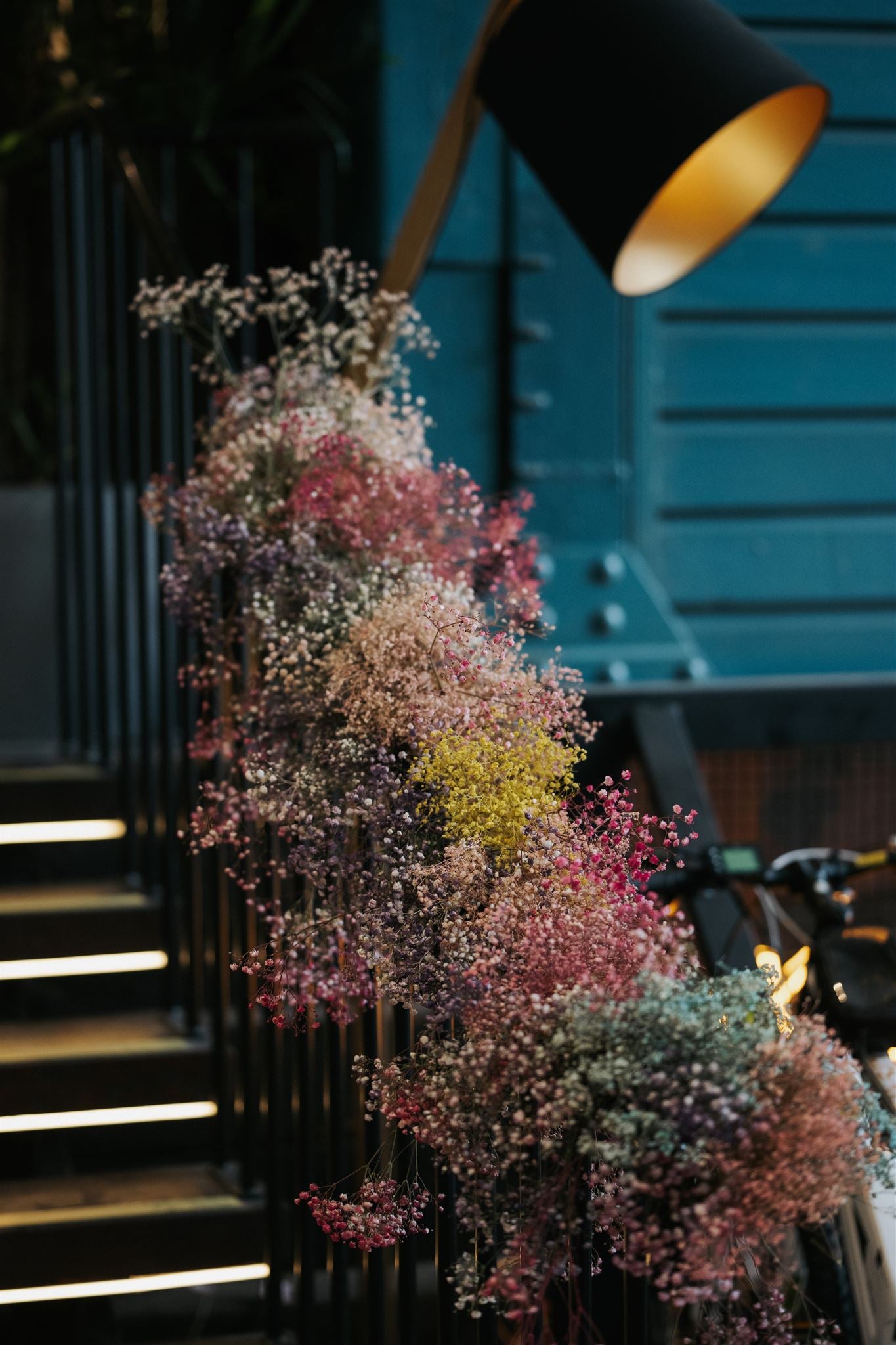
Start from the season's palette. It's the easiest way to make your budget go further.
Most couples choose a venue first, then a date, and only then start thinking about flowers. We'd gently suggest looking at the date and the flowers together. The week you marry decides which flowers are at their best, which colours come easily, how far your budget stretches and how the blooms cope on the day. After designing more than 530 weddings across Sydney and NSW since 2014, here's our florist's view of what each season gives you.
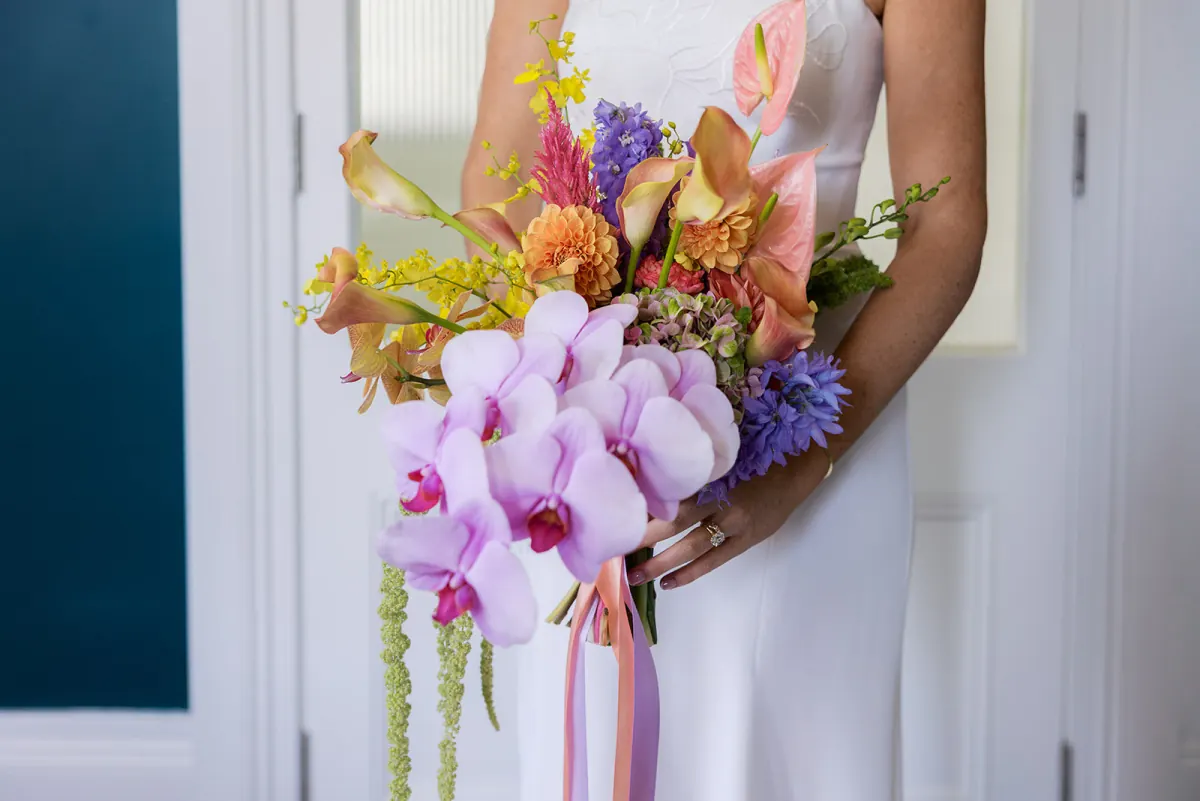
Summer is bright, lush and generous. Garden roses, cosmos, delphinium, lisianthus and hydrangea are all flourishing, and dahlias start arriving from about mid summer. Calla lilies are the flower of the moment for many of our couples. They're in season from late spring through summer (about November to February or March), with some local growers supplying them outside that window from greenhouses. Natives such as flannel flower, banksia and kangaroo paw add texture.
Mollie & Izzy's January wedding at Sergeants Mess paired orchids and peach callas with delphinium and banksia: soft and sculptural at the same time.
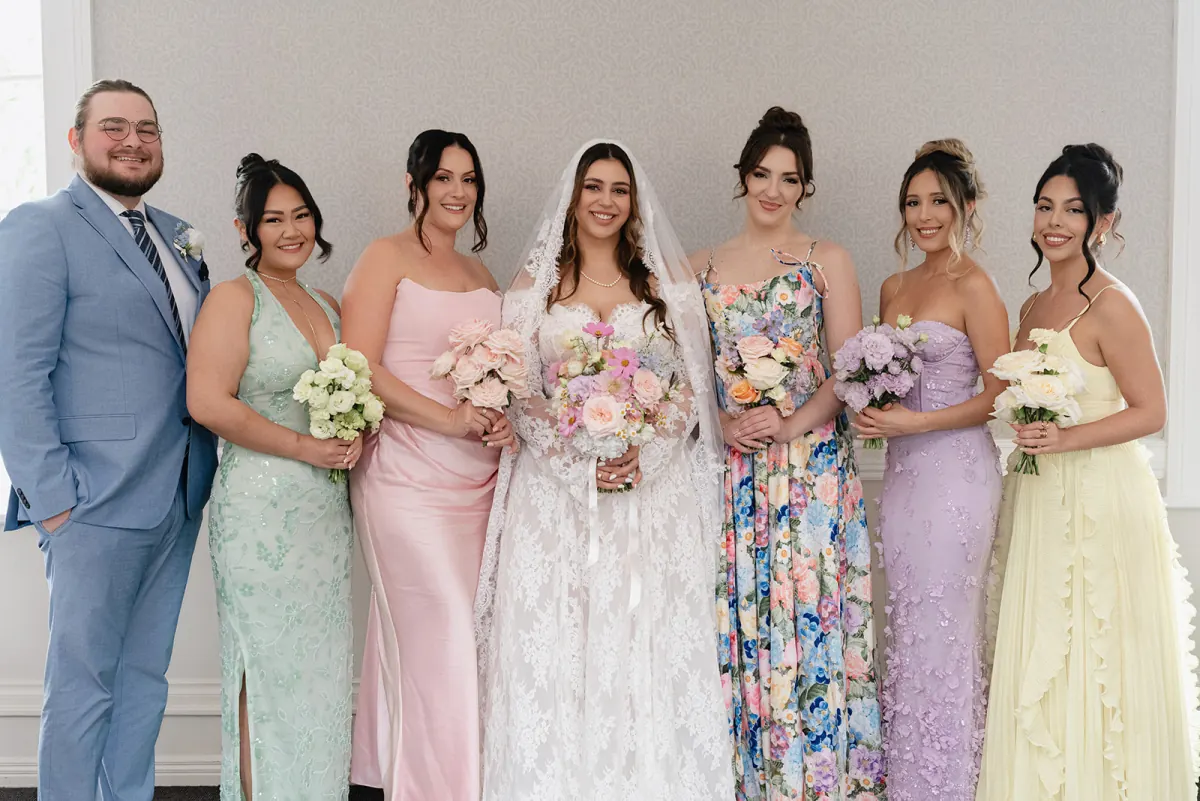
Our tip: for outdoor ceremonies, plan for shade and water. Flowers, like guests, do better out of the midday sun.
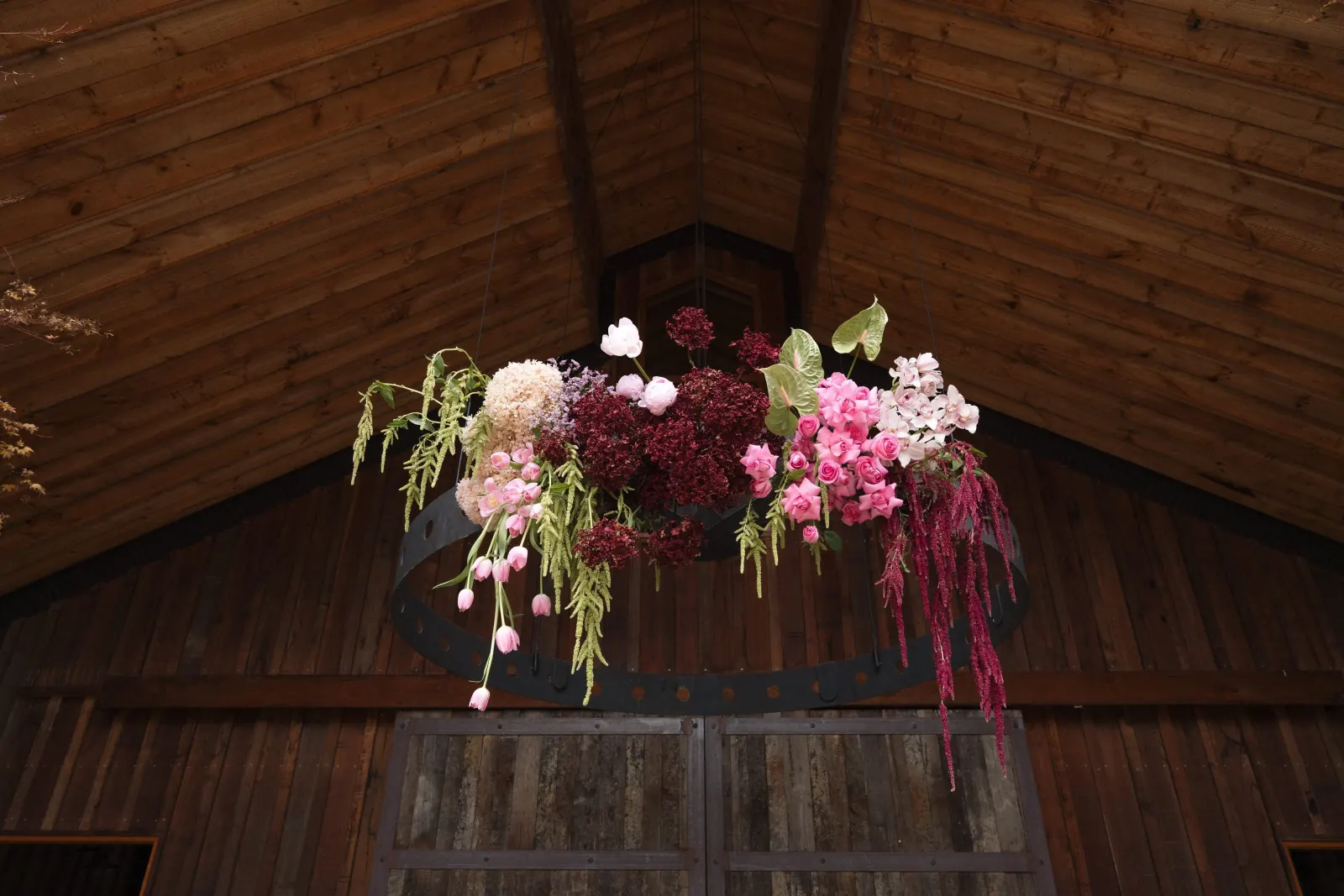
If you're asking us for a sweet spot, it's autumn. Dahlias are at their peak and the palette turns rich: burgundy, rust, blush and the antique tones hydrangea takes on as the season turns. Chrysanthemums, amaranthus, roses and autumn foliage round it out, with banksia and kangaroo paw for a native touch. Add settled weather and softer light, and autumn gives you the best mix of flower choice, colour and comfort on the day.
Tayla & Hamish's April wedding at Church Point and Dunes, Palm Beach, is autumn at its best.
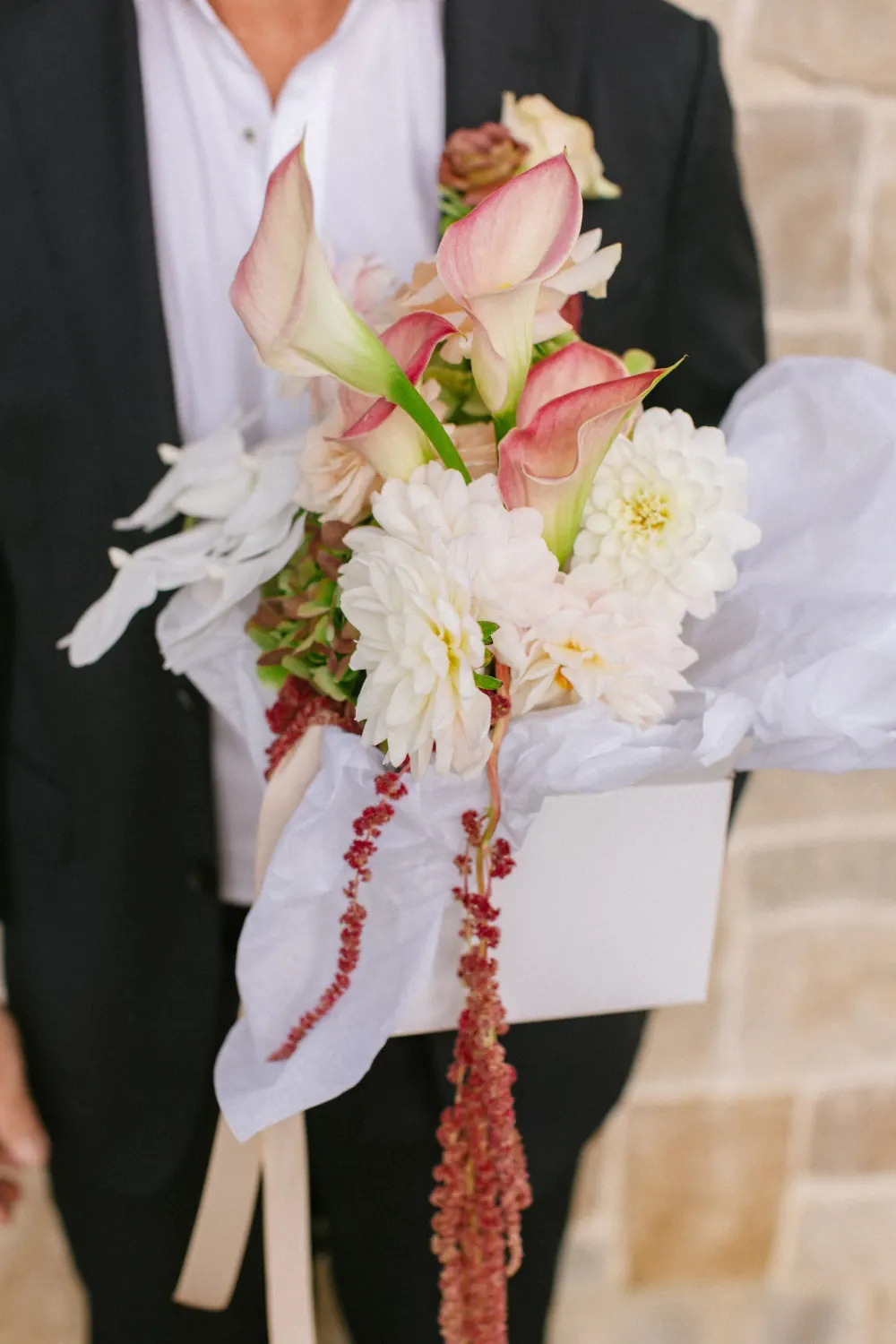
Our tip: autumn Saturdays book out early, so lock in your florist once the venue is confirmed.
Winter is quieter and more refined. Anemones, tulips, hellebores and camellias come into their own, ranunculus starts arriving in late winter, and natives shine: wattle from late winter, plus banksia, protea and kangaroo paw. A few local dahlias hang on into June, mostly in deep burgundy tones, so treat them as a lovely bonus rather than a promise.
Samantha & Zi's June wedding at the Palm House in the Royal Botanic Garden brought orchids together with orange ranunculus and delphinium, proof that winter doesn't have to mean muted.
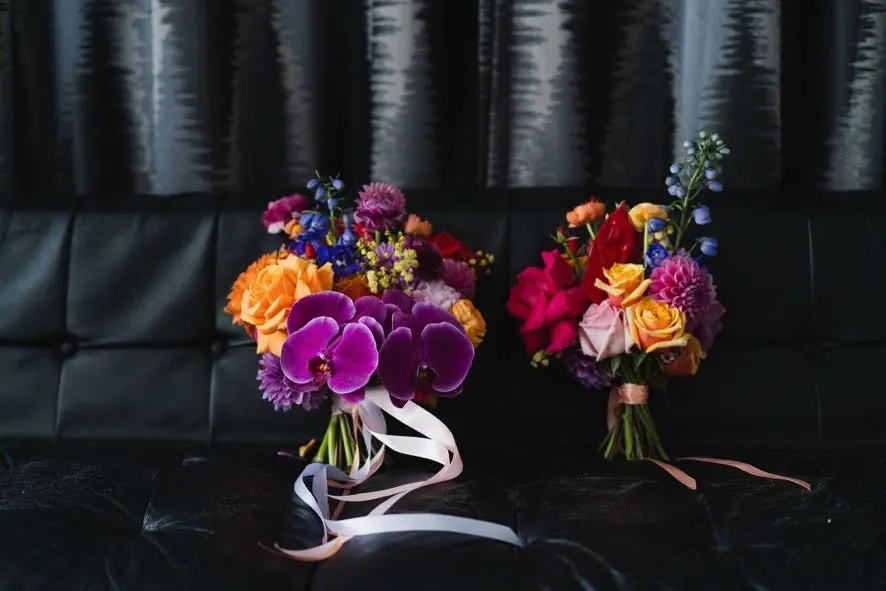
Our tip: winter is the quietest season for weddings, so you'll often have more choice of venues, dates and suppliers.
Spring is peak wedding season, and it's easy to see why. Ranunculus, sweet pea, garden roses and blossom are everywhere, tulips and anemones carry through early spring, and natives such as waratah (about September to November) and flannel flower are at their best. Then there are peonies. Local peonies have a short window, from about mid October to early December. Outside that, they're imported and cost more.
Jessica & Mark's October wedding at Pasadena, Church Point, paired blue delphinium with peach roses and daisies: a fresh blue and peach spring palette with Pittwater behind.
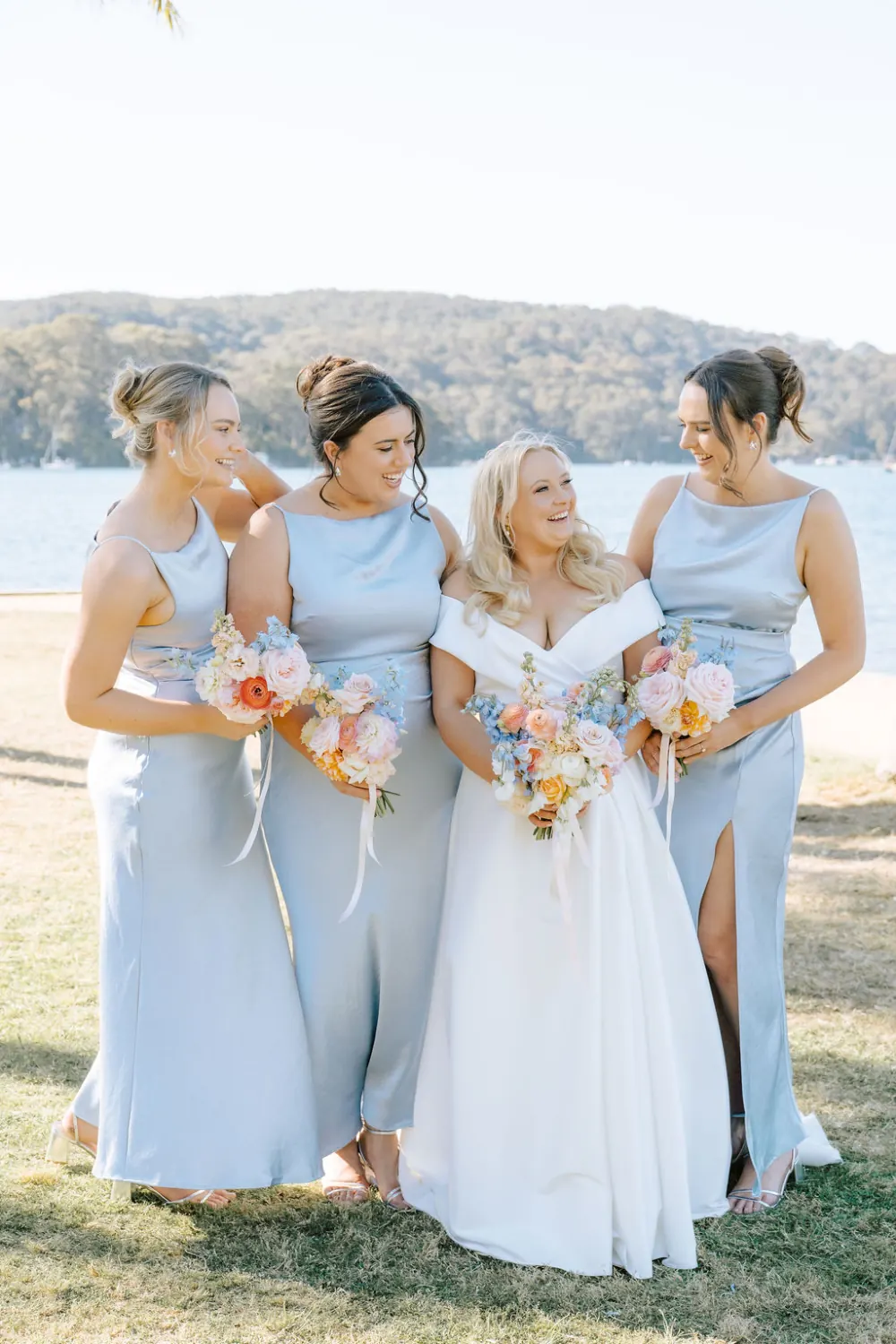
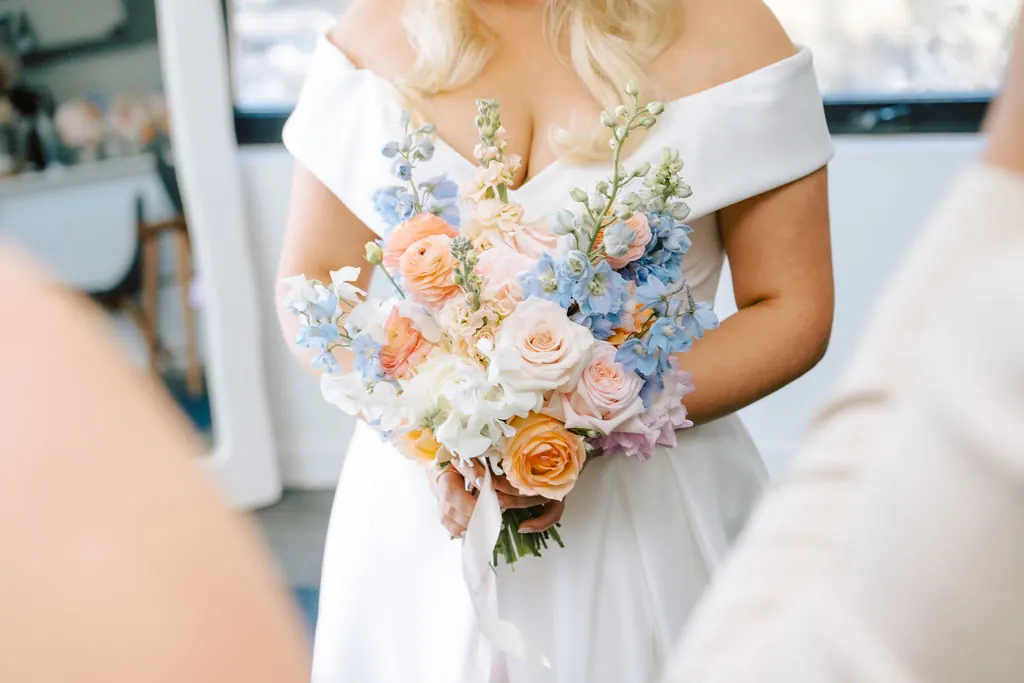
Our tip: book early, and if peonies are a must, ask your florist about a back-up flower in case the season runs early or late.
We love mixing Australian natives with garden flowers: waratah beside a dahlia, kangaroo paw through roses. A quick guide:
| Native | Best time in Sydney |
|---|---|
| Waratah | September to November |
| Flannel flower | Spring into early summer |
| Wattle | Late winter into early spring |
| Protea | Winter |
| Banksia | Most of the year |
| Kangaroo paw | Most of the year |
Roses, orchids, kangaroo paw and banksia are available most of the year, though some stems may be imported out of their local season, which can affect cost.
Valentine's Day (14 February) and Mother's Day (May) are the busiest flower weeks of the year. Prices go up and choice gets tighter, roses especially, and some florists don't take weddings or events then. We don't take weddings or events in the week leading up to either date. If your date falls near one, book your florist early, stay flexible on roses and ask whether they're taking events that week.
If there's a flower you can't picture your day without, you have two options: choose your date around its season, or let your florist suggest an in-season look-alike. Imported, out-of-season stems cost more and can be patchy, so it's worth asking before you fall too hard for one bloom. It's also very hard to guarantee any particular flower, as availability can change week to week, but your florist will always do their best and make suitable substitutes.
Lime Tree Bower started in a founder’s apartment, moved to a warehouse, and is now a shop and studio on Sailors Bay Road in Northbridge with a team behind it.