

East Coast Tasmania / Freycinet, Tasmania
Harveys Farm Bicheno
A north-facing Hamptons-style house on five private acres at Bicheno, where the granite meets the Tasman Sea.
Wedding Venues
Visit in person
The Journal · Coastal
Rain gets a decision and a phone call. Wind just turns up, and everybody smiles through it.
By The Little Wedding Planner Editors · · Updated 10 September 2026
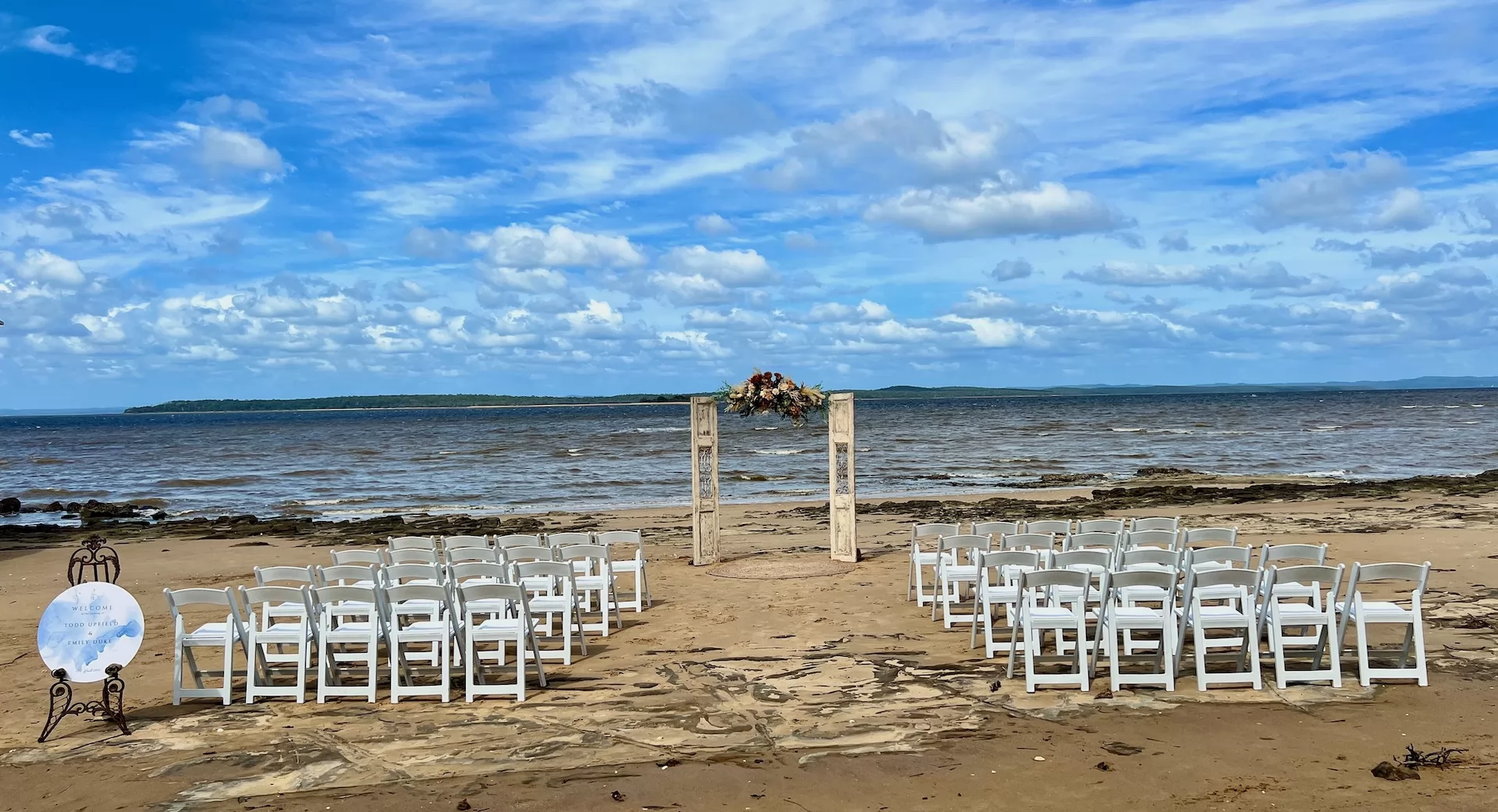
A wet weather option exists because rain forces somebody to choose something on the morning. Wind never crosses a line, so nobody chooses anything, and on the coast it turns up on the fine days as well. The only defence is a venue that made the choice long before you arrived: a lee, a hedge, a wall that comes down, a room facing the same water.
The ceremony is at four, on the sand, and it is a beautiful day. No cloud, warm without being unkind about it, the water doing the thing the water does. It is also blowing, and it has been building since about one, the way it does on that coast most afternoons of the year.
So the celebrant reads with one hand held flat across the page. The vows carry to the third row, and after that people are watching a mouth rather than hearing words. Two hours of somebody's hair is gone inside a minute. The trio have their sheet music pegged to the stands, because they have done this before and you have not. Everybody means it afterwards when they say it was lovely, because it was.
Here is what nobody tells you before you sign. Rain gets a plan. Wind gets nothing at all.

There is a moment on the morning when somebody with a forecast has to say which way the chairs are going. It is why your wet weather option is really a second venue. Wind never forces that choice, because there is no amount of it that obliges anybody to move anything. Nothing triggers, nobody rings, there is nowhere to move to. It blows through the afternoon, and the ceremony goes ahead exactly as you booked it.
Which would be fine if wind only came on the days the weather was bad anyway. Beside water it comes on the fine ones as well.
A lawn above the water at six in the evening, flat light, flat sea, is a photograph of a good evening. Nobody puts the other afternoons on the page, and nobody would. Catching the good one is somebody's whole job.
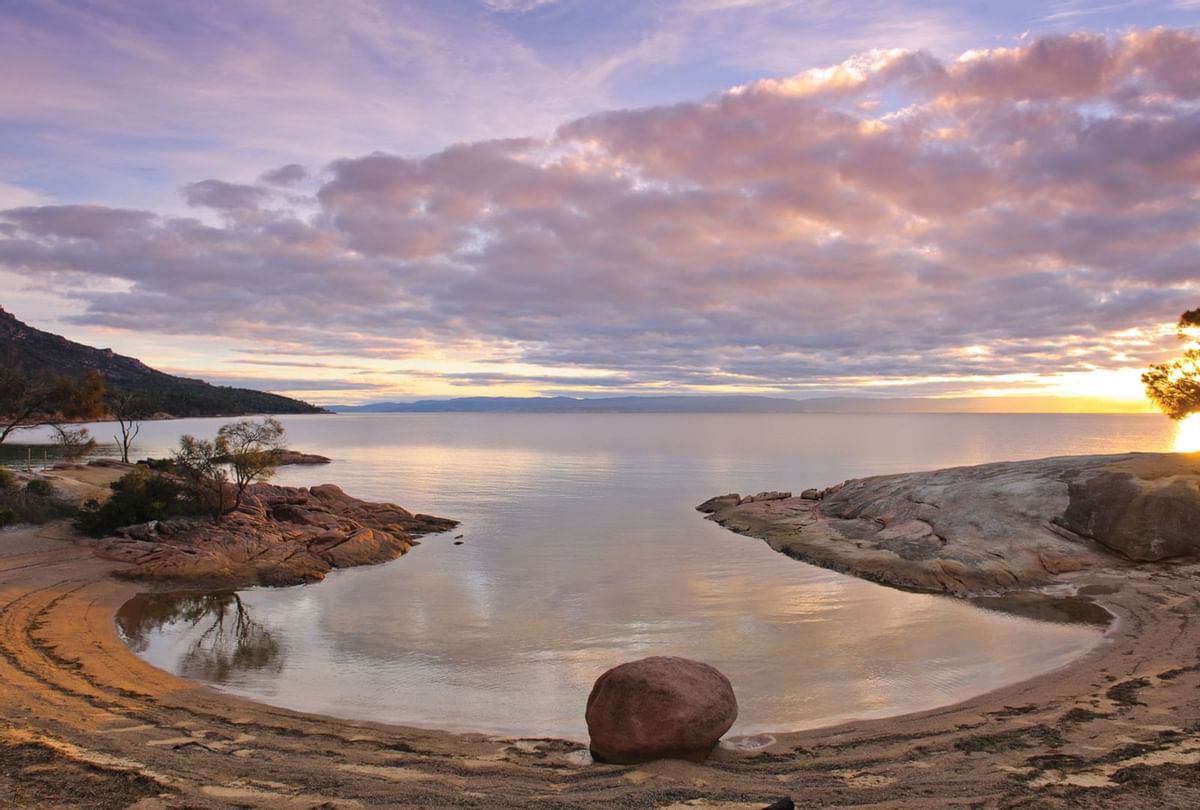
Your own visit was that kind of day. Autumn, a Tuesday morning, glorious, and standing on the grass you could not think of a single question. Nothing is wrong with that. The sea is the one part of a wedding nobody can book, and you have been shown it on its best behaviour by everybody involved, including yourself.
The case for the wind is stronger than you would like. Nobody sells a headland by talking about the southerly, and I would not want them to. On a hot afternoon in February the air coming off the water is the difference between a wedding and an ordeal. A venue that talked a couple out of its own lawn on the best day of the year would be doing them no favours and would deserve none back.
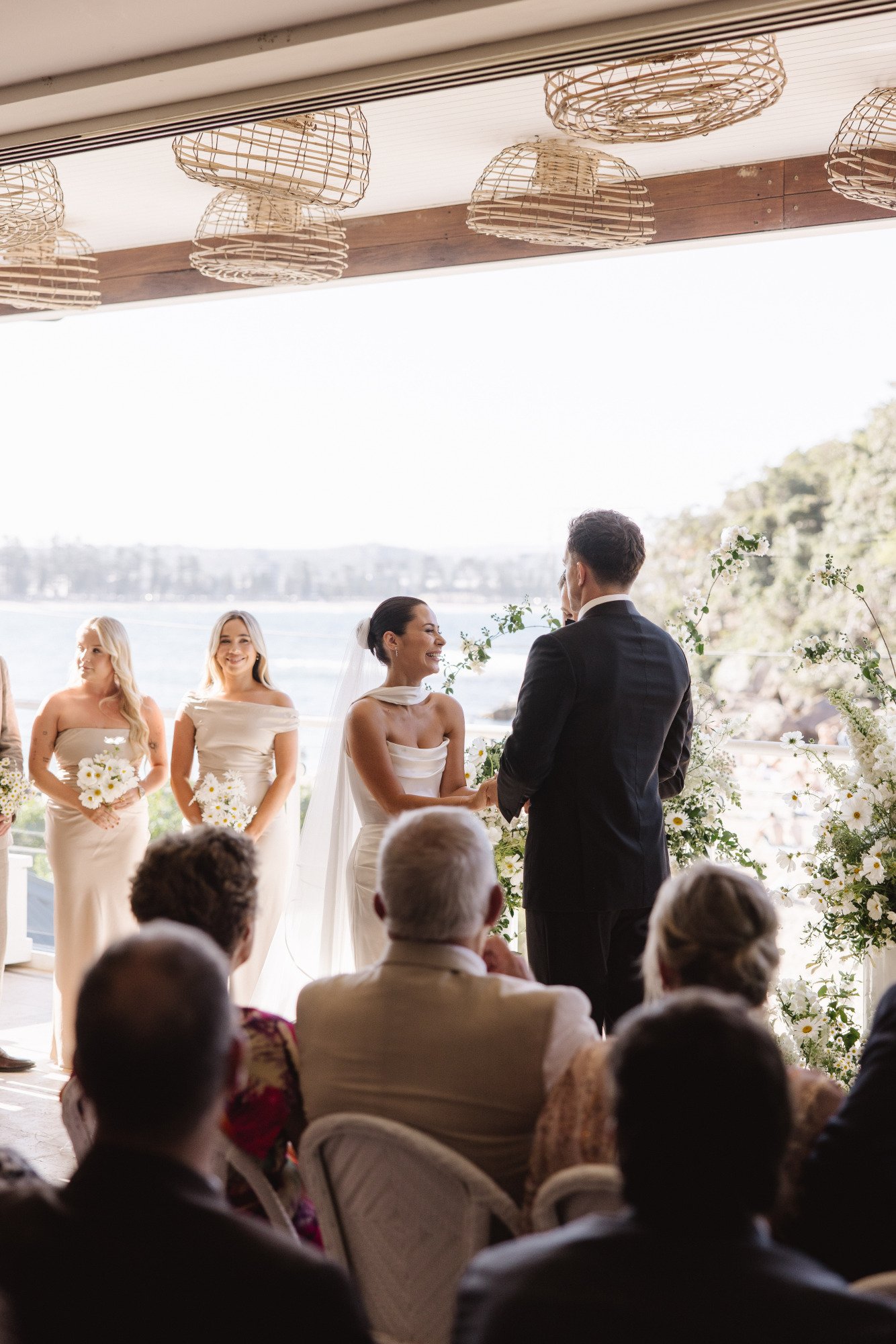
There is also no promise to print. A curfew is a time and a minimum spend is a number, and both go on a page. A promise about the wind would be a promise about the weather, which nobody can make.
So the places that have thought about it do not sell you a policy. They sell you a building and a piece of ground that were arranged with the wind in mind: a lee, a hedge, a wall that comes down, a room facing the same water. All of that is on the page already, if you know what you are reading for.
Start with the compass. Some places describe their own ground by which edge takes the weather and which way the building faces. A direction on a page is the mark of somebody who has stood on all four sides of that building in every season. Looking for one costs you nothing, so look for it first.
Then look for shelter that belongs to one spot rather than to the whole property. A hedge, a tree line, a wall, a fold in the ground: each of them works at one end of a lawn and not the other. A place that lists its ceremony sites one at a time, and says of a single one that the trees on that side keep the weather off, has told you something exact. Somebody watched a ceremony there, saw what the wind did to it, and planted the hedge.
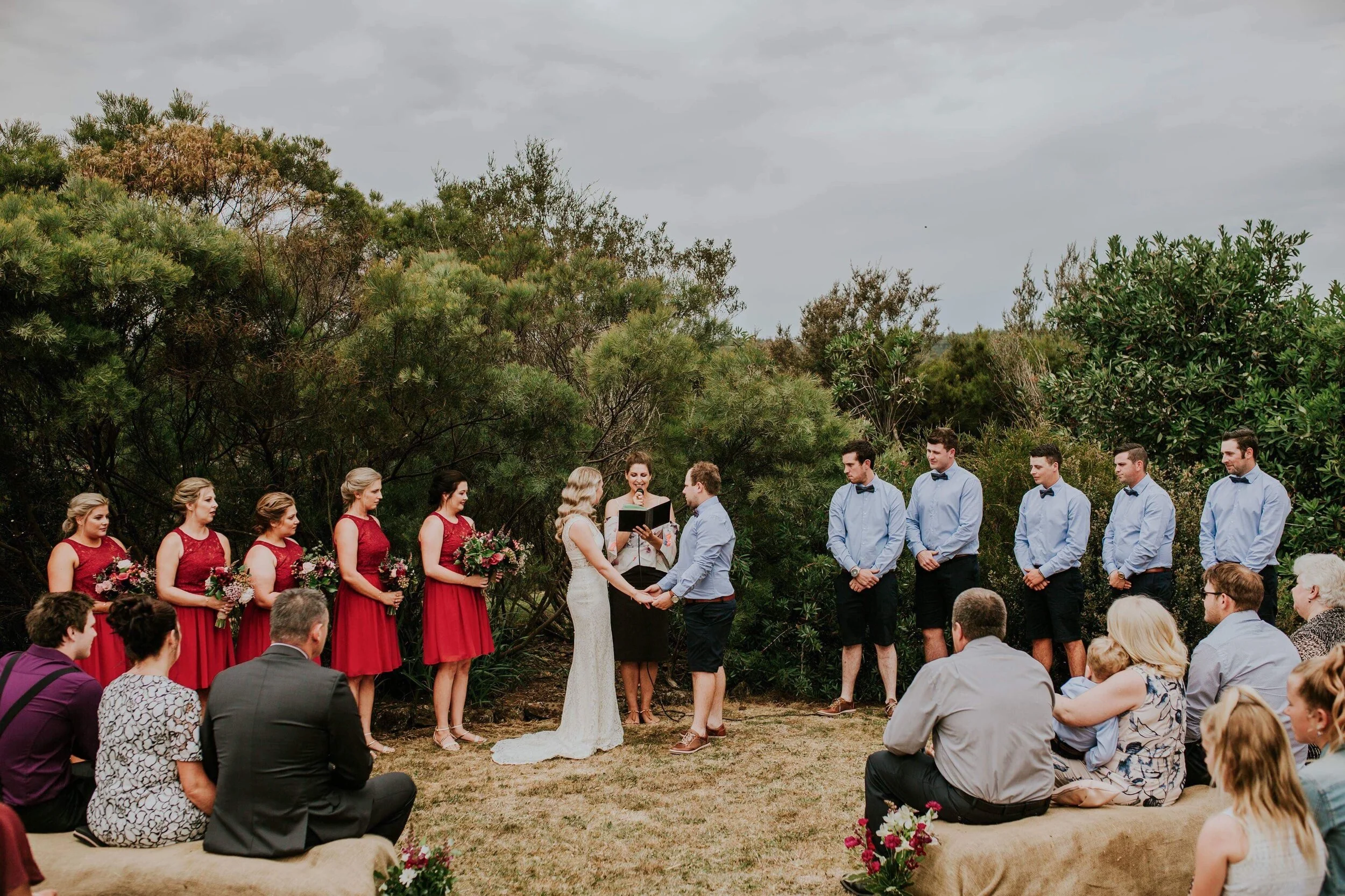
After that, a wall that moves. Blinds that pull down along the eaves, sides that close in or open right up, a roof over ground that is otherwise open air. That leaves the decision with whoever is standing there at four o'clock instead of taking it nine months ahead, and it means a roof is not what you settle for when the wind comes up. It is where the wedding was always going to be.
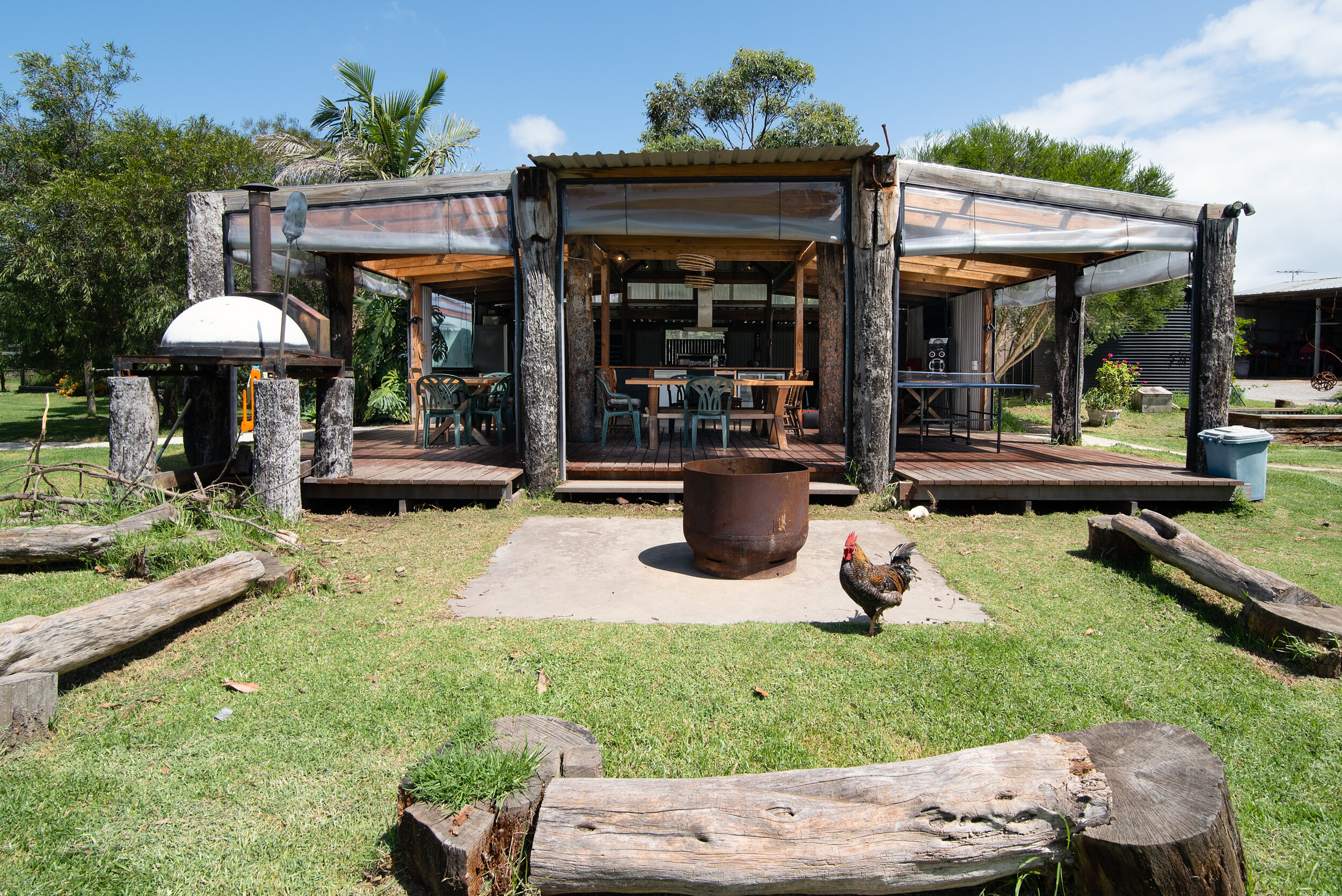
Last, the indoor room that faces the same water. Moving is not losing in a building arranged like that: you get the view you paid for, with a wall between you and the wind. The room that makes moving feel like a defeat is the one with its back to the view. Some venues say which of their rooms is which, on the page, before anybody asks.

Your florist has already worked this out, because wind is not a comfort question to her. It is a build question, and it is priced.
An arbour with an installation across the top is a sail. It is either weighted, guyed and planted in something, or it is on the ground by the second reading. Hanging things outdoors is a different job from hanging them in a room. Candles are decorative indoors, and outdoors they will not stay alight. Paper orders of service are confetti. Somebody prices all of that from what you have told them about the site. The wind on your lawn turns up in your budget through the people building it, long before it reaches you through a venue.
So look at the ground before you look at the photographs of it. Which edge takes the weather, what stands between the chairs and the water, and where everybody goes if the air does not settle by four. A place that has answers to those has them because it has already watched the wind spoil a ceremony or two, and worked out what to do about it.
You already know the other kind of day, the one at a place that has never worked any of this out. The pegs go on the sheet music, the celebrant holds the page flat, and by then it is beautiful out and there is nothing left for anybody to do about it.
A north-facing Hamptons-style house on five private acres at Bicheno, where the granite meets the Tasman Sea.
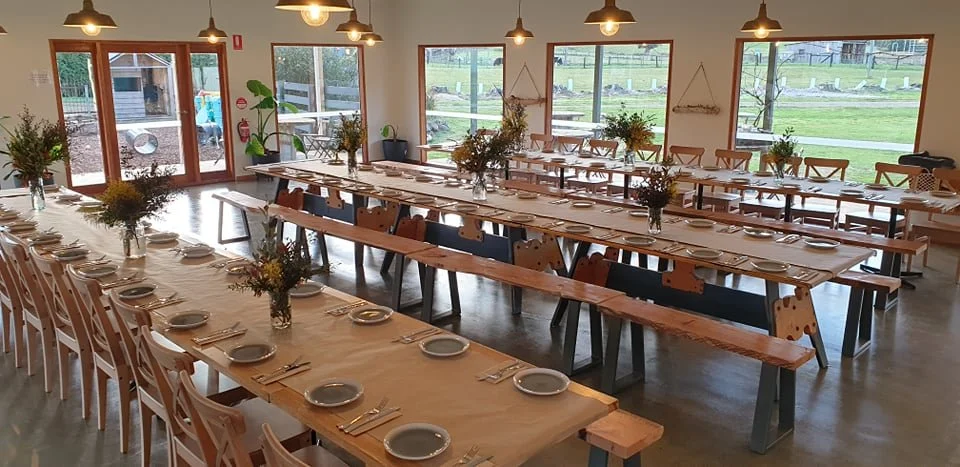
A working paddock-to-plate farm at Ridgley, fourteen kilometres south-west of Burnie and set above the Guide River.
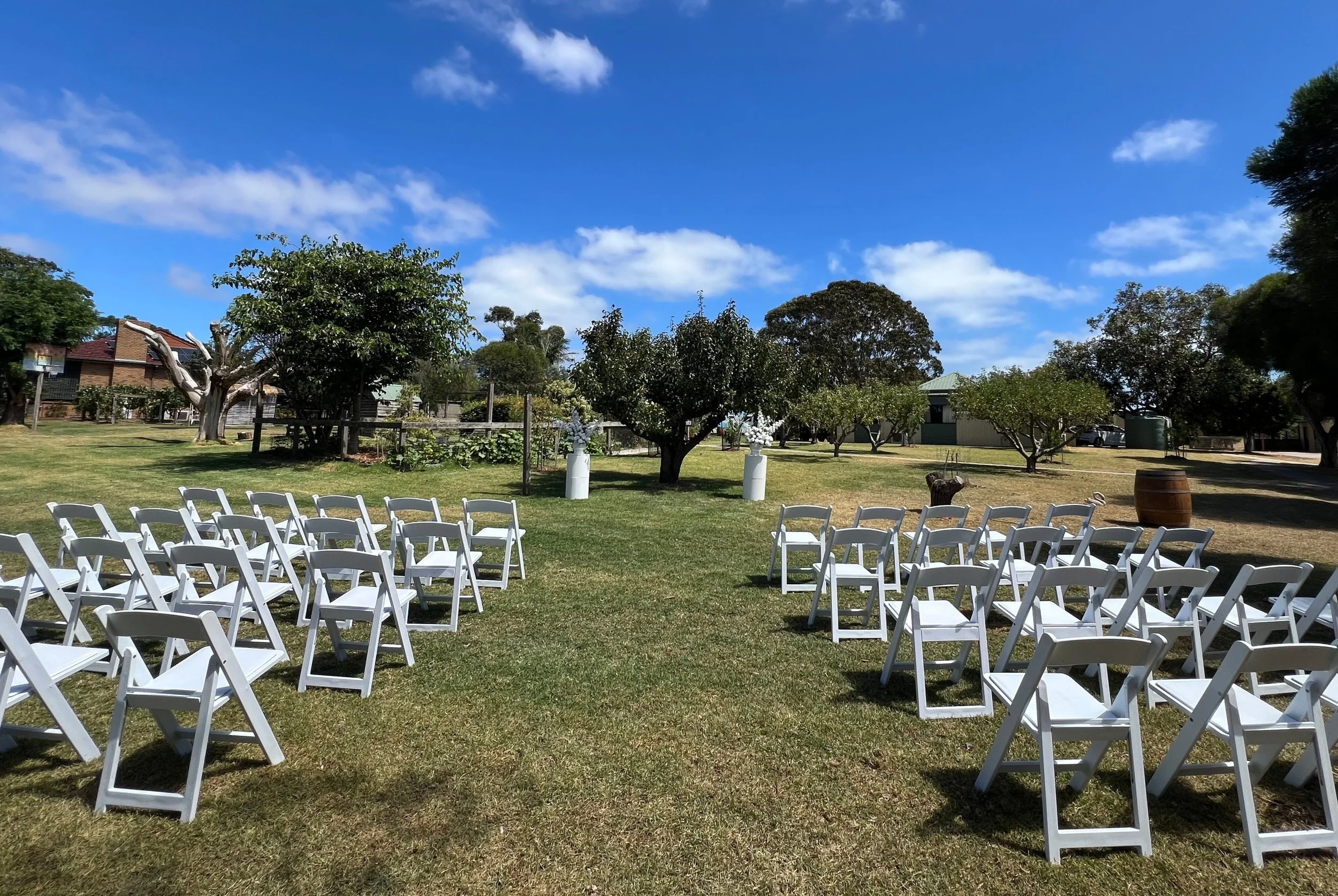
A 15-acre working farm near Ventnor Beach on Phillip Island that hires out as a whole — exclusive use of the entire property for 24 hours, 11am to 11am, with seven…

Shoal Bay Country Club sits on the shoreline of Shoal Bay Beach at the eastern end of Port Stephens, where the bay turns turquoise and Mount Tomaree closes off the…
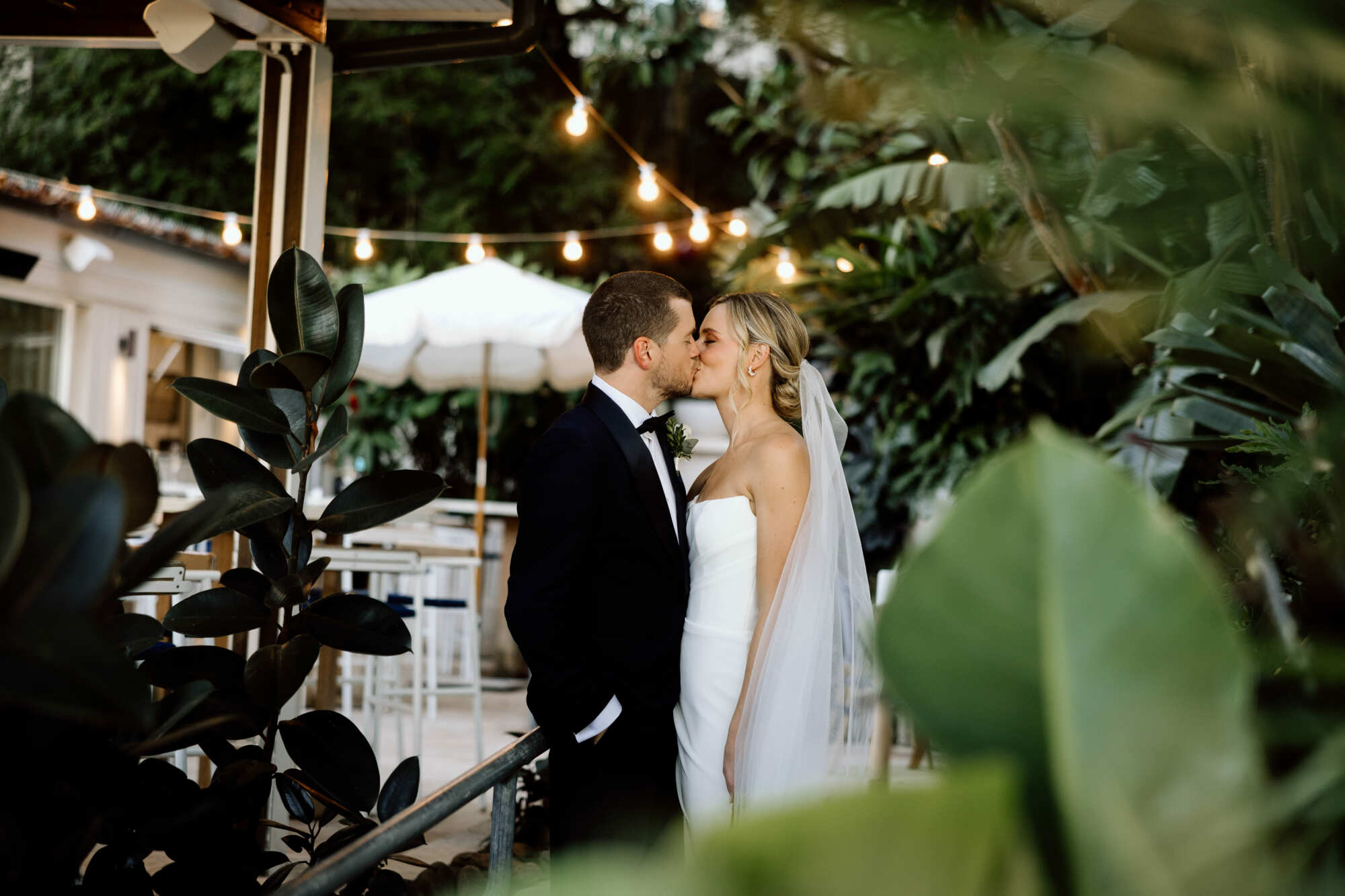
The Boathouse Shelly Beach sits right on the sand of Manly’s sheltered, west-facing Shelly Beach — one of the only Sydney venues where the ocean is literally at the…
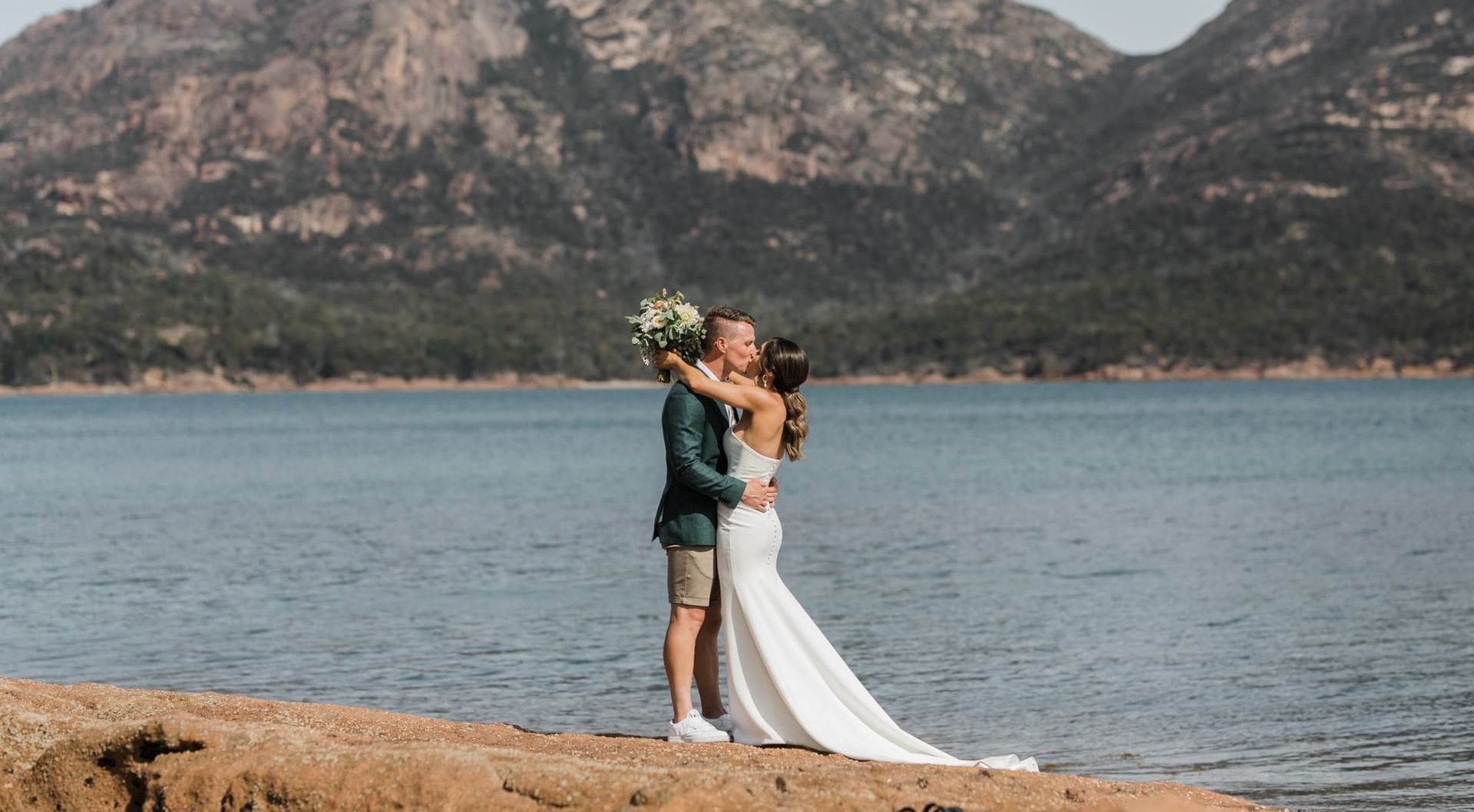
The only accommodation inside Freycinet National Park, on Great Oyster Bay with the pink granite peaks of The Hazards behind it and Wineglass Bay over the ridge.

Fera Flores is Georgie’s studio-based floral practice at Victor Harbor on the Fleurieu Peninsula, working across the peninsula, McLaren Vale, the Adelaide Hills and…

The Waterfront Restaurant stands on the beach at Dayman Park, Urangan, at the eastern end of Hervey Bay looking across to K’gari.
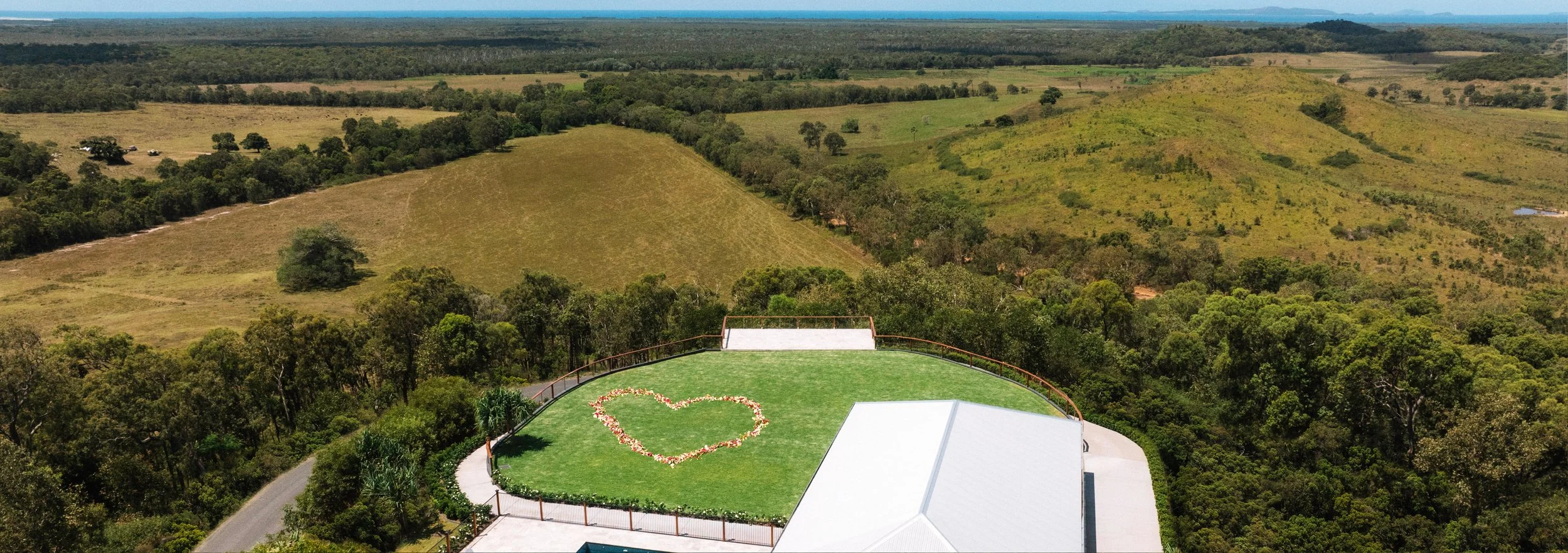
A private 50-acre estate in the Woodbury hinterland, fifteen minutes from Yeppoon, on a hilltop with views running from the rolling mountains down to Corio Bay and…

At The Heads sits on the water’s edge at Barwon Heads, a timber-and-glass restaurant looking straight down the Barwon River to the bridge, the Bluff and the heads…
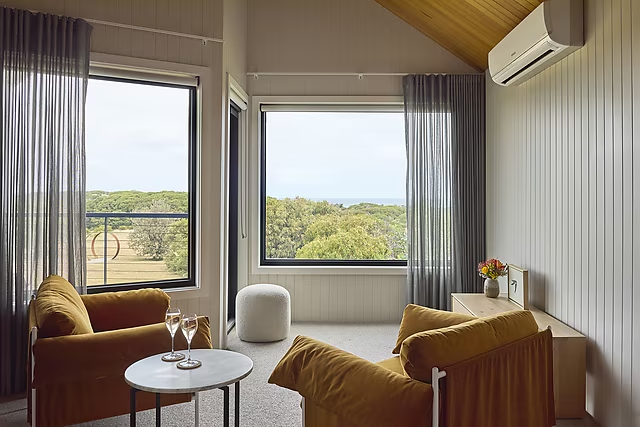
Lon Retreat sits on a working coastal property at Point Lonsdale — moonah woodland, lakes and open farmland running down to a private beach track onto the Lonsdale…
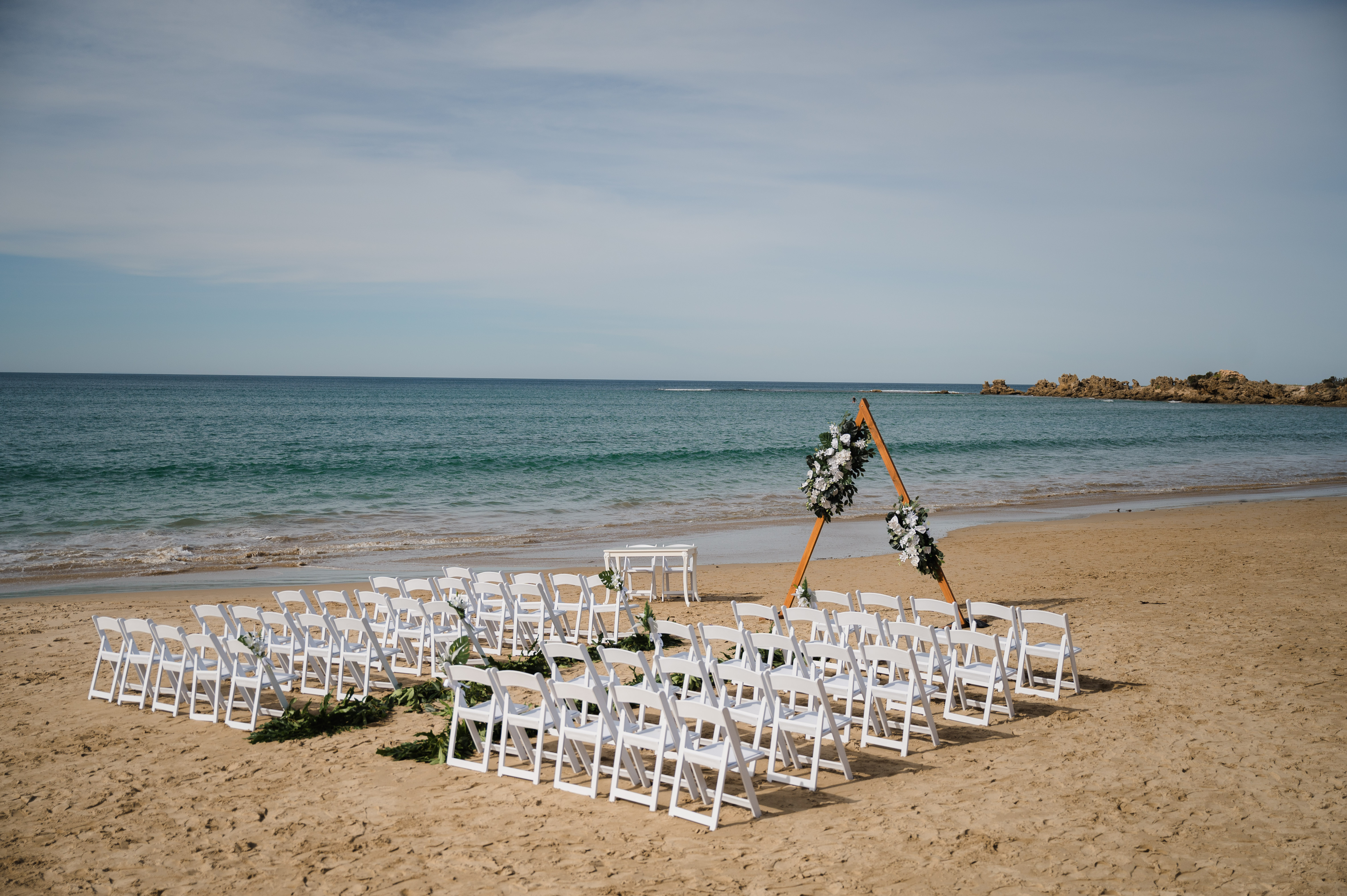
Great Ocean Road Resort sits at 105 Great Ocean Road in Anglesea, on the edge of the Great Otway National Park and a short walk from the river and the beach.
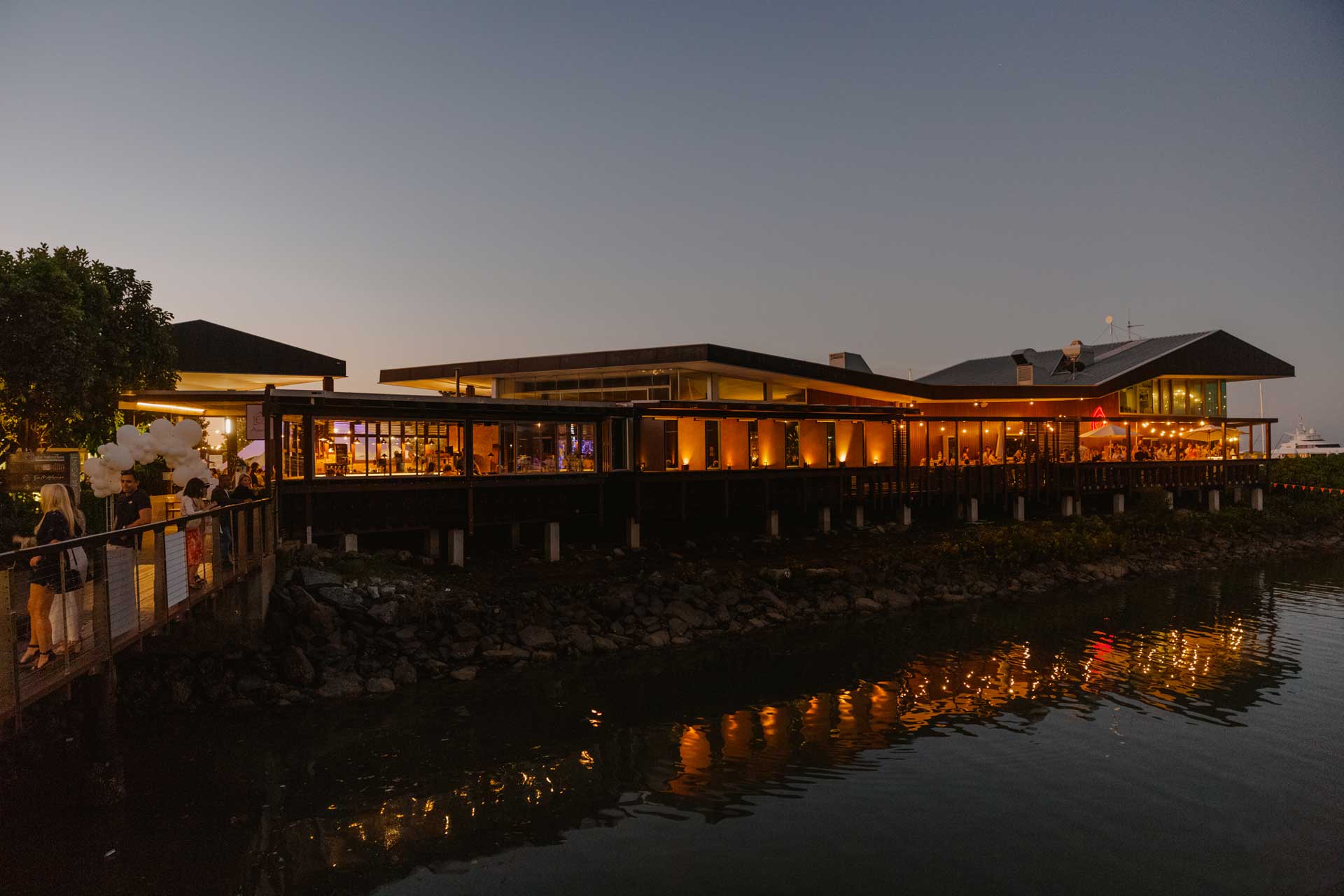
Salt House sits on Marina Point at the mouth of Trinity Inlet in Cairns — a waterfront restaurant and bar of warm timber and open kitchen, with an outdoor cocktail…
A private mansion on 650 acres of its own headland east of Albany, above the Southern Ocean, with two private beaches, a helipad and its own airstrip.
Basils Farm looks out over Swan Bay to the village of Queenscliff beyond — a working vineyard, cottage and restaurant at Swan Bay, with a contemporary pavilion…

The Baths Middle Brighton floats over the water beside one of Victoria’s last two sea baths — a 138-year-old bayside institution where an Art Deco façade meets…
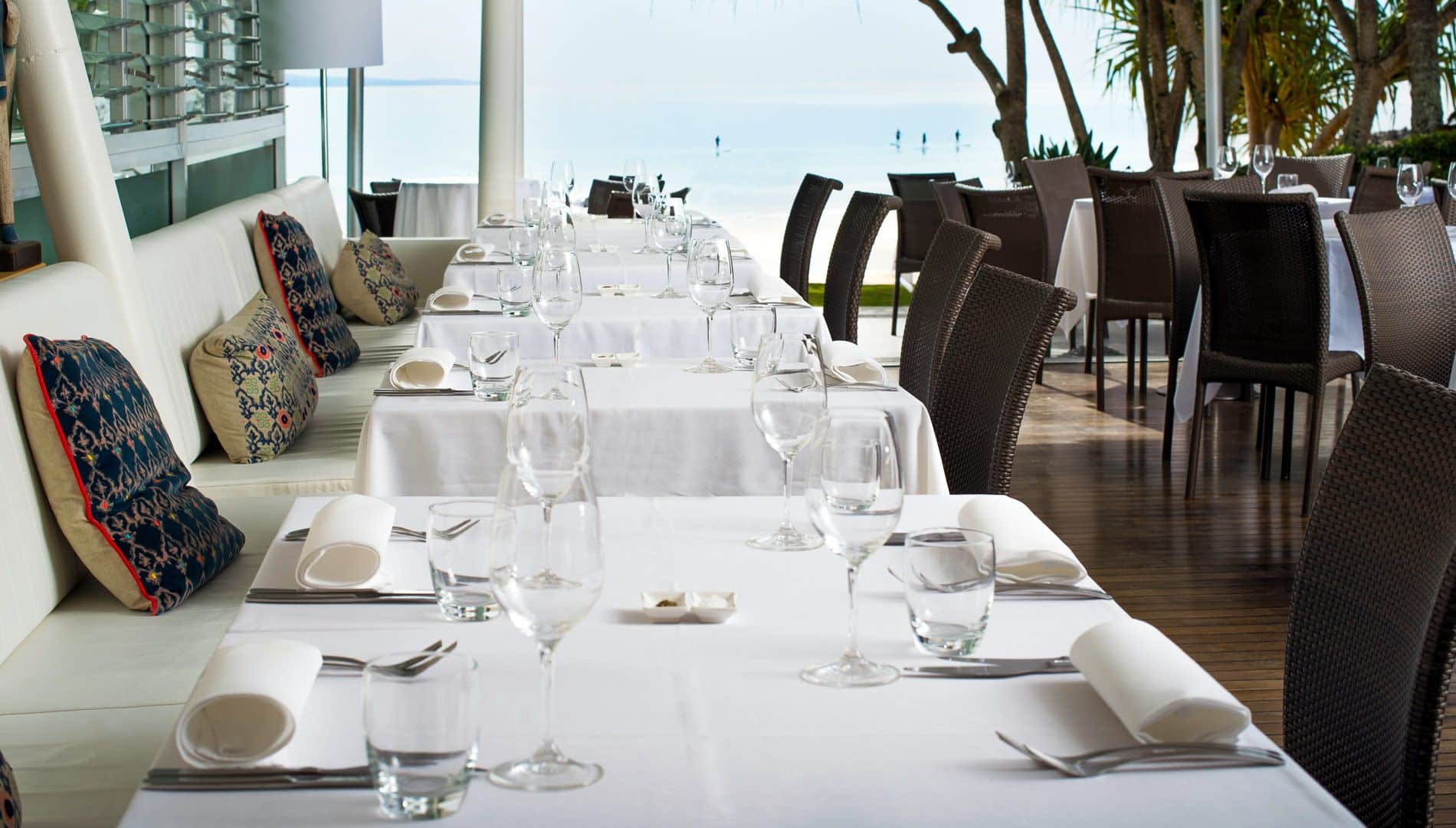
Sails sits directly on Noosa Main Beach at the end of Hastings Street — pandanus framing the sand, white linen in the sea breeze, and one of Queensland’s most…