An elopement on a summit is a walk with a deadline, and the walk is the part you are paying for.
By The Little Wedding Planner Editors · · Updated 10 September 2026
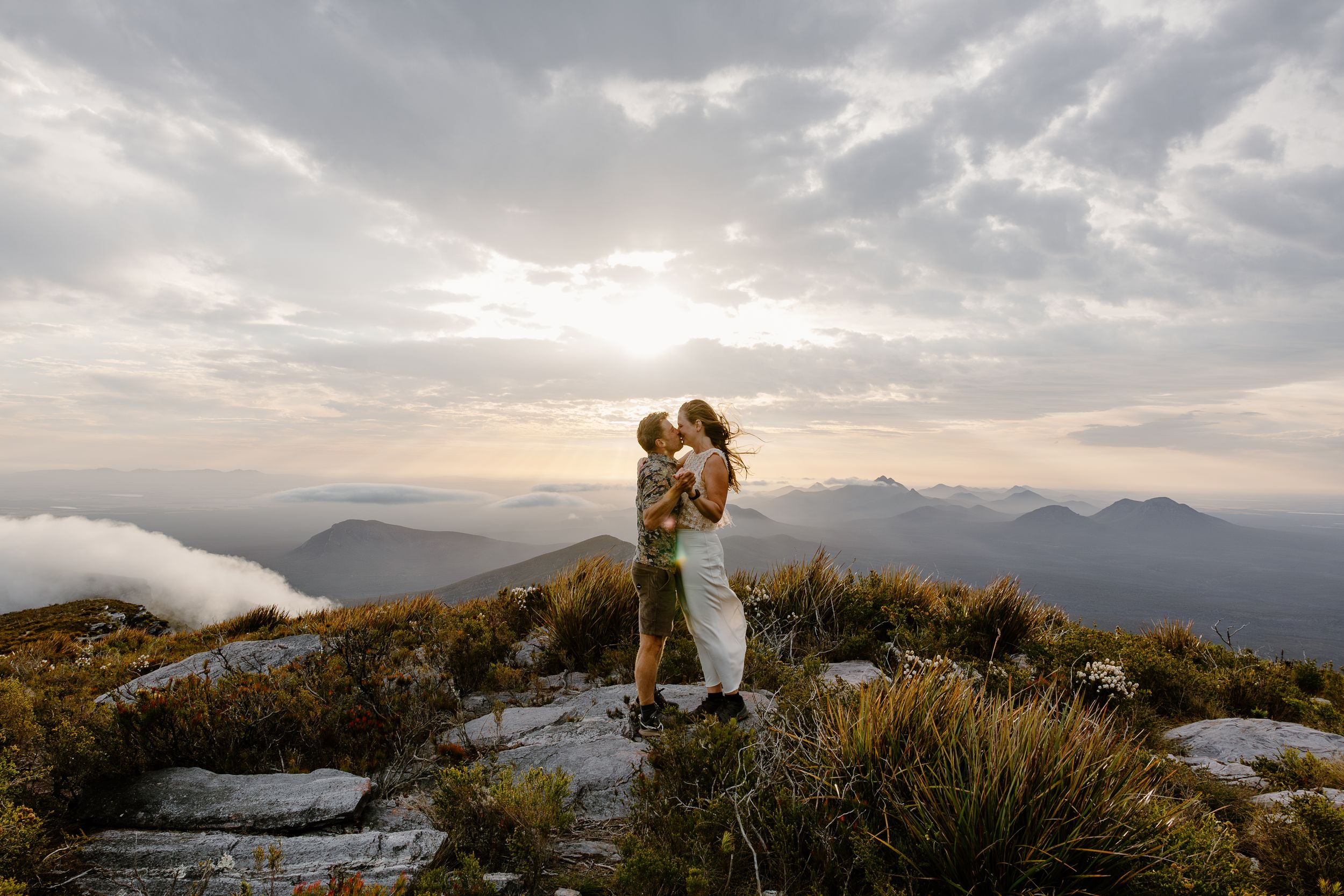
Ann and Tom Photography Videography, based at Albany in the Great Southern of Western Australia, whose elopement work runs to clifftops and mountain summits.
The argument
An elopement on a mountain is a small expedition with a camera in it. The walk, the light, the weather, the last unsealed kilometre and the permit all have to work, and the photographer needs them to work more than anybody else on the day. The ones worth booking have put that planning inside what they sell, and price the walking at the same rate as the rest of the day.
The alarm goes at half past three. The car park is gravel and unlit. A dress goes into a dry bag, boots on, the good shoes carried. Behind you a woman you have met twice on a video call is carrying two camera bodies and a lens the weight of a brick, doing sums about how long your party is taking, because the sun comes up when it comes up.
That morning is the one behind the picture you have saved somewhere: two people on bare rock, cloud sitting in the valley below them, ridges going blue into the distance, nobody else within an hour's walk. It is a beautiful thing to want, and wanting it is not the least bit silly.
Two rain jackets and the weather that turned up. Melbadsey Co photographs elopements out of Melbourne, and its booking includes planning check-ins at three months, six months and one month out.
The morning is what you are buying. The photograph is what is left over at the end of it. An elopement on a mountain is a small expedition with a camera in it, and the ones worth your money say so where they put their prices.
Nobody photographs the car park
You pick a photographer out of a gallery. No frame of the fire trail, the locked gate, or the twenty minutes in the wind waiting for a cloud to move off the sun. A portfolio is the four good minutes at the end, and nobody hides anything by not photographing a boot rack.
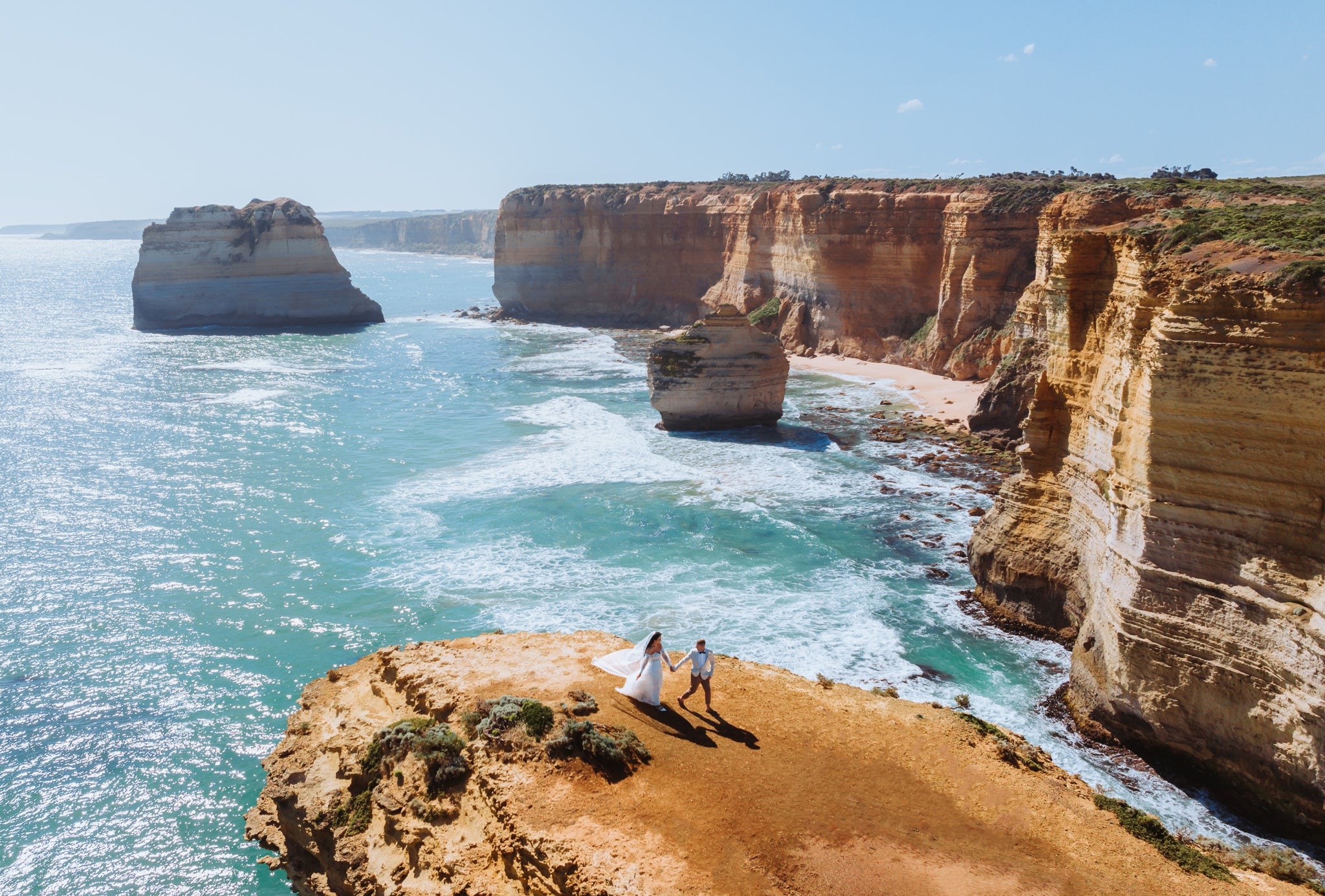
The seaward end of the Great Ocean Road, from above. Josh Beames Photography works this coast from Warrnambool, and puts a pre wedding consultation and a venue visit inside both packages.
The price page is not much better. Photographers sell hours, and the same entry price buys wildly different days. An hour is a sensible unit at a venue, where the ceremony lawn is ninety seconds from the reception room. On a mountain the hours go on movement, and the camera comes out at the end of them.
What two hours of walking costs
You can work out what an hour of walking costs from a photographer's own price page. Some photographers publish the whole ladder, three hours through to nine, with a figure on every rung. Look at the step from one rung to the next. Where it is even, an hour at the back of a reception room and an hour going uphill cost the photographer the same.
Some keep a second ladder for elopements, and there the extra hours go on a drive out to somewhere quiet, or a walk in. Same photographer, same rate for an hour, and all that separates the two is how far you are going.
Two hours going uphill beside you are two hours she is working and cannot be anywhere else. That is no surcharge for scenery. It is the same two hours you would be buying inside a reception room, spent on a track instead, and on an even ladder they cost you the same. The walk is not the setting for what you are buying. It is part of what you are buying, and it belongs on the quote alongside the other hours.
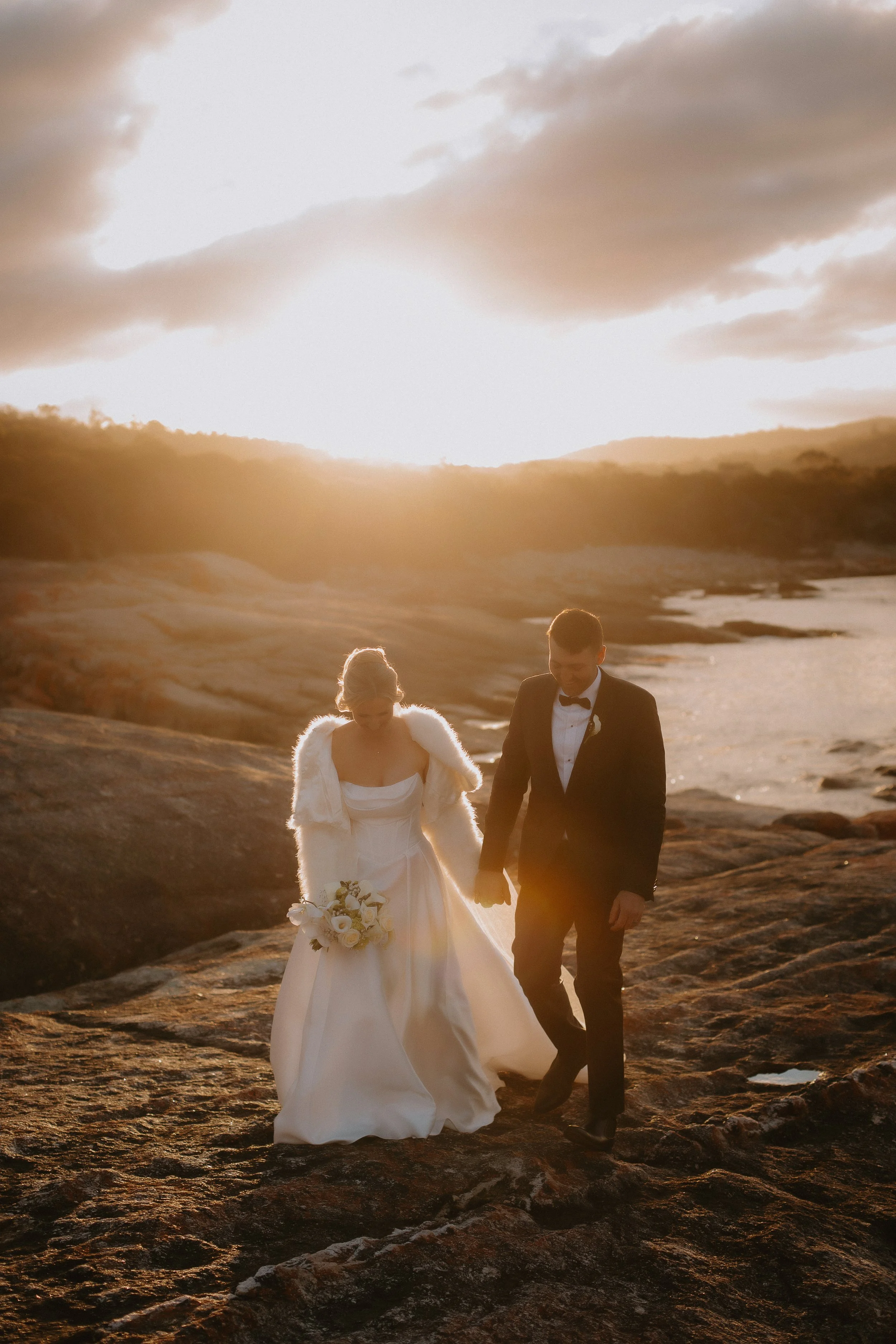
Out on the granite with the sun going, and shallow water running between the rocks. Kelsea Midson photographs weddings and elopements from Sheffield in north west Tasmania, and publishes every rung of both her price lists.
She is not a mountain guide, and has never said she is
Now the fair objection. A photographer is not a guide. She has no duty to lead you anywhere, no obligation to know the track, no insurance that covers your ankle. What she sold you was photographs. The call about the road, the scouting trip, the message at nine the night before about the wind: none of it is on an invoice.
The photographer does the planning anyway, and the reason is the most reassuring thing in the business. The photograph you are booking her for exists only if you are all on the right rock while the sun is still low. A wedding in a building can run late. A mountain cannot. The sun clears the ridge once, and the rest of the morning happens on the way down.
So the planning is not a kindness. It is self-defence, and that is the better thing to be offered. The person with a professional reason to check the track and the sunrise is the one walking beside you. Book the ones who have stopped calling that a favour and written it into what they sell.
The ridge at the end of the walk, and the ranges going blue behind it. Louise Brown Photography sells adventure elopements out of the New England country near Tamworth, and starts them with a conversation about how much hiking you want to do.
The permit nobody has heard of
Photographing a wedding on public land can need a permit. Most couples have never heard of that, and it is nobody's job until somebody makes it theirs. Book a venue and somebody there settled it years before you walked in. Step outside the fence and it lands on you, unless the person you hired has already dealt with it.
Some photographers put the permit in the inclusions, a line in a box beside the number of images and how long the gallery stays up. It tells you two things: that a permit exists at all, and that hers is handled.
The useful ones do not stop there. A ceremony with a celebrant standing in it can be a different application from two people and a camera, so a permit that covers her may not cover your whole morning.
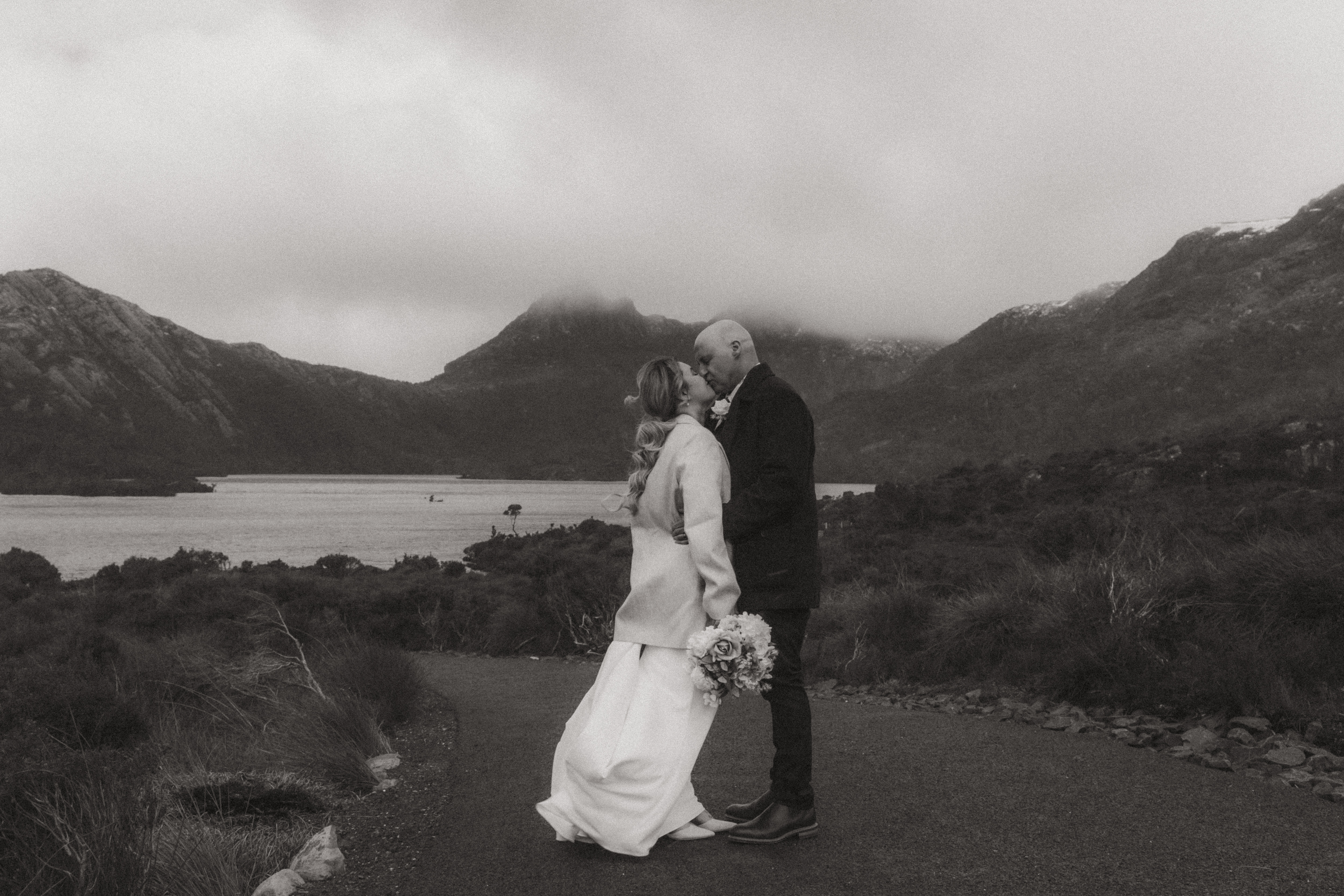
A sealed path beside the lake, in black and white, with the mountain in cloud behind. Kristy L Photography works from Latrobe on the north west coast of Tasmania and builds her elopement, proposal and vow renewal collections around Cradle Mountain.
Not finding the word permit anywhere on a photographer's site tells you nothing at all. Plenty of people who sort this out every season have never thought to write it down, and one email settles it. Ask who applies, and whether the application stretches to a celebrant.
Where the road gets rough
The sentence I would most like to see on a photographer's site is about the road. Travel usually gets written as a distance: so far included, a rate per kilometre after that. A distance says nothing about the surface, and the last stretch to a trailhead is where a hire car gets into trouble.
A better version tells you what the last stretch of road demands of a car. Included travel runs as far as an ordinary car can sensibly get, and past that she will talk about the last few kilometres rather than refuse them outright. The distance turns up on somebody's invoice, and a photographer who has said where her limit falls has decided it before you ask. A limit written that way is one you can check tonight, against the place you already have in mind, without sending anybody an email.
Then say how far you are willing to walk, and say it early. Some photographers ask first, and open with the kind of country you want and how much walking you would like to do. Not a thing to discover in a car park in the dark, but a distance you say out loud, months ahead, to the person carrying the heaviest bag on the hill.
Standing on a granite boulder in the snow, in a navy gown. Mandy Lamont Photography works the Snowy Mountains from Jindabyne, with published weddings at Thredbo, Perisher and Dead Horse Gap.
Somebody behind the picture you saved knew when the sun would clear the ridge, how long the walk takes with a dress in a bag, what the last stretch of road does to a hire car, and who had the permit. None of it is in the frame, and all of it is why the frame exists. So do not open your first message with the date. Open with the walk. Then go and buy the boots. You will need them either way.
Photographers who plan the day as well as photograph it, and photographers who work in the mountains
Kelsea Midson is a wedding and elopement photographer based at Sheffield in Tasmania’s north west, under Mount Roland and at the doorstep of Cradle Mountain.
Kristy L Photography works out of Latrobe on Tasmania’s north-west coast, and Cradle Mountain is the backdrop she returns to again and again — the boat shed on the…
Louise Brown works out of the country near Tamworth, and her pictures are full of the New England North West: couples in long grass at sunset, a bridal party…
Josh Beames works from Warrnambool at the western end of the Great Ocean Road, and describes himself as a landscape, wedding and corporate photographer.
Mandy Lamont came to the Snowy Mountains the long way round: she lost her job in Melbourne in the GFC, took a winter season at Thredbo shooting on the mountain, and…
Rachael Emmily photographs weddings from Albury-Wodonga across North East Victoria, the Rutherglen wine region, the King Valley and the Victorian High Country.
Kaylah Meredith photographs weddings out of Bathurst, in the middle of the Central West. She calls herself a chaos coordinator turned photographer and a mum of…