A venue will say yes to your ceremony on the phone. Whether the kitchen, the room and the price list were built for it is a different question, and it was answered in writing long before you rang.
By The Little Wedding Planner Editors · · Updated 10 September 2026
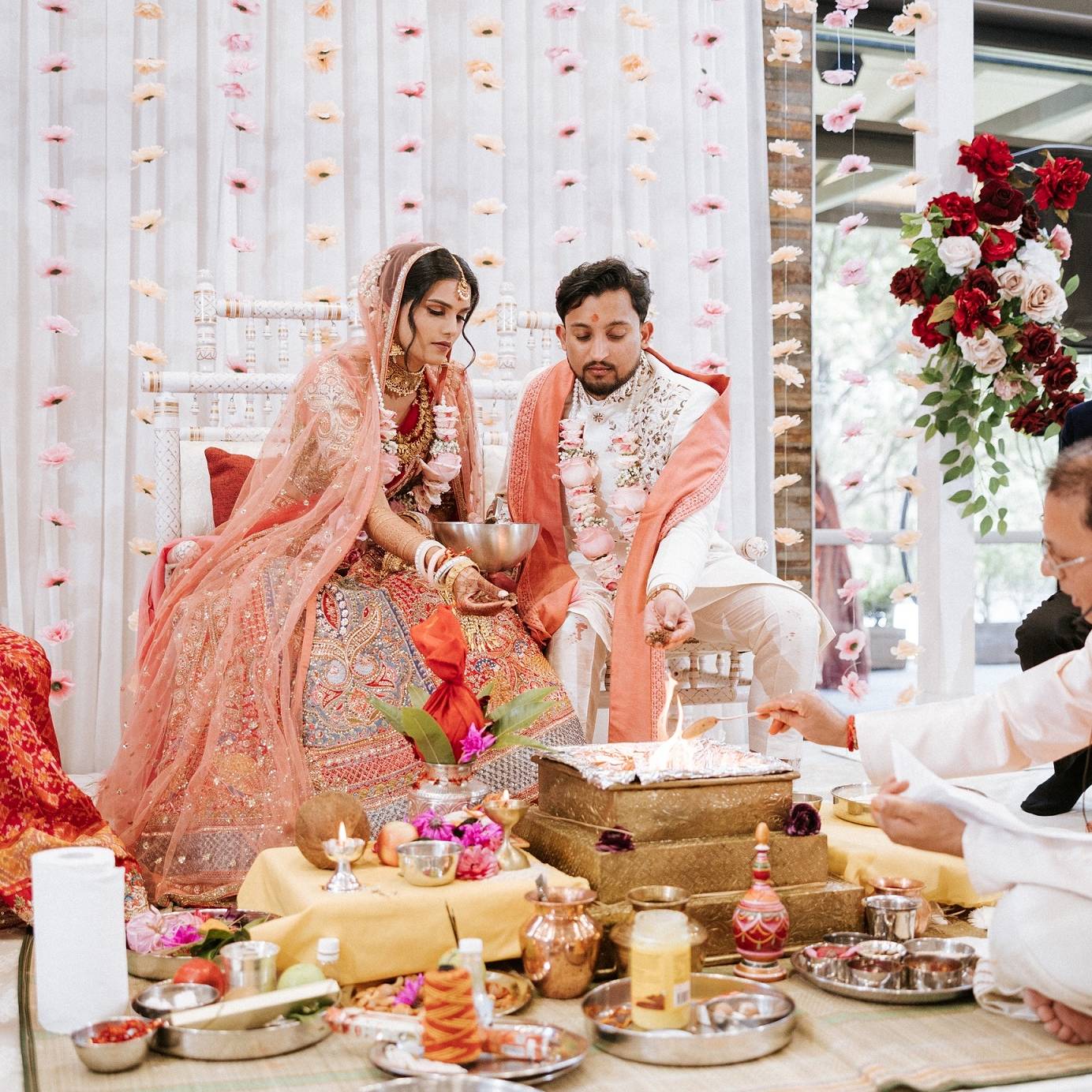
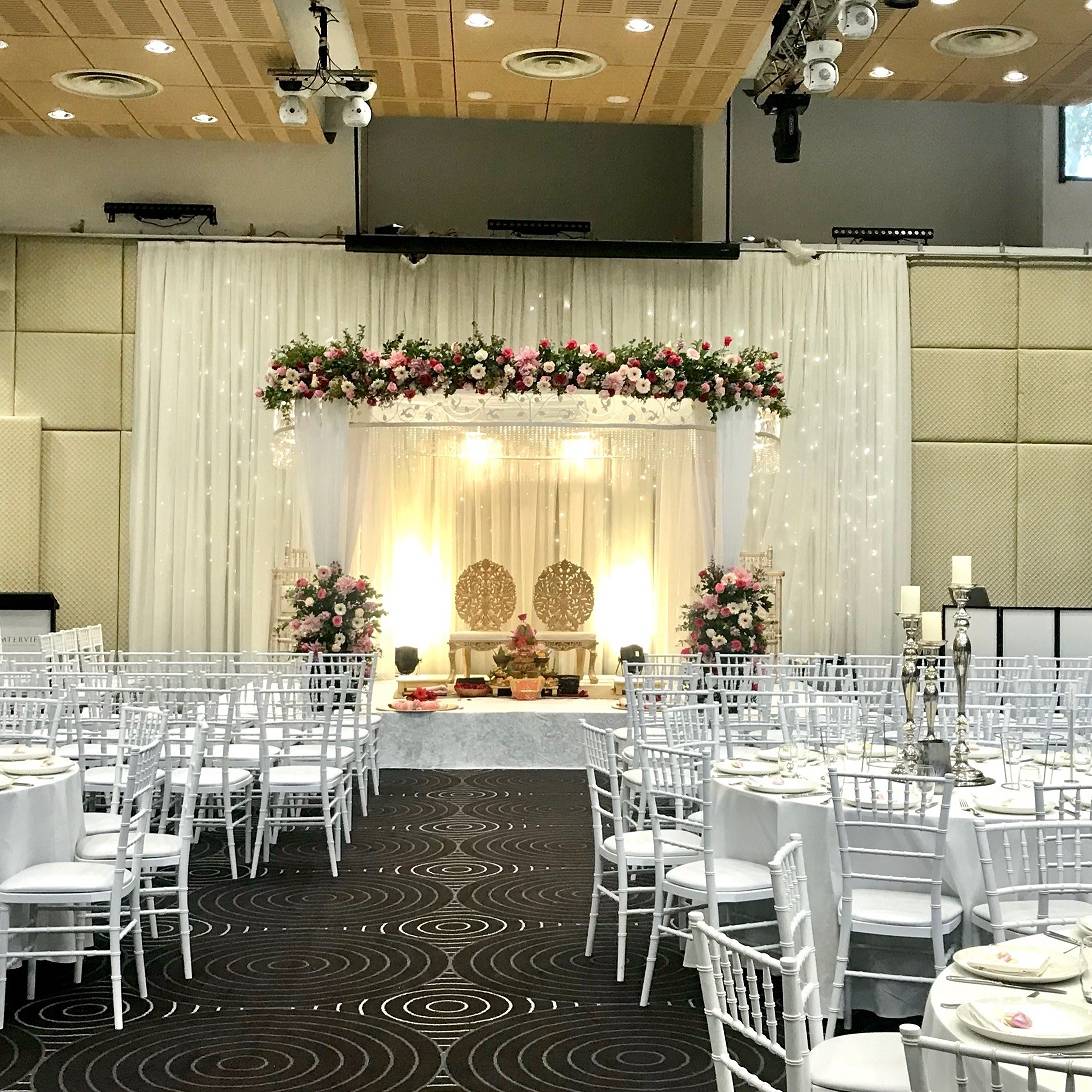
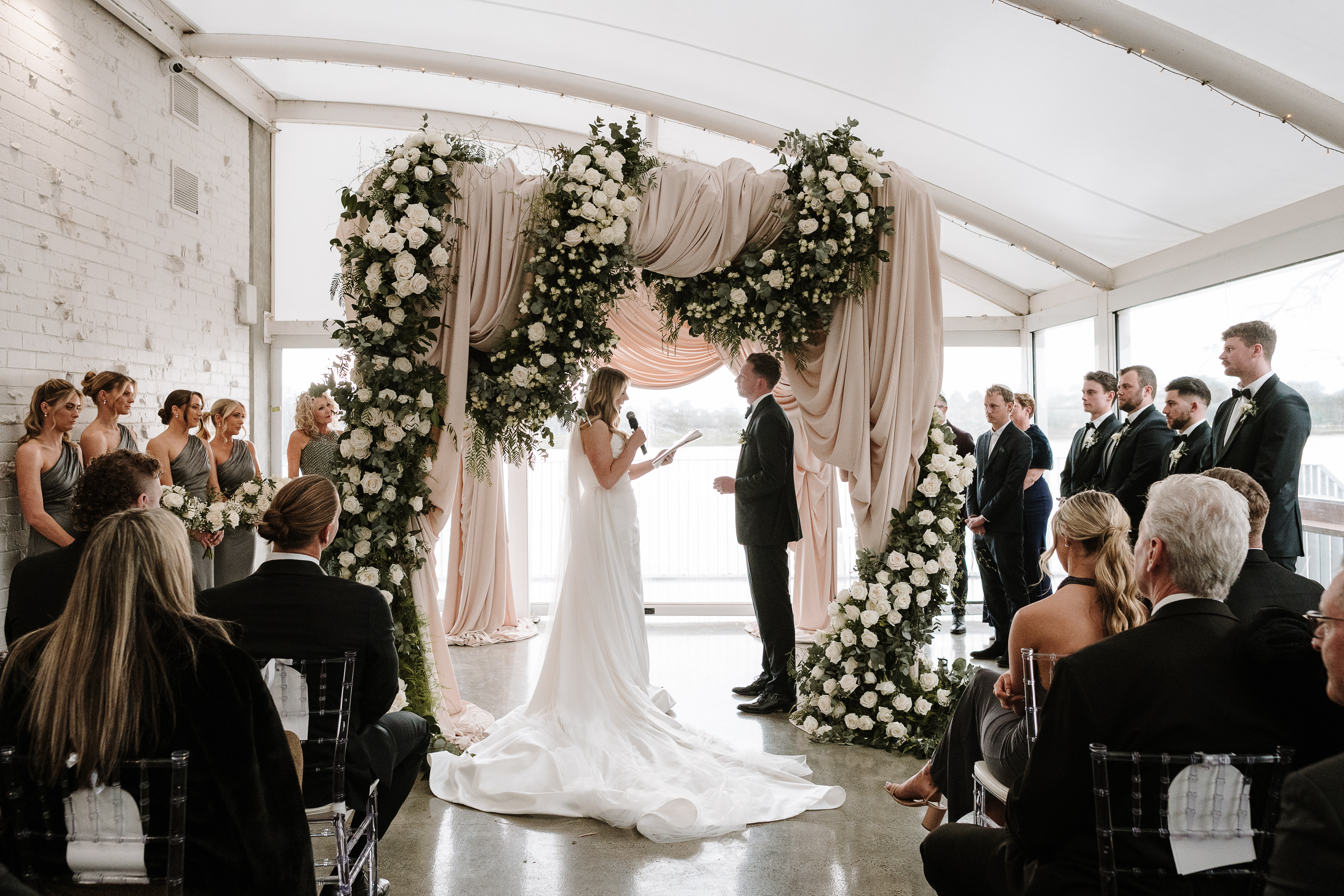
WatervieW in Bicentennial Park at Sydney Olympic Park, part way through a Hindu ceremony. A fire lit indoors is a fire somebody has already worked out where to put.
The argument
Willingness to host a cultural ceremony is not the same thing as a building already set up for one, and the difference has been written down since long before you enquired. The package list, the notice period on the kitchen and the way the ceremony itself is priced will tell you more than any phone call can.
You have the number in front of you and you have practised the sentence. There will be a Hindu ceremony in the morning, or a tea ceremony, or a nikah, or a poruwa on the lawn, and you would like to know whether that is all right here. It comes out faster than you meant it to.
The answer is warm and immediate. Of course. Absolutely. We can do that. And the person saying it means every word.
You asked whether they would, and they said they would. What you needed to know is whether they already do, and only one of those was settled before you picked up the phone.
What they already do is not on the page with the photographs. It is written down in three places: the list of what the venue sells, the paragraph about who is allowed to cook, and the price on the ceremony itself.
It is in the package list
Start with the dullest thing a venue publishes: the list of what it sells. Somebody wrote it, put a price behind it and has to answer the phone about it, and my bet is that nothing stays on a list nobody books.
So read the names. Some venues sell the ceremony and the reception as two cultural packages, sitting alongside the general ones rather than tucked underneath them. Some name the days before the wedding, the sangeet and the henna, as things you can book. A few name what happens inside the ceremony itself: the poruwa, the dance entrance that comes through the door with drums behind it. An entrance with drums in it means a door, a corridor width and a start time that has to hold, and I doubt anybody writes one into a package before they have watched it happen.
Leonda By The Yarra in Hawthorn publishes an Indian package and a Sri Lankan one separately, and prints the poruwa and the Kandyan dance entrances inside the second of them.
Other venues list the structures their staff will set up instead: a mandap, a poruwa, a chuppah, the table for a tea ceremony. Not what they will cook for you, but what they will build.
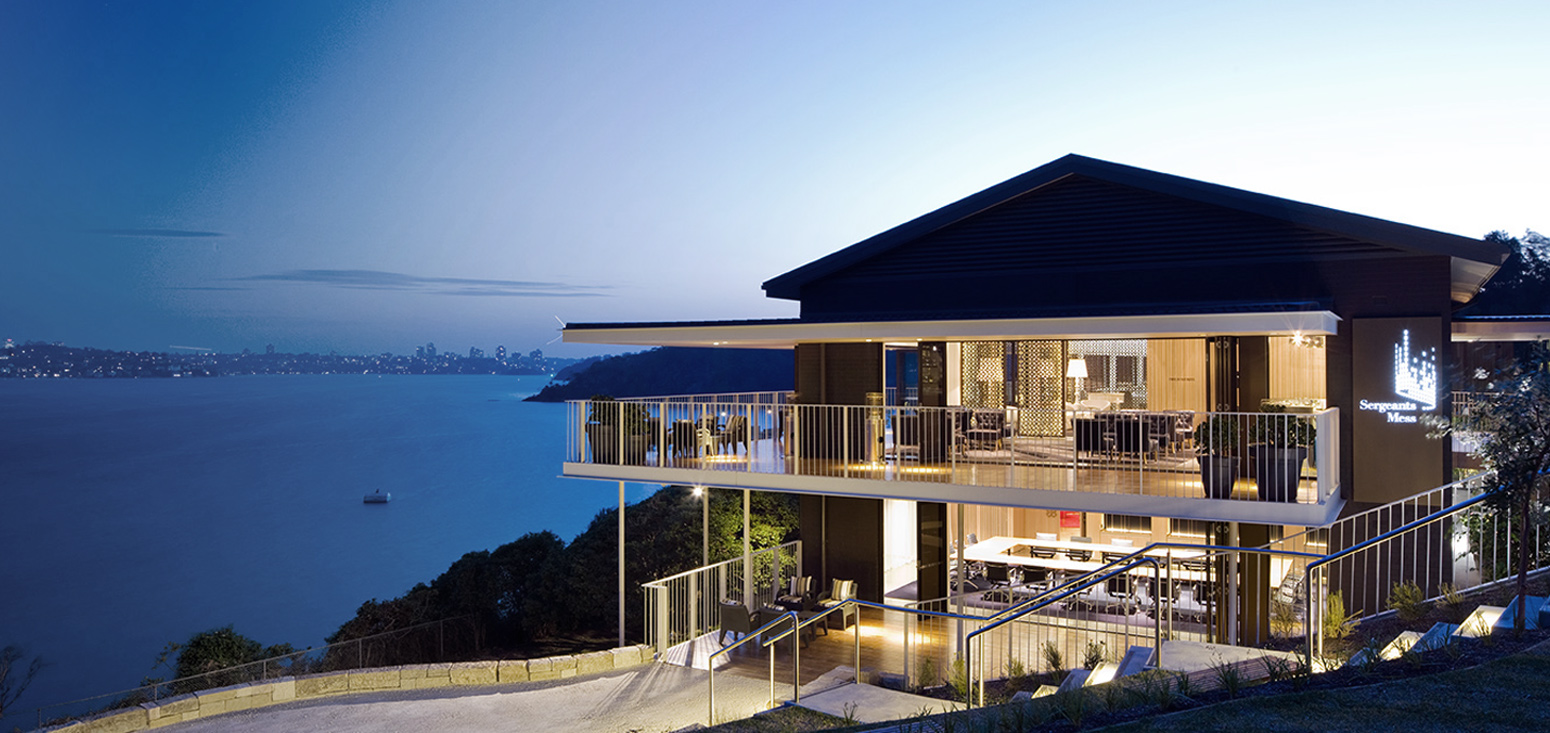
Sergeants' Mess at Chowder Bay on Sydney Harbour. Among the things it lists doing are mandap and poruwa setups, chuppahs and tea ceremonies.
A first time is not a worse wedding
A room can hold a wonderful wedding the first time it holds a mandap. Nothing in a package list says otherwise. The people who run venues run hospitality, and an ordinary Saturday is harder work than this. Every one of those lists started with a couple who wanted something that was not on it yet, and being that couple at a good venue is a fine thing to be.
The difference is not skill. It is how many decisions are already made when you walk in, and who has to make the rest. If it has not been done before, the decisions are yours. Where the fire sits and what it stands on. Who isolates the smoke alarm. How long the floor takes to go from rows of chairs to round tables, and when the drummers can get in and out again. Every one of those has an answer, and each answer arrives in your inbox in the last month, on top of the seating and the shoes.
If it has been done, that list was settled years ago by people paid to settle it, and you inherit the lot without ever seeing it. In the month before a wedding, that is worth a great deal.
The cooks need warning
The second place to look is the kitchen, and what the people who cook need from you is time. Some venues publish how much warning they want for particular food, in plain words, on the wedding page, where you can read it before you ring anybody.
At first glance that can look like a venue making things hard. My reading is that somebody there has already made the calls and found out. They put the answer where you will see it, rather than leave you to learn it in the week of the wedding. No food is being treated as difficult. They are telling you what they need in order to get it right.
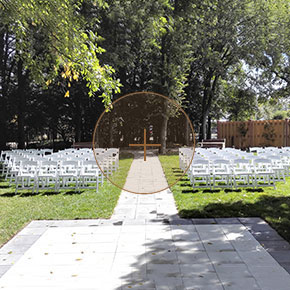
The Elm Park garden at The Carrington Inn Bungendore. The inn publishes what its kitchen needs before you ask it: a fortnight for most special diets, a month for kosher and halal.
The other good answer comes from venues that are happy for somebody else to do the cooking. Some publish that you are welcome to bring the caterer of your choice. Some will cook your wedding themselves, or put the use of their kitchen into the hire fee and let a caterer you have chosen work in it. Both have made room for cooking that is not their own, and if your food has to come from a particular kitchen, that is the whole answer.
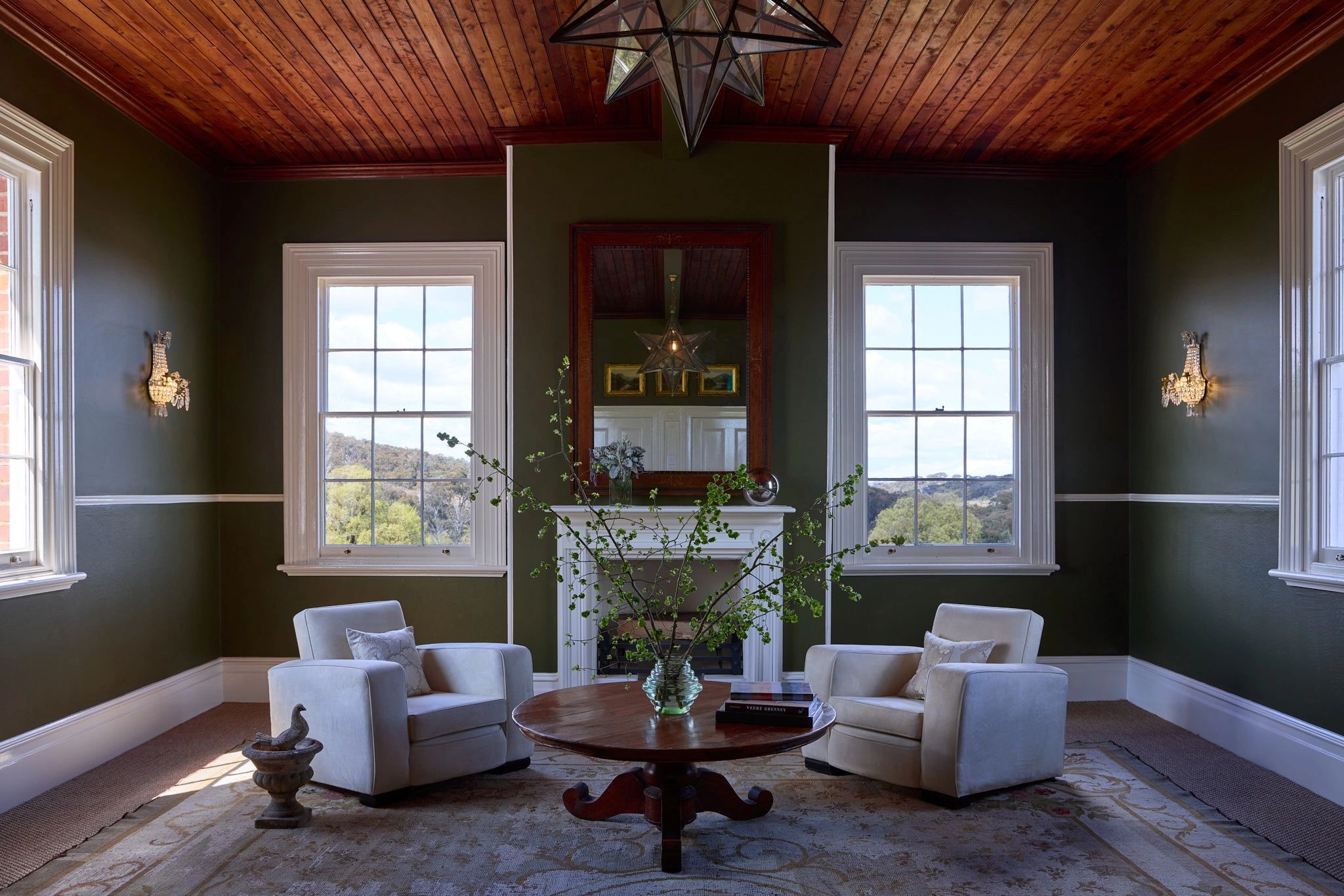
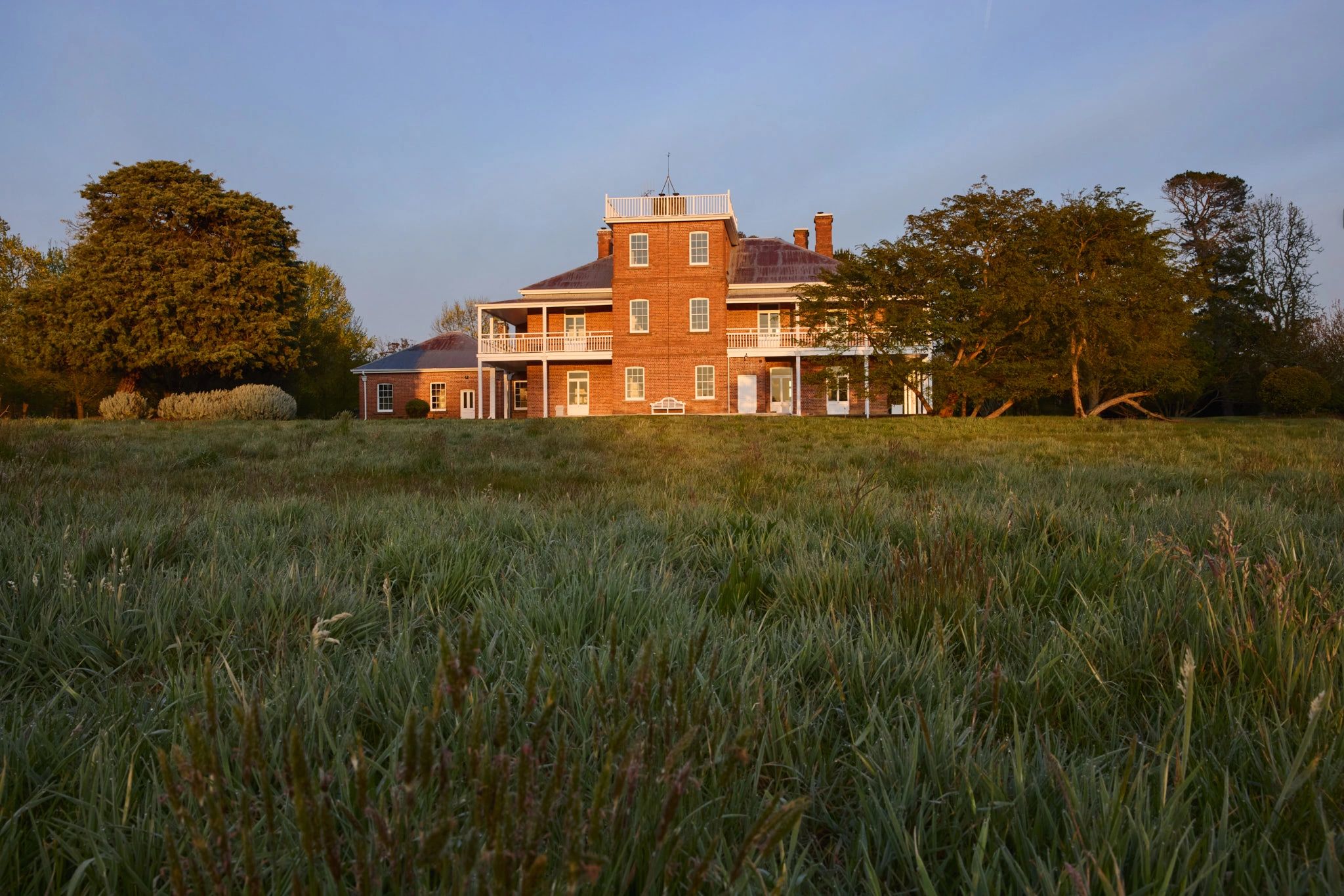
A room at Highclere Farm Yass. Catering here is external and the farm says so: engage your own choice of caterer, or take one of the three it works with.
The room has to turn over
The third is the price on the ceremony, and it is really a question about the schedule. A ceremony and a dinner are two different events, and in one building one room has to be both. Ceremony seating faces one way. Dinner does not. Between them a floor of chairs becomes a floor of round tables, and people you will never meet do it while your guests are outside with a drink.
You can tell from a price list whether a venue counts that turnover as real work. Where the ceremony is sold on its own, with chairs and a start and a finish time against it, somebody has costed the turnaround and agreed in advance that your day holds more than a dinner. Where it is a line inside the dinner package, you cannot tell from the page who does it, or when.
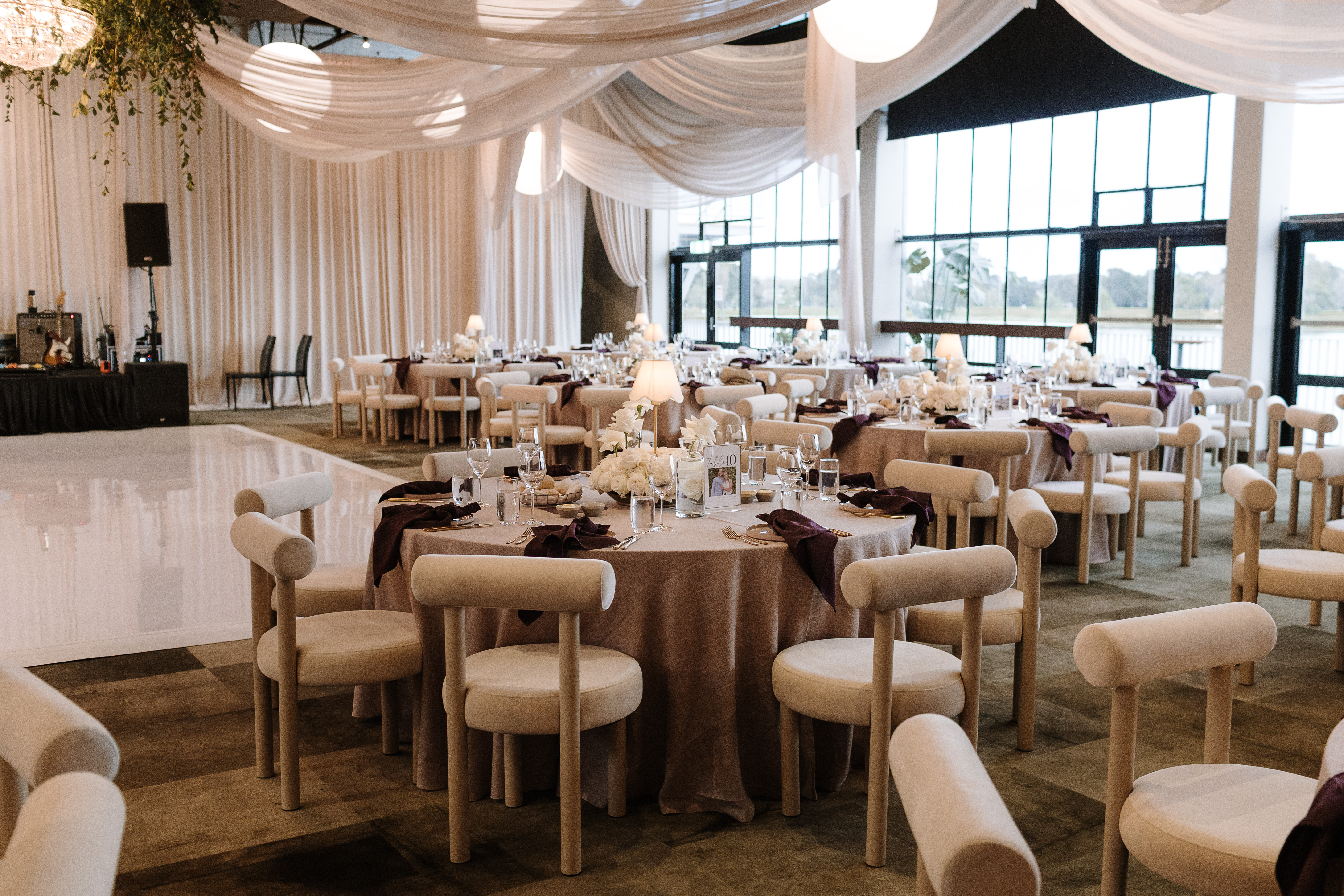
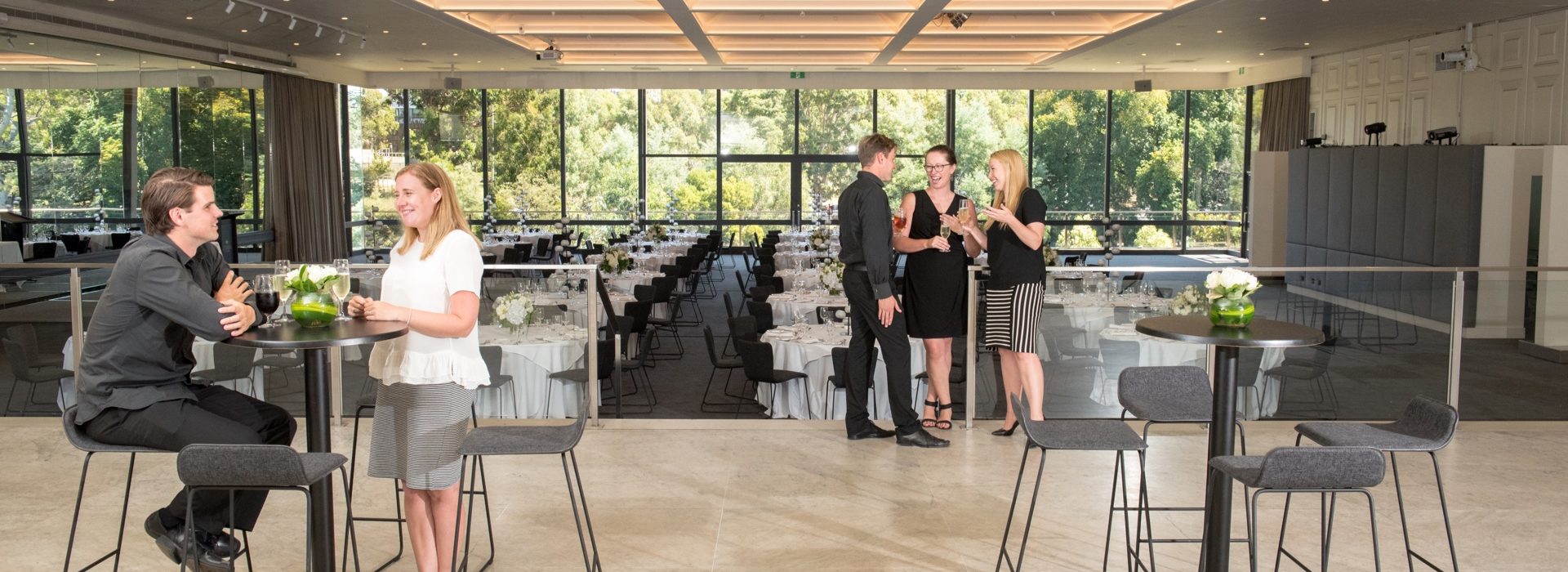
Lakeside Pavilion at Albert Park, set for dinner beside its dance floor. The ceremony here is sold as a product of its own, in tiers, and the first of them is two hours.
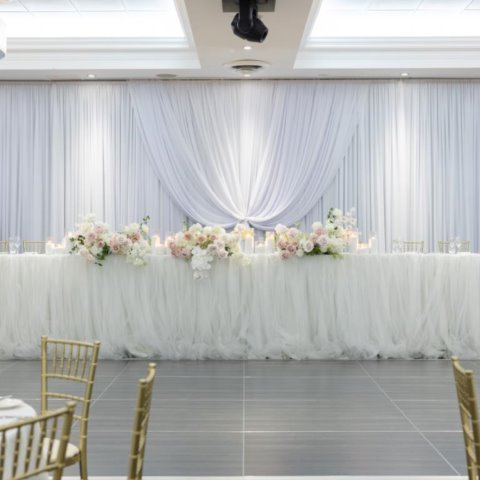
The strongest version of this I have seen is a photograph rather than a sentence. One room, in one frame: ceremony chairs in rows down one side of the aisle, the banquet tables already laid on the other, cutlery down. The room has been set up for both jobs at once, and somebody chose to publish the picture. Every venue is making an argument about how your day should go. This one is arguing that the ceremony and the dinner belong in the same room, and that its own staff will do the work in between.
The Park Room at WatervieW in Bicentennial Park, holding a ceremony and a dinner at once. This is the photograph the venue chose to publish of itself.
The yes was true
The person on the phone meant it, and on the day they would have worked very hard to make it so. But a phone call is a promise about what somebody will do on the day, and what you needed to know was what has already been done.
What you wanted was in writing all along: the package list, the warning the cooks want, the price on the ceremony. It has been sitting on the same website since before you were engaged, in the part no venue puts on the front page, four clicks in. Nobody is going to read it out to you on the phone. Go and find it.
WatervieW in Bicentennial Park is western Sydney’s grand-scale celebration house — a light-filled venue set amongst the lakes and parklands of Sydney Olympic Park.
Lakeside Pavilion stands on Lakeside Drive at Albert Park, directly overlooking Albert Park Lake with the Melbourne skyline rising across the water — ten minutes…
Wedding VenuesVisit in person
View profile
Murrumbateman / Canberra District, New South Wales
The Carrington Inn has stood on Ellendon Street in Bungendore since 1885 — a village inn twenty-five minutes from Canberra with twenty-six suites, a tavern, two…
Leonda By The Yarra is one of Melbourne’s great wedding institutions — a riverbank landmark at Hawthorn, four kilometres from the CBD, where couples have celebrated…
The Epping Club is northern Sydney’s all-inclusive wedding powerhouse — a freshly renovated events venue whose ‘Gone with the Wind’ staircase, chandeliered Grand…
Wedding VenuesVisit in person
View profile
Murrumbateman / Canberra District, New South Wales
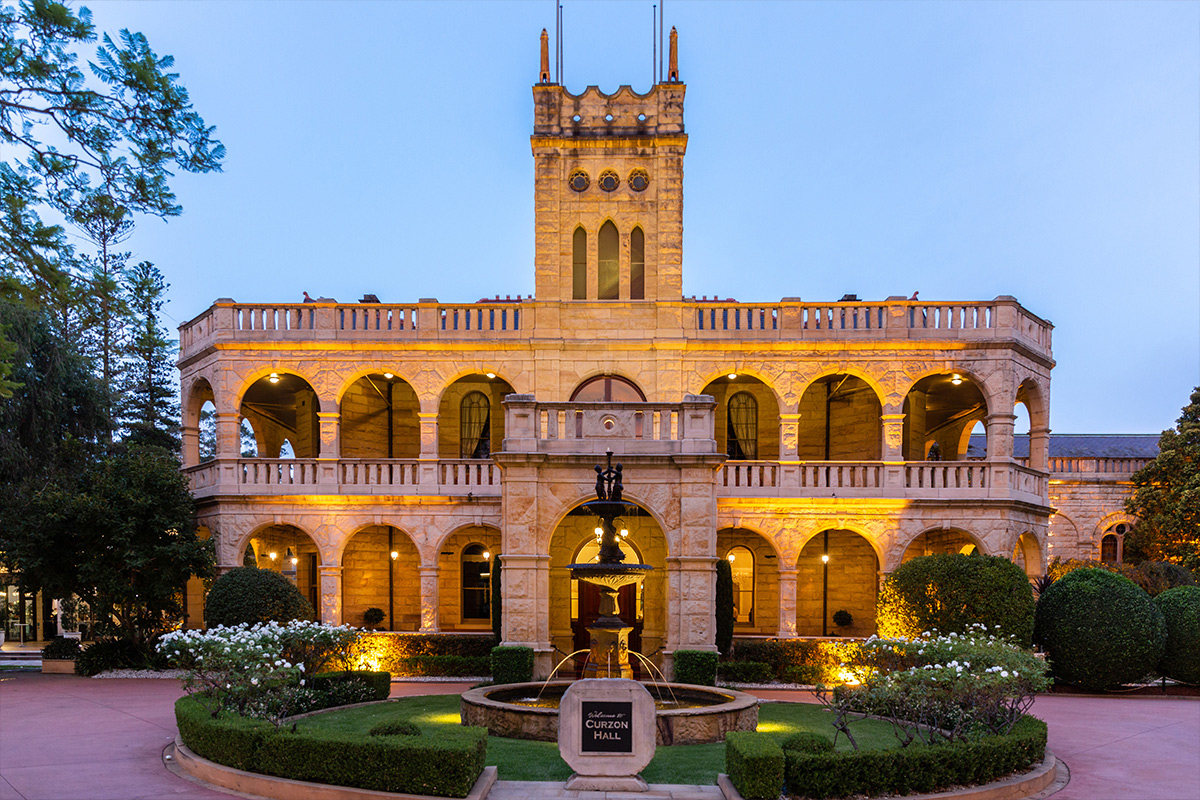
Navarra Venues is Sydney’s grand-wedding dynasty — a family group whose five venues include Curzon Hall, the city’s fairytale 1800s castle in Marsfield, and Le…
Doltone House is Sydney’s best-known luxury wedding venue group — a family hospitality house that has set the standard for grand celebrations for over 55 years.
Flaxton Gardens perches on the Blackall Range escarpment at Flaxton — a hinterland icon whose lawns fall away to a view of the entire Sunshine Coast coastline.