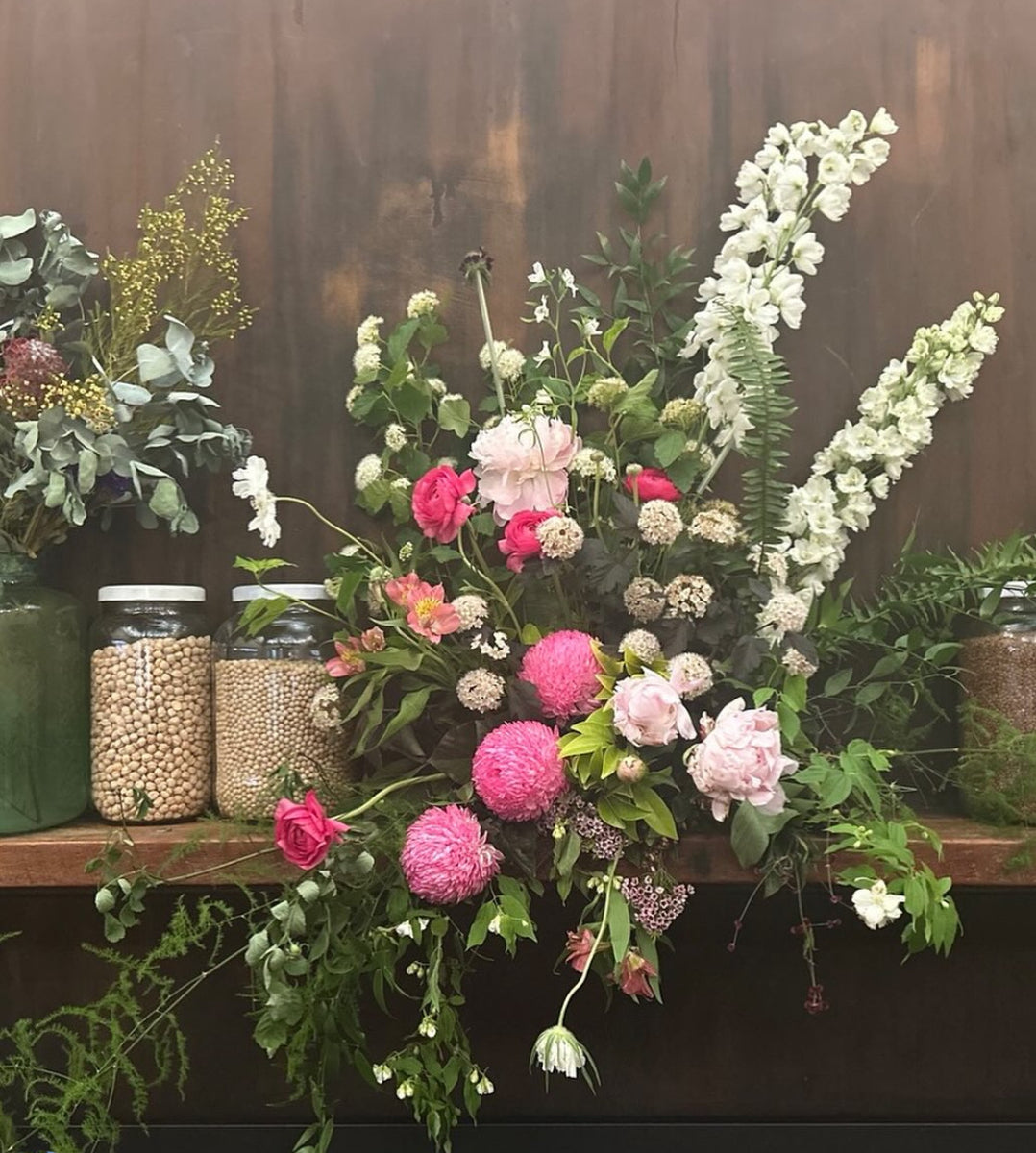
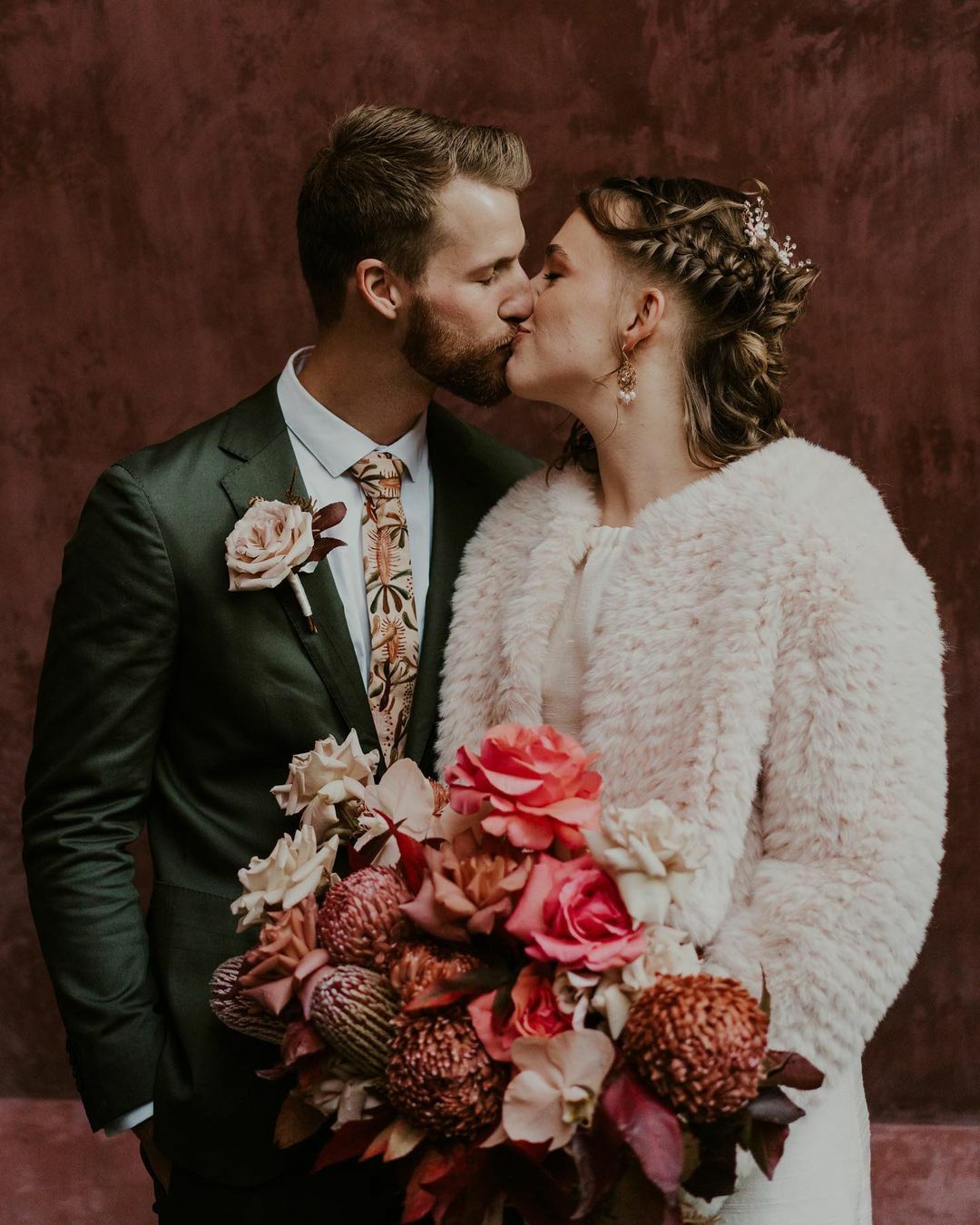
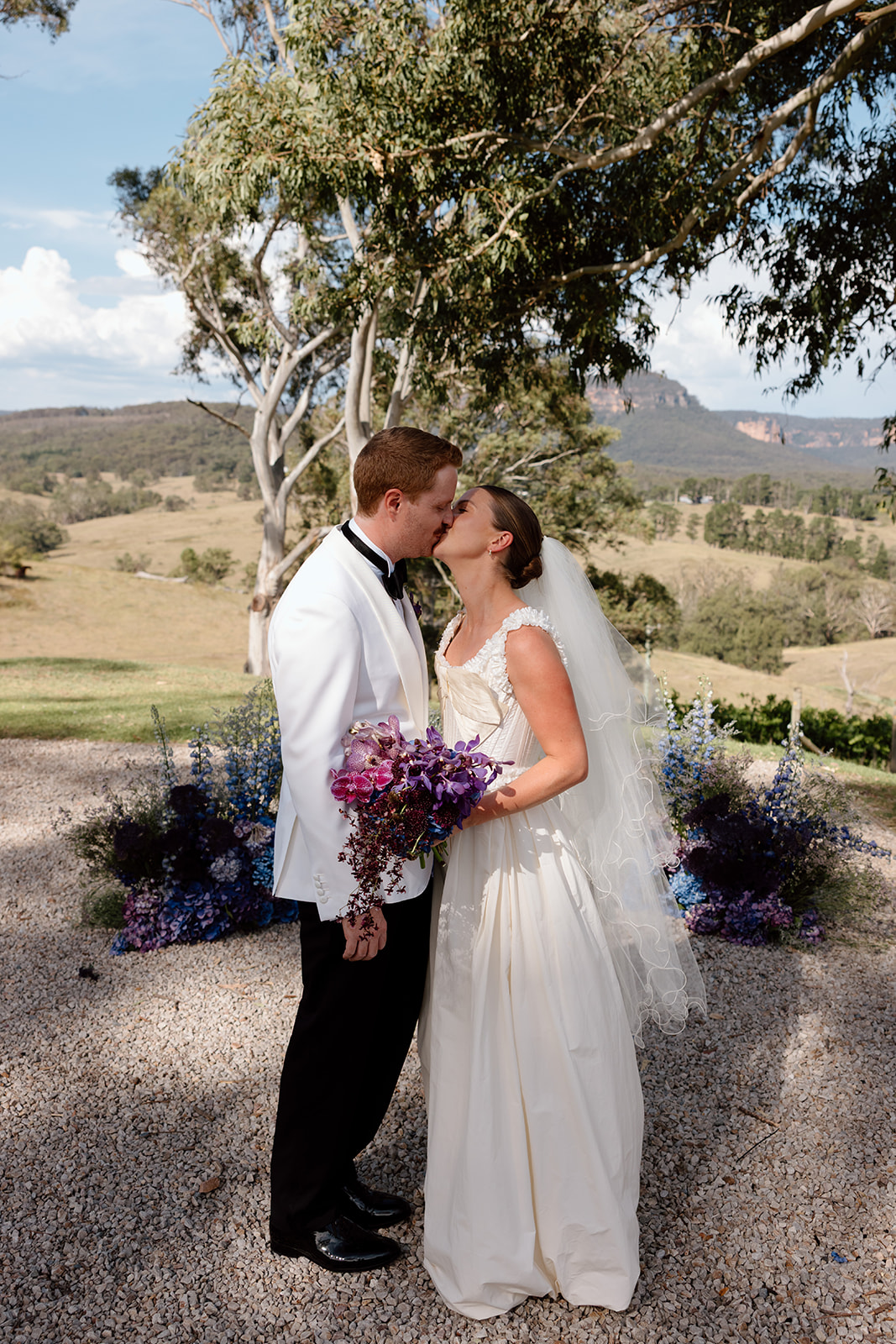
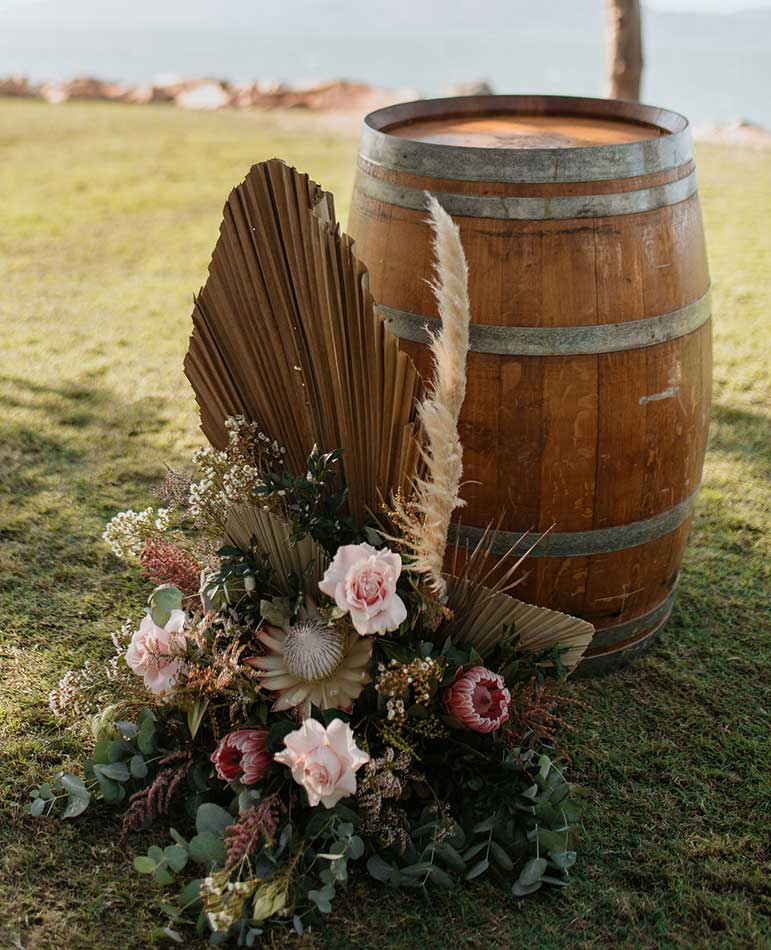
The peony is on the mood board. It is always on the mood board. That fat, blowsy, faintly ridiculous bloom that opens like a dropped ballgown and lasts about as long as a good mood. You have saved more photographs of it than of the dress. Your florist has seen those photographs before, more times than she will say, and has learned to smile.
Then the date comes up. March, because the venue had a gap. July, because that is when everyone could fly in.
In Australia the peony has a window rather than a season, and the florists here who publish a month put it in spring, most often November. A peony on your table in March has almost certainly been on a plane, and the plane is in your quote whether or not anybody writes it there.
The ones who write it down
A few studios put the month on the page. One South Australian studio runs a seasonal guide where most entries get a range. Dahlia from December to April. Hellebore from July to September. The peony gets one line and one month.
Peony - romantic and lush, available November
Another South Australian business, which runs its own flower farm down on the Fleurieu, has written down the sentence most of the trade leaves for a phone call.
Peonies are only available for a few weeks in mid-Spring (most often November) but the specific availability often changes from year to year, depending on how cold the winter has been
It is the second half that does the work. Not November. Most often November, with the winter holding a vote. That is a grower talking about weather, which no calendar can print in advance.
The calendars disagree
Now set the published guides beside each other, which is roughly what a couple does on a Tuesday night with nine tabs open, and watch the flower move around the year.
A studio in the hills behind Nambour names "Peony (November only)". One on the Mornington Peninsula sorts roughly 150 blooms by season with the months attached, and lists "Peonies (late Spring-early Dec)". A four-season Perth guide, around sixty blooms deep, files the peony under spring. A Sydney studio files it under summer.
None of these studios is doing anything wrong. Sydney is not Perth, Perth is not the Fleurieu, and the Sydney studio prints the caveat itself: "the seasonal availability of flowers depends heavily upon weather and climate conditions". A peony answers to the winter it has just come through, not to a calendar. But the couple with the tabs open is not handed a climate. She is handed the same flower in summer, in spring, and in November only, and nothing to tell her which one covers a Saturday in March.
Look at what the disagreement still agrees on. Spring. Late spring. November. Early December. Summer at the outside. Five states cannot settle the month, and not one of the six guides will give you March. They are quarrelling over the edges of a window they all treat as small, and your date is outside it.
One shop answers the question inside its own list. A Port Macquarie florist publishes month by month rather than season by season. May and June both read "Peonies (imported)". November and December carry peonies with no such note. Same shop, same document, six months apart, and the provenance printed beside the name.
Seasonal became a style word
Of the 176 florists here, 153 describe their own work as seasonal. Seventeen publish an availability guide: a chart, a calendar, a month-by-month list a couple could hold a date up against.
That gap is the thing to be annoyed about. Seasonal, as a studio applies it to its own work, has come loose from any actual month. It means loose, gathered, garden-ish. It means a look, and a look cannot be checked against a date. The date is the one thing you have already fixed.
Twenty-four of the 176 mention importing, freight or the flower market. Forty-seven mention growing locally. Those are claims made, not practices audited, and they overlap, because a studio can grow some of it and fly the rest. Twenty-four is a floor, not a measure: a shop that imports without saying so is invisible to a count. What the number counts is who raised the subject first.
The freight is in the quote
A Far North Queensland studio names roses, peonies and phalaenopsis orchids for one purpose only, which is to explain how far they have travelled.
the roses that you purchase in your local florist have probably been grown by a farmer in South America or Southern Africa, those Peonies that appear in the middle of June have most likely been sent on a first class flight from Japan
The word doing the work in that sentence is not Japan. It is flight. Somebody buys the seat.
A few studios say so before the quote arrives. Another Sydney studio sets it out in its booking terms: "Out-of-season flowers and imports such as phalaenopsis orchids carry a premium". A second far north shop answers the seasonality question with "there are many seasonal flowers, and a great percentage of Australia's flowers are imported", then names the blooms it cannot promise year-round, peonies among them, any of which may carry a surcharge. A Townsville shop needs one line: "We work with a wide variety of seasonal and imported blooms", bought from growers and importers across Australia.
A Canberra studio puts the sourcing and the money in one sentence and flinches at neither.
we will try our utmost to source your flowers locally but more often than not we do need to transport flowers in—seasons, geography and the financial climate all play huge roles in the costing
Transported in. The studio names no country and does not need to. What it does name is who pays. Seasons and geography move what a stem costs, the studio brings the flowers in anyway, and the couple absorbs the difference without ever seeing a line on an invoice that reads freight.
A Melbourne studio, which publishes no wedding price of any kind, has written down the rule underneath all of it. Set your heart on one particular flower and the quote goes up, because a specific stem out of its month means imports and substitutions. Its co-founder says it harder.
Control is the most expensive thing on a wedding flower quote
A peony in March is control. So is one exact shade, one exact stem, on one exact Saturday. The flower is not expensive because it is a peony. It is expensive because you wanted it in a month when having it means buying it a seat.
The ones who grow it themselves
A few businesses answered the problem structurally instead of arguing with it. One of them, in western Victoria, is a flower farm that turned into a florist rather than the other way round: established in 2018, more than 70 species planted on a property seven kilometres out of the nearest town, the stems cut from her own paddock. She calls those blooms pesticide free and available year round. That is her claim to make, and it is good only as far as she delivers.
Another arrived from the other end, adding a working flower farm at Jindera, north of Albury, in 2021: a florist that became one of its own suppliers. A Mudgee studio publishes the hedge instead of hiding it: "where possible we prioritise seasonal, locally grown blooms and partner with trusted growers". Where possible. Not always. That is what an honest sentence about sourcing sounds like.
Then the one that ought to end the argument. A mother-and-daughter micro flower farm at Richmond in Tasmania grows the stems and then designs with them. The varieties it names as its own are zinnia, scabiosa, poppy and lavatera. The peony is not among them. It turns up in the terms as an add-on: "Premium flowers such as roses and peonies may incur an additional fee", beside "Specific flower varieties cannot be guaranteed."
A farm cutting its own stems that week still charges a premium for a peony, and still will not promise the variety. If the grower in her own paddock will not guarantee it, the mood board on your laptop cannot do it for her.
Ask for the month
An imported peony is not a scandal. It is a beautiful flower, and a florist who buys one for your February wedding is doing exactly what you asked. This trade is full of people who are up at four in the morning so a bouquet is cold and perfect when the cars arrive, and who eat the difference when a crop comes in short. The argument is not with them. It is with the word seasonal. Nobody makes a shop attach it to a month, so the month reaches you late, inside a quote, inside a conversation nobody told you to start.
So start it. Send the photograph, and send one question with it. In my month, in my city, is this stem grown here or flown here, and what does that do to the number at the bottom? Ask it in writing, and the answer will tell you more than every gallery you have scrolled through since the engagement.
You can still have the peony in March. Just know that it is flying, and that the seat is on your bill.