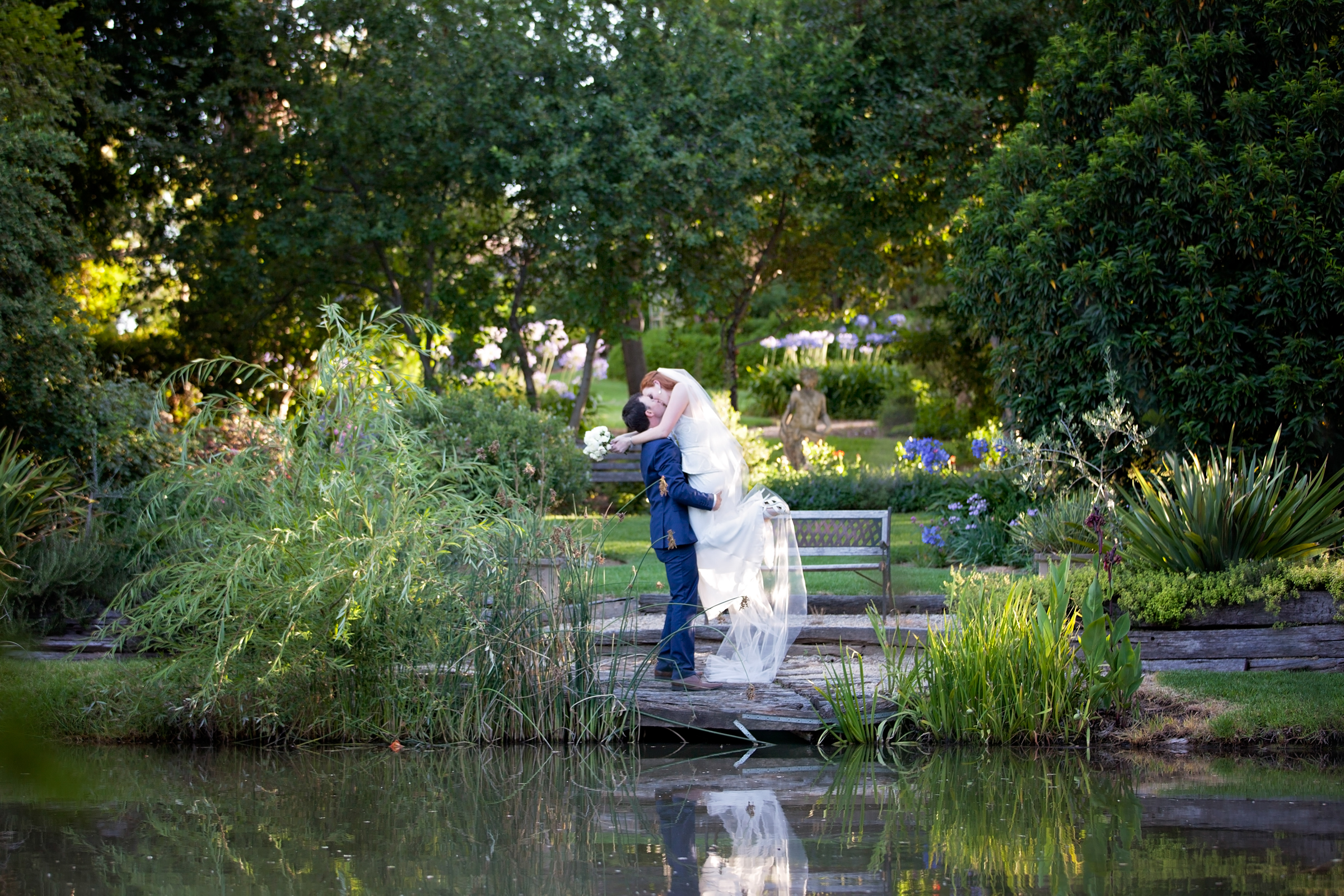
Wheelchair accessible is a tick box, not a route. The best venue pages name the one part of the property a wheelchair cannot reach, and that is the sentence to look for.
By The Little Wedding Planner Editors ·
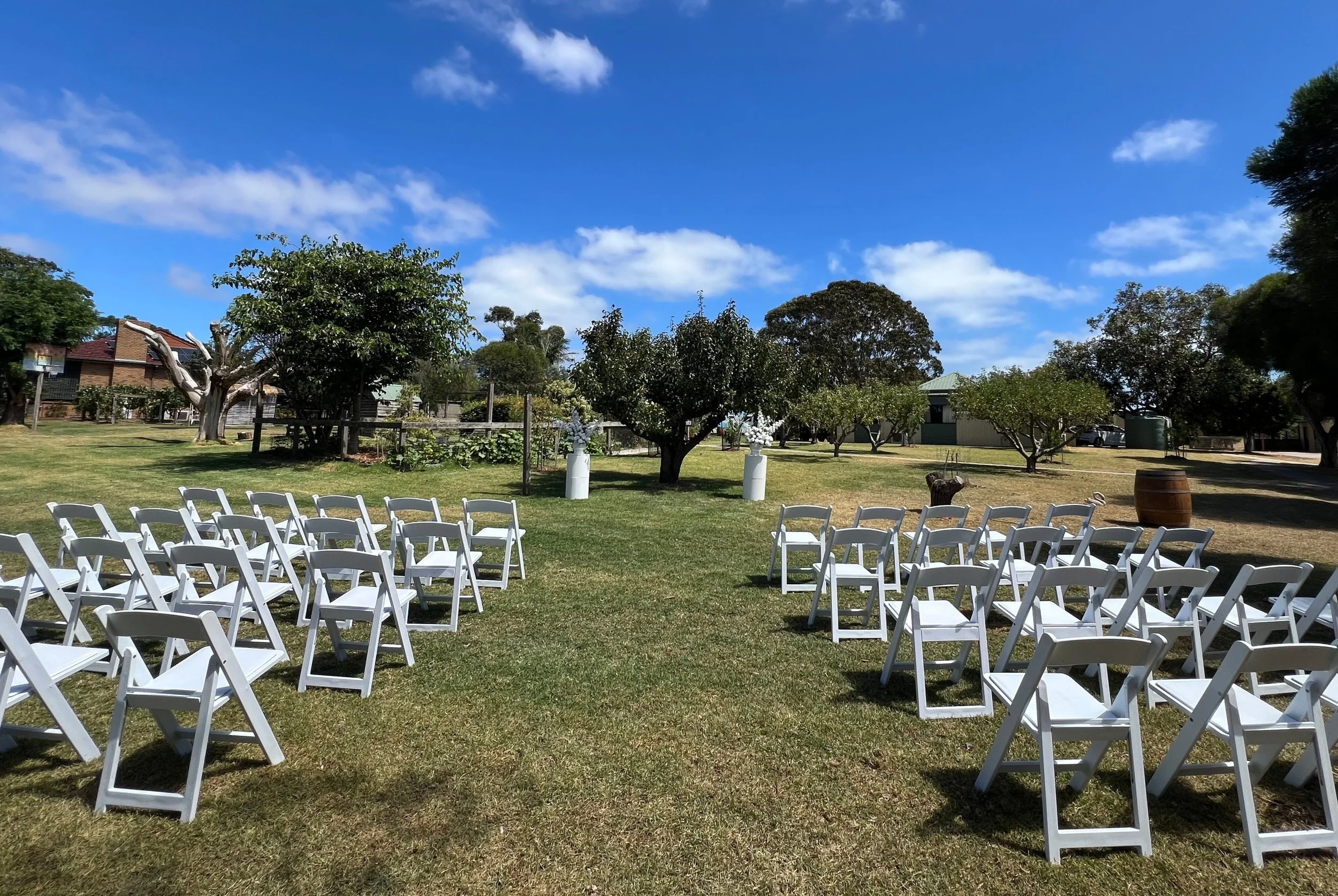
The grassed amphitheatre at Albany's Historic Whaling Station at Discovery Bay, in Western Australia. Its July 2024 accessibility guide publishes level or ramped access from the car park, and names the one part of the site, down stairs inside the historic ship, that a wheelchair cannot reach.
The argument
Access at a wedding is a route rather than an adjective: a car park, a surface, a chair, a toilet, a dance floor. A tag on an amenity list is a good sign rather than a plan. The pages a guest can plan a day from do the harder thing and name what is not accessible.
There is a person on your list you have not thought about properly yet.
Your nan, who is fine, honestly, as long as it is not far. Your dad, eighteen months after the stroke, who walks well now and will not use the stick in photographs. Your friend who uses a chair and has spent her whole adult life ringing ahead. Somebody pregnant. Somebody on crutches by then, because it is nine months away and somebody always is.
You look at the venue's page and there it is, on the amenity list, between the dance floor and the free parking. Wheelchair Accessible.
Good. Accessible from where, to what, across what, and to which of the four places your wedding is actually going to happen in?
A wedding is a route, not a room
Nobody arrives at a wedding and stops. They arrive in a car park, cross some ground, sit down somewhere for half an hour, get up, move to a second place for drinks, move to a third for dinner, find a toilet twice, and at some point stand near a dance floor. That is five or six separate journeys, and a two word tag on an amenity list is a claim about one of them at most.
Venues do write it down: a ramp, a lift, an accessible bathroom, accessible parking. Somebody sat down and typed that, and a venue that bothered to write Accessible Parking has thought about where the car goes. It tells you the subject came up, which beats silence. It does not tell you the place is accessible, and a venue that has never written the word down has not told you anything either way.
But a tag answers a narrower question than the one you are asking, because the thing that stops people is almost never the front door. It is the lawn between the car park and the chairs, soft after a wet week, in heels or on wheels. A venue can be perfectly wheelchair accessible and still have that lawn.
Chairs on the grass at Ripples n Tonic Farm on Phillip Island. The farm publishes that all its cottages are fully accessible and that it keeps accessible equipment on hand.
Which is why the pages worth reading twice do something harder than saying yes.
The sentence that names what you cannot reach
A visitor attraction on the coast outside Albany hires out its grounds for weddings, and publishes an accessibility guide dated July 2024 that reads like somebody walked the site with a tape measure. A drop off zone. Level or ramped access from the car park to the entrance. Accessible toilets. Free wheelchair hire, which is the line that tells you they have had the conversation before.
Then the sentence that makes the whole document trustworthy. The interior of the historic ship on the site is named as the one part of the property that is not accessible, because you have to go down stairs and steps to get inside it.
That is the standard, and what it costs is a walk round with a notebook. A venue that tells you where the wheels stop has told you the truth about everywhere else on the page, and you can plan a day from it. Not every place can get there, and a guide is real work for somebody who is also doing the invoicing and the mowing. Some properties cannot be made flat at all, because a heritage overlay sits over the step at the door, or because the paddock runs down to the water, which is the reason you liked the photographs. That is not indifference. It is a building, and buildings take years and a great deal of money to change.
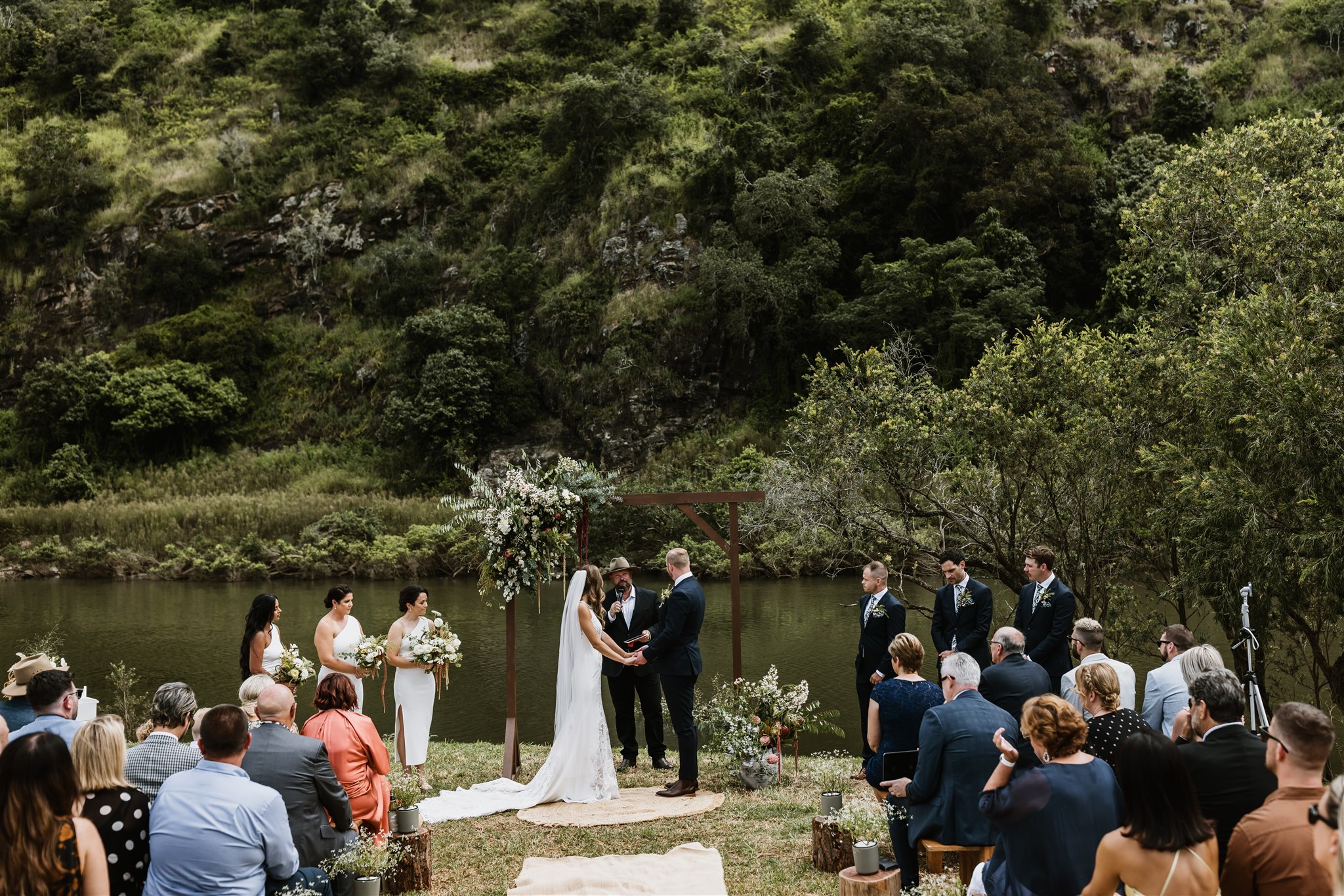
A ceremony on the river bank at Longview Farm near Port Macquarie. The farm publishes accessible parking, a ramp and its accessible bathrooms in the same list as the dance floor.
So the most useful page is not always the one that says yes. Some publish a no with the route attached: not wheelchair accessible as such, they say, but staff will walk you round, and it means the grass, the gravel path and the side door rather than the front steps. No detour is far. There is an ambulant toilet with easy access to the restaurant, and the two closest car spaces are held for customers who use a chair. That is a no, a workable yes, and the exact cost of the long way round, in distance and in dignity. A person who uses a chair can decide from it in fifteen seconds. She cannot decide anything at all from the word accessible.
Others volunteer the limit where nobody would have asked: one line on a page about cottages and acres, saying access across the property is currently difficult for a wheelchair and that they will be reviewing it. Somebody decided a family should find out in September rather than in March, after a three hour drive with a chair in the boot. That is not a venue failing anybody. It is the most generous thing on the page.
The detail that gives it away
You can usually tell in about thirty seconds, and the tell is specificity.
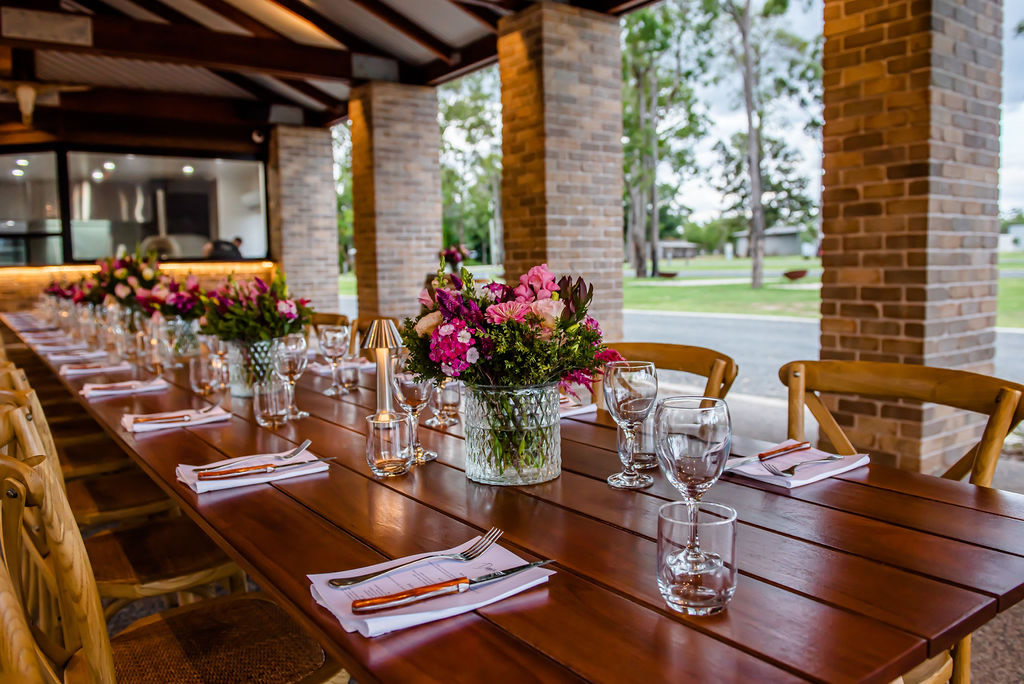
A table set under the pavilion at Splitters Farm in Bundaberg. The farm publishes a large accessible bathroom with grab rails and a shower seat, and a count of its disability parking spaces.
A Phillip Island farm publishes that all of its cottages are fully accessible, that it is stocked with accessible equipment, and that the only thing you need to bring is your own sling. A sling. Nobody writes that sentence unless they have hosted the guest, watched the transfer happen and worked out what they could not supply.
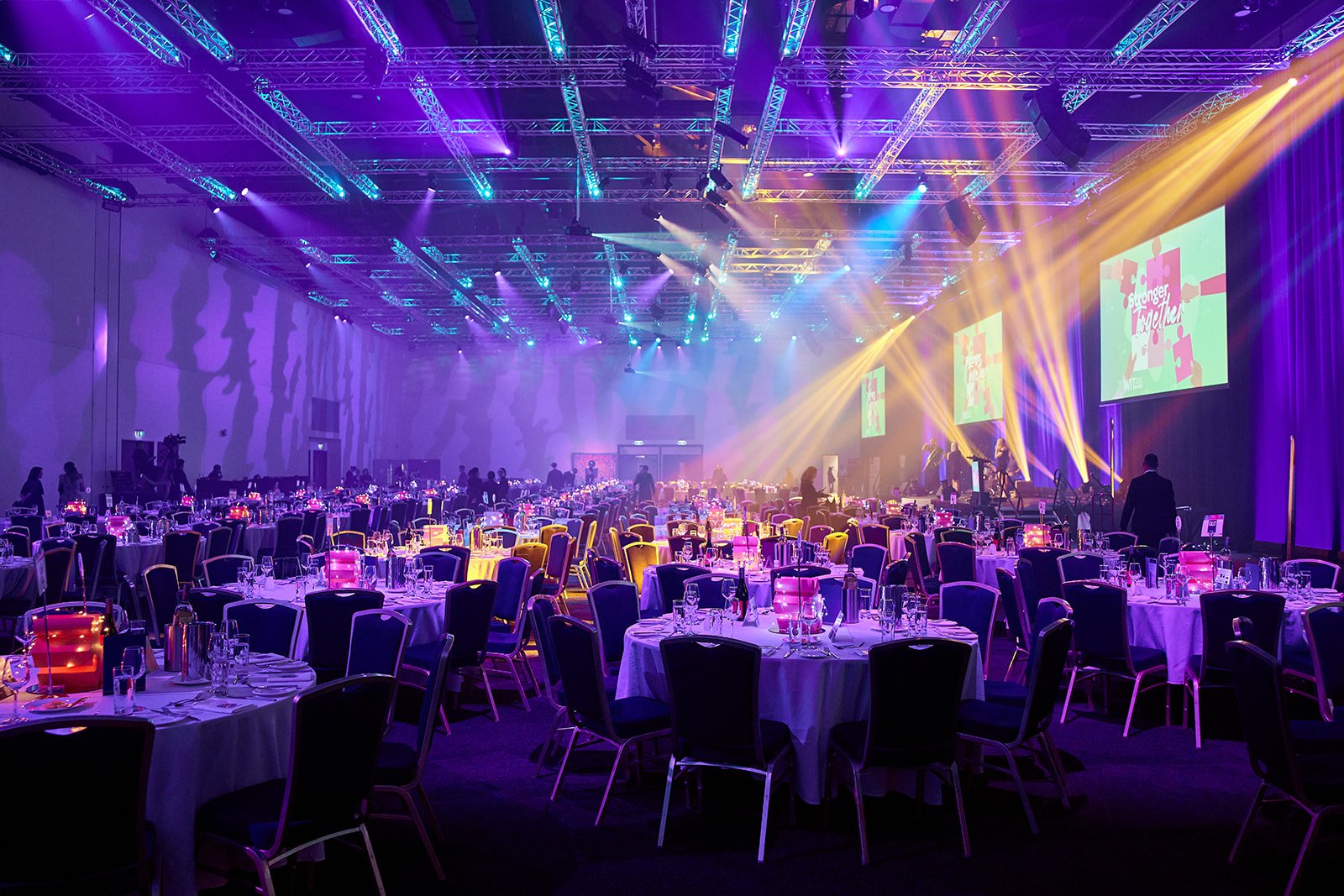
A large Brisbane events venue puts an assisted hearing loop on its amenity list. Not every guest who will miss half of what is said is on wheels, and a room that treats hearing as equipment rather than luck has thought about the person at the back of it. Neither line was expensive to publish, and both are the difference between a guest coming and a guest making an excuse.
Then there is a second tell, and it needs no reply to an email. Open the venue's own gallery and stop looking at the couple. Look at the ground. The surface under the ceremony chairs. The step at the door behind the bridal party. The path in the portraits, and whether the guests are on it or beside it on the grass.
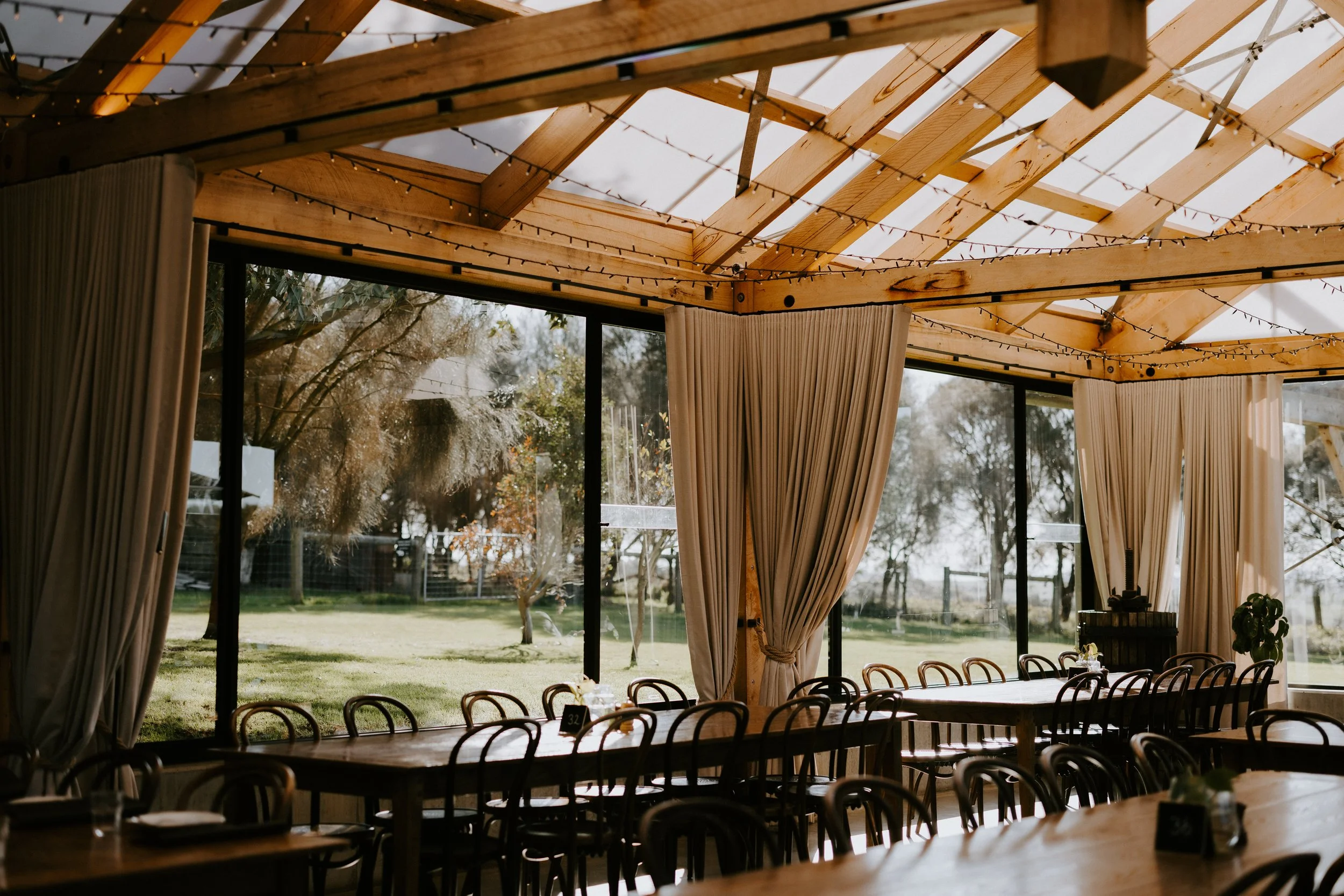
The cafe and function room at Lanigan's Vineyard in north west Tasmania, level and open across a concrete floor. The venue answers the access question in its own FAQ and holds an accessibility accreditation.
A venue puts up the photographs it is proudest of, which is exactly why they repay a slow look. This is the property on its best day, mown and dressed and lit, with the route in the background of every frame. And if a ramp is in shot, somebody built it and wanted you to see it.
Ask about the route, not the building
None of this is a test you have already failed. Nobody thinks about the distance from the car to the chairs until they have a reason to. Ask early, ask in writing, and ask about the ground rather than the doorway.
How far is it from the closest parking to the ceremony, and what is the ground between them? Lawn, gravel, paving, or a slope?
Where is the accessible toilet, and how far is it from the reception table? A toilet across a courtyard is a decision about how much anybody drinks.
If something is available on request, what does that mean on the day? A door unlocked is a different arrangement from a unit brought in on a truck.
Is there anywhere on this property we are hiring that a guest could not get to?
That last one cannot be waved away with a yes, which is exactly why it is the question that gets an interesting answer.
Then send the answers to your friend, the one who has spent her whole adult life ringing ahead, and let her choose. She will know in a minute what would have taken you a fortnight. And on the day, if the ground is right, your dad will walk in off the car park without the stick and nobody will think about the ground at all. Which is the whole point of thinking about it now.
A 15-acre working farm near Ventnor Beach on Phillip Island that hires out as a whole — exclusive use of the entire property for 24 hours, 11am to 11am, with seven…
A family estate at Rocky Cape on Tasmania’s north-west coast, at the foothills of Rocky Cape National Park, looking across Bass Strait to The Nut at Stanley.
A family-owned winery and restaurant on Berrys Beach Road at Ventnor, at the western end of Phillip Island, with a black-clad barn, a glass Atrium and five acres of…
A five-star boutique property on 4.5 acres beside the Cudgegong River, minutes from the centre of Mudgee but, in its own words, “seemingly miles away from…
Located just 1.5 kilometres from the CBD, the Brisbane Showgrounds is a world-class events and lifestyle precinct that seamlessly bridges the gap between historic…