
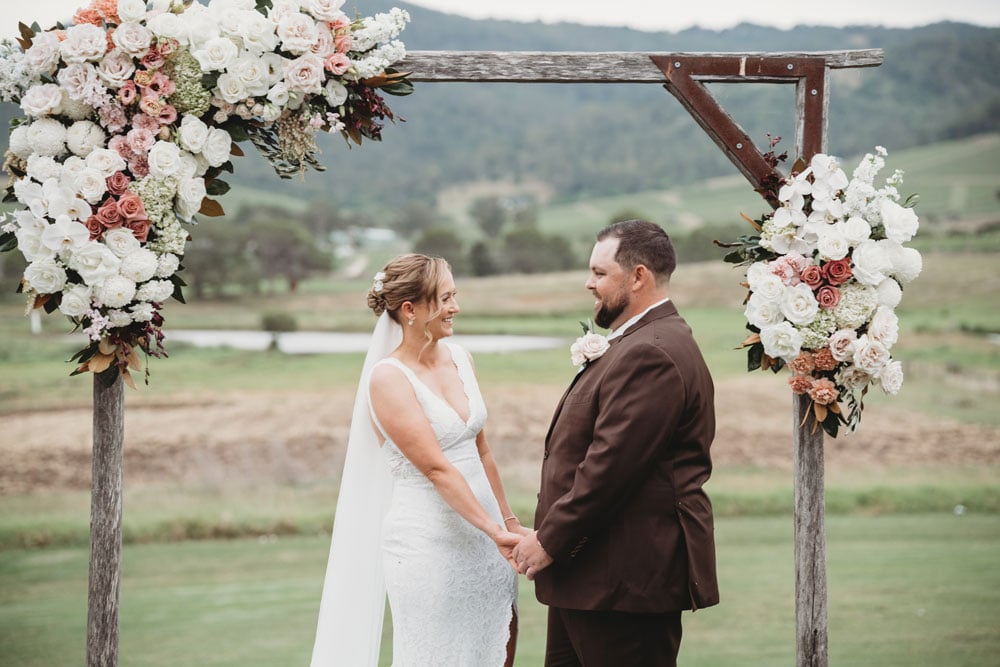
Hunter Valley, New South Wales
Ben Ean
Ben Ean — the old Lindeman’s estate — rolls across 200 acres of Pokolbin hills, its 200-year-old fig standing swing-hung on the hilltop and its heritage-listed…
Wedding Venues
The Journal · Booking timeline
A winter wedding costs less almost everywhere you look. The hard part is saying so at the dinner table.
By The Little Wedding Planner Editors ·
Almost everything a couple can actually change points the same way outside the busy months: venues that publish an off-peak or midweek rate, florists whose guides are built around what is genuinely available, suppliers with more of the calendar free. The only real obstacle is that a winter date sounds like a compromise when you announce it.
Say it out loud at a family dinner. We are thinking July. Then watch the table.
Somebody will ask, kindly, whether you have thought about how cold it gets. Somebody else will say they love a winter wedding, in the voice people keep for a haircut they do not love. Your mother will ask if the photographs come out dark. Nobody says the word budget, and everybody hears it.
The table is not arguing about weather. It is asking whether you have been made to settle. So do not go to that dinner carrying a feeling. Go carrying the venue's own published rates, a florist's availability guide, and the answer to what happens if it rains at four. A table can talk you out of a mood. It cannot talk you out of a document.
Across this directory, 62 venues publish wording that offers a seasonal or midweek saving: a winter rate, an off-peak band, a low season, a weekday price. Another 55 photographers say something of the same kind about their own diaries. That counts who has raised the subject in public and nothing else. A mention is not a discount, and the size of one is almost never printed beside it. But it is a far easier phone call to a business that brought the subject up first.
One estate runs across the Pokolbin hills in the Hunter, with a swing hanging from the fig tree on the hilltop, and it names the cheaper season in writing. Its reception packages carry reduced rates in winter and midweek. There is also a separate intimate package, up to 50 guests, Monday to Friday.
It is offering you two different ways to spend less, on one page, which is rarer than it ought to be. Read them against each other, though, because they do not stack. The intimate package caps at 50 guests. A weekend wedding there wants 80 adults minimum. So ask for the midweek package and you are marrying on a Wednesday with a guest list that stops at fifty. Ask for the winter rate instead and you give up neither, and nobody at that dinner table will make the distinction for you.
The document those rates sit in is dated July 2023, so the current figures have to come from the venue itself. A phone call, not an obstacle.
A cattle property outside Tweed Heads publishes its venue hire three years ahead. For 2026 it is $9,000 peak, which it defines as Friday to Sunday, against $7,500 off-peak, Monday to Thursday. The pairs climb a thousand dollars a year from there: $10,000 against $8,500 in 2027, then $11,000 against $9,500 in 2028.
Line the three years up and the gap never moves. It is $1,500 every time, which is about 17 per cent off the 2026 peak, 15 per cent off 2027 and under 14 per cent off 2028. A fixed sum sitting on a rising price shrinks. Booking a long way out does not buy you a bigger discount; it buys you a smaller one.
Then deflate what is left. That is hire alone, buying 48 hours of exclusive use and not one plate of food. Menus run $72 to $120 a head and a $1,200 minimum bar spend sits on top, and the venue prints all of it on the same page, in the same voice, three years out. Move off the peak days and you have taken 17 per cent off one line of a quote that has three. The 17 per cent is the figure your own head will keep, because it is the only one that sounds like a saving.
Notice what that split measures, though. Days, not months. It is the trade everybody already knows about, and the one most couples turn down for a sound reason: a Wednesday costs every guest a day of leave. A venue that names a winter rate is asking you for the month and leaving the day alone. That is the one to ask for by name.
Flowers are where a winter date is supposed to collapse. It is the objection I trust least, because the person making it is picturing a bare hedge and has not looked anything up.
A Launceston florist publishes a four-season availability guide sorted by season and then by colour. Summer, autumn, winter and spring each list blue, green, orange, pink, purple, red, white and yellow options by variety. Winter is a column with things in it, written by a shop in a cold part of the country with no reason on earth to flatter June.
Its own caveat sits at the top of that guide.
Please be aware that this list is just a guide. Flowers are products of nature and may not be in bloom at exactly the same time from season to season, year to year.
Which is a warning about certainty, not about winter. It is a guide in November too.
A Mornington Peninsula studio publishes blooms by season and prints its season boundaries beside them: summer December to February, autumn March to May, winter June to August, spring September to November. Where a stem needs a qualifier it gets one in brackets, in the studio's own hand: "Helleborus (late autumn)", "Ranunculi (late winter)". You can tell which end of a season you are standing in.
Another studio, at Victor Harbor on the Fleurieu Peninsula, names the months in writing beside the blooms. Its hellebore entry reads:
Hellebore - subtle, romantic tones, ideal for winter weddings, available July - September
Ideal for winter weddings. A working florist wrote that about July, in public, where anyone can read it before choosing a date.
Now hold the two guides side by side. The Victorian studio files helleborus under late autumn. The South Australian one has hellebore from July to September, which on the Victorian studio's own boundaries is winter running into spring. One flower, two studios, two states, two answers, and neither of them is wrong. That is all a florist's guide ever is: one shop telling you what it can get out of the ground it actually buys from. Which is why you ask yours, and ask early enough that the answer can still move the date.
Of the 176 florists in this directory, 153 come out as seasonal on the work they show. Seventeen publish an availability guide. Designing to a season and printing what the season holds are two different jobs, and only the second one is any use to you before the date is booked.
The weather is a real objection and I am not going to talk you out of it. June light goes early. Lawns hold water. Some part of the day is going to want a roof over it, and the worst afternoon to find that out is the one you are standing in.
A lot of venues have already answered it in writing. In this directory, 113 publish a named wet weather plan: an indoor alternative, a covered terrace or pavilion, a marquee option, a plan B set out before anybody asked for one. If yours is among them, the argument is settled in public and you can hand the page across the table. If it is not, that is a question to put to the venue, not a conclusion to draw about it.
Then ask it like somebody who has read the brochure. Where do your guests stand if it rains at four? Is the terrace covered, or is it a lawn with a roof over the bar? Who makes the call, and by when? A venue that has thought about winter answers all three without pausing.
None of that is the hard part. The hard part is the dinner.
So announce it as a decision instead of a concession. Not: we could only get July. That invites sympathy, and sympathy invites advice. Try: we are doing July, we want the room with the fireplace, and we would rather put the difference into the food. Nobody argues with a preference. Everybody argues with a compromise, because a compromise sounds like something they can talk you out of.
The same sentence works on a supplier. You are not asking a favour. You are telling them which square you intend to fill.
Open your calendar and look at a Saturday in June. Not a Wednesday. Nobody is asking you to give up the day, only the month. It is the same square as every other Saturday on that page. The only thing wrong with it is that you would have to explain it, and you can do that now in one sentence, before anybody at the table gets as far as the haircut voice.
Ben Ean — the old Lindeman’s estate — rolls across 200 acres of Pokolbin hills, its 200-year-old fig standing swing-hung on the hilltop and its heritage-listed…

Pioneer Country is a fifth-generation cattle property at Tweed Heads South, owned by the Sullivan family since 1892 and ten minutes from Gold Coast Airport.

Fera Flores is Georgie’s studio-based floral practice at Victor Harbor on the Fleurieu Peninsula, working across the peninsula, McLaren Vale, the Adelaide Hills and…

Hello Blossoms is a wedding florist based on the Mornington Peninsula, working from a studio and showroom at Hastings that opens by appointment.

Northern Tasmania’s longest-running florist under a newer name. The shop traded as Newstead Flowers for more than thirty years before rebranding to Banksia Florist…
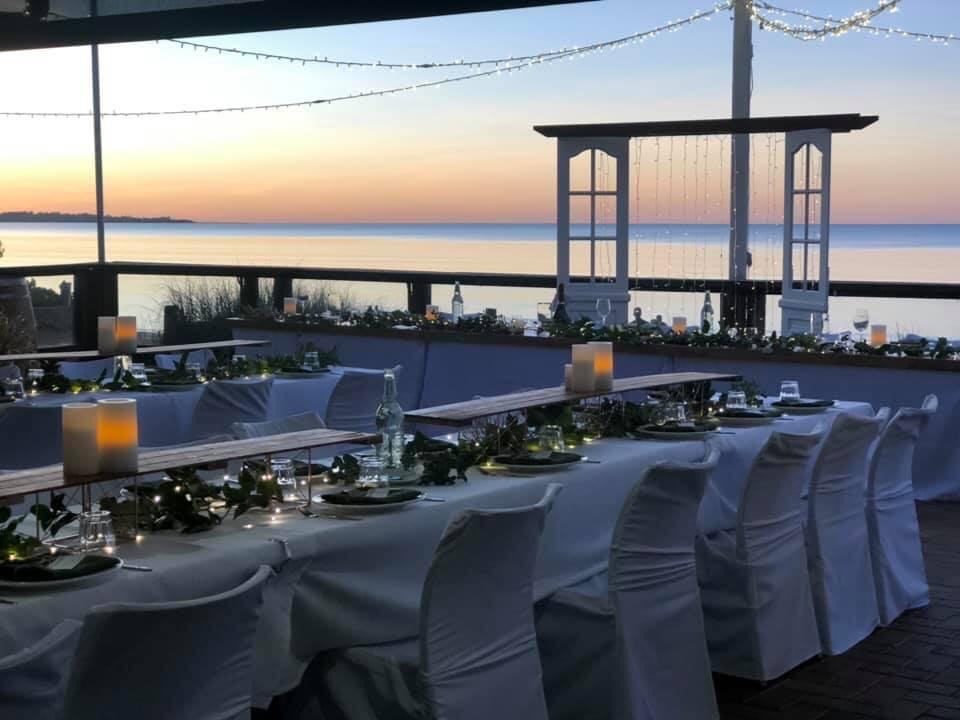
A beachfront bar and eatery on the Torquay foreshore, right on the Hervey Bay Esplanade with the water a few metres away and K’gari (Fraser Island) across the bay.

A golf and function estate in the Enchanted Valley, on the edge of Wungong Regional Park in the Perth Hills and about 40 minutes from the city.

Ballara Receptions sits on Main Road at Eltham, in Melbourne’s north-eastern green belt, around a lake fed by a cascading waterfall with willows down to the water.
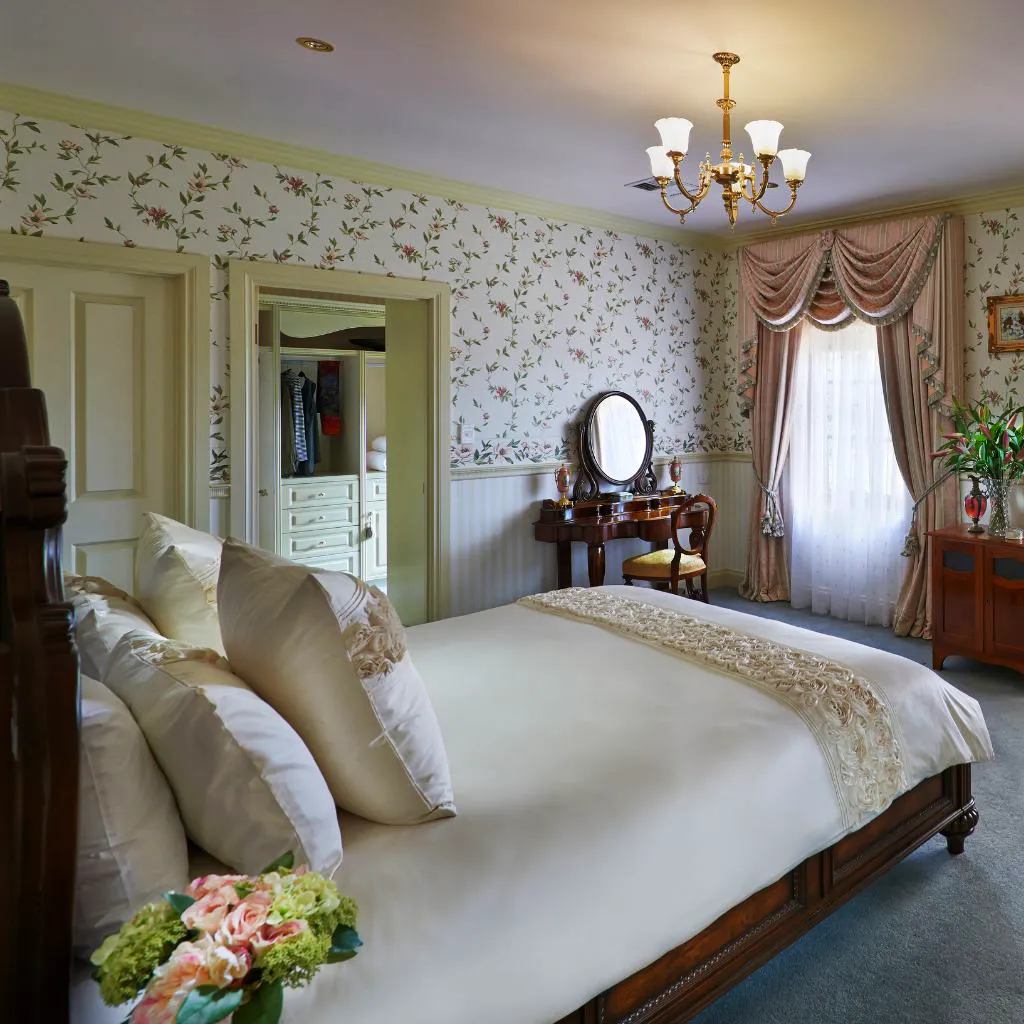
Barossa Chateau and its sister property Lyndoch Hill share twenty-five acres at Lyndoch planted with thirty thousand roses — a garden of national significance…
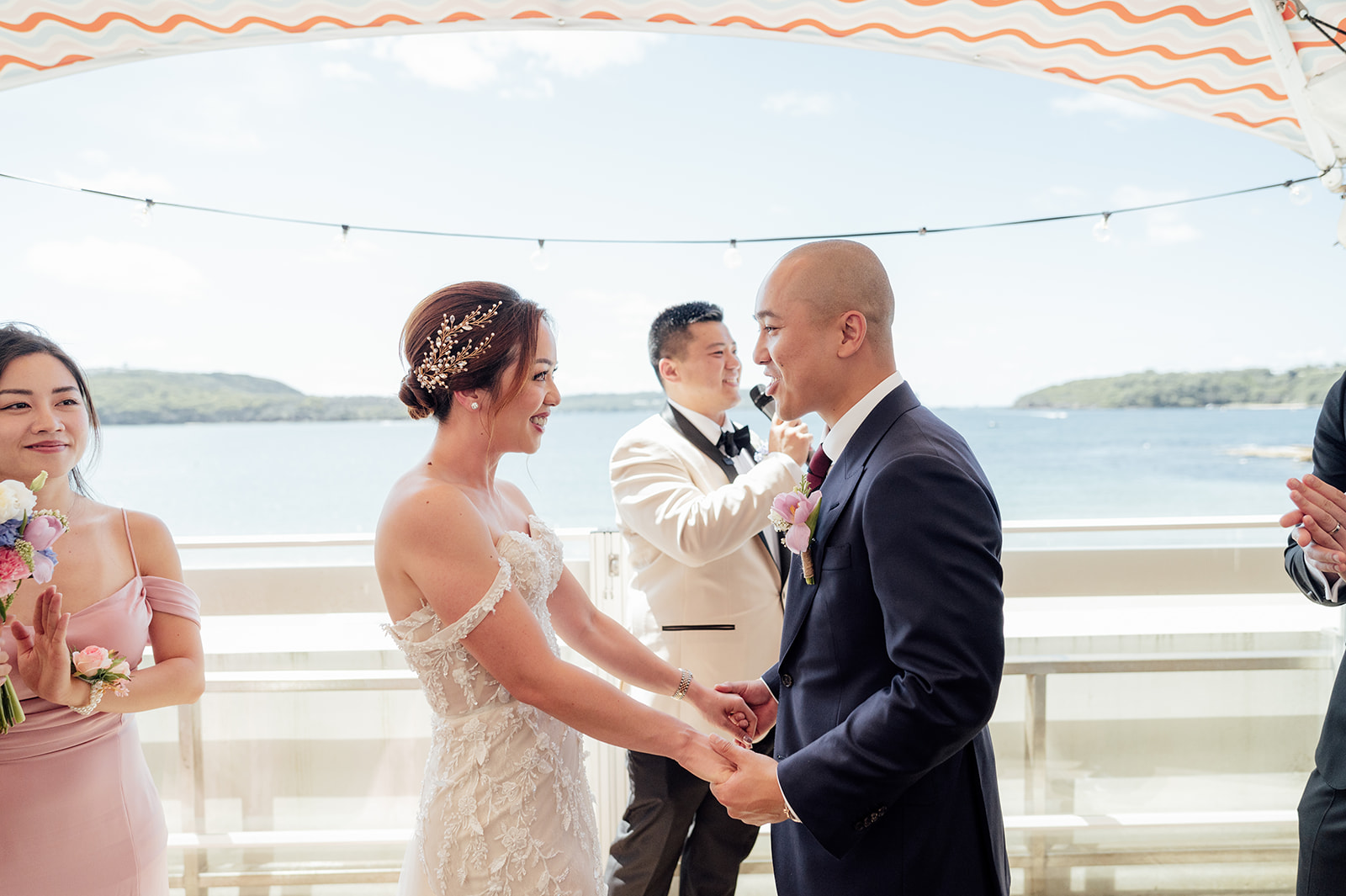
Bathers’ Pavilion is Balmoral Beach’s heritage icon — a 1920s Spanish-Mission pavilion on the sand with sweeping views across the bay to Sydney Heads.
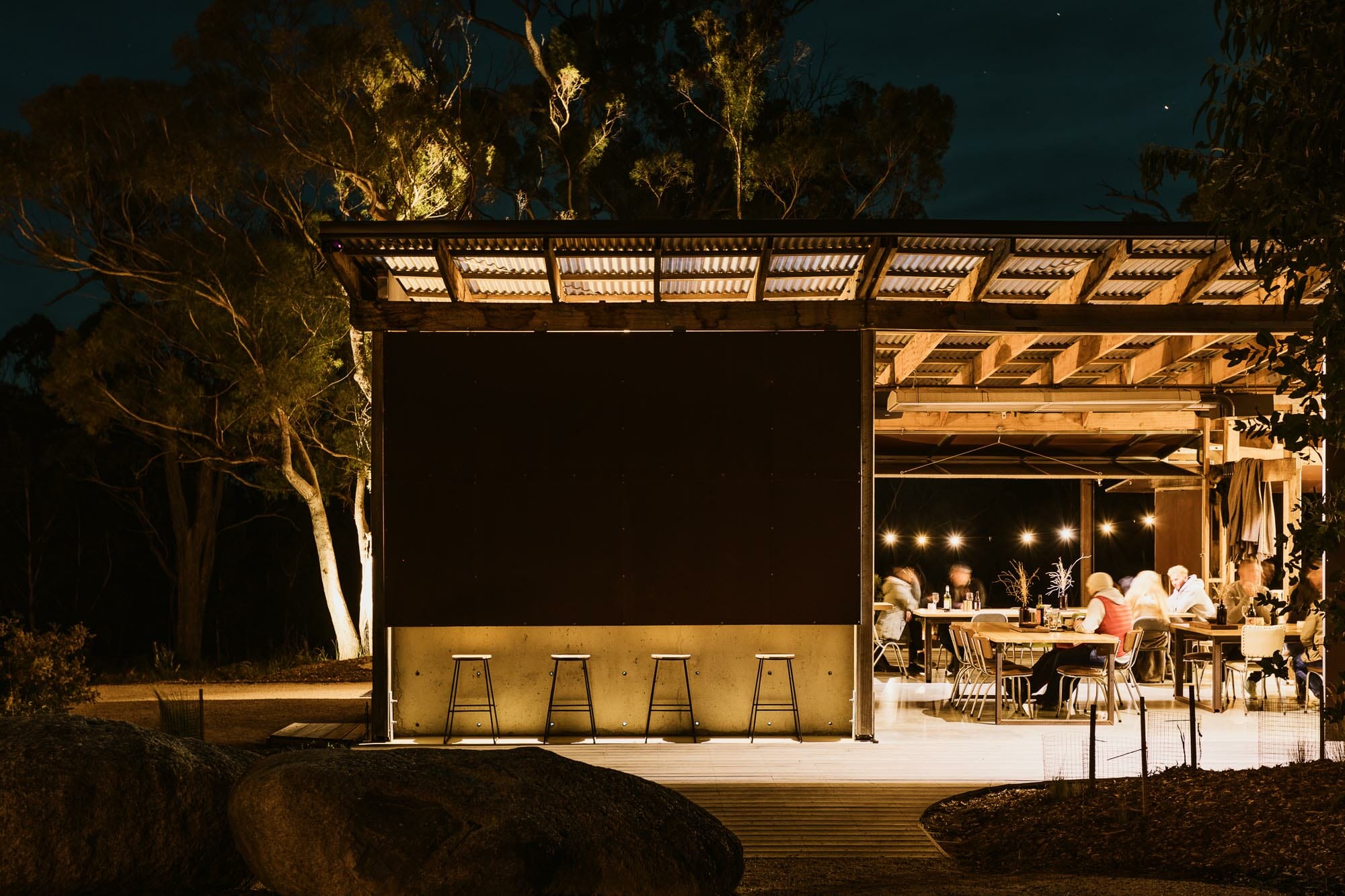
A boutique glamping retreat on 25 acres of coastal bush at Binalong Bay, minutes from the orange-lichened granite of the Bay of Fires.
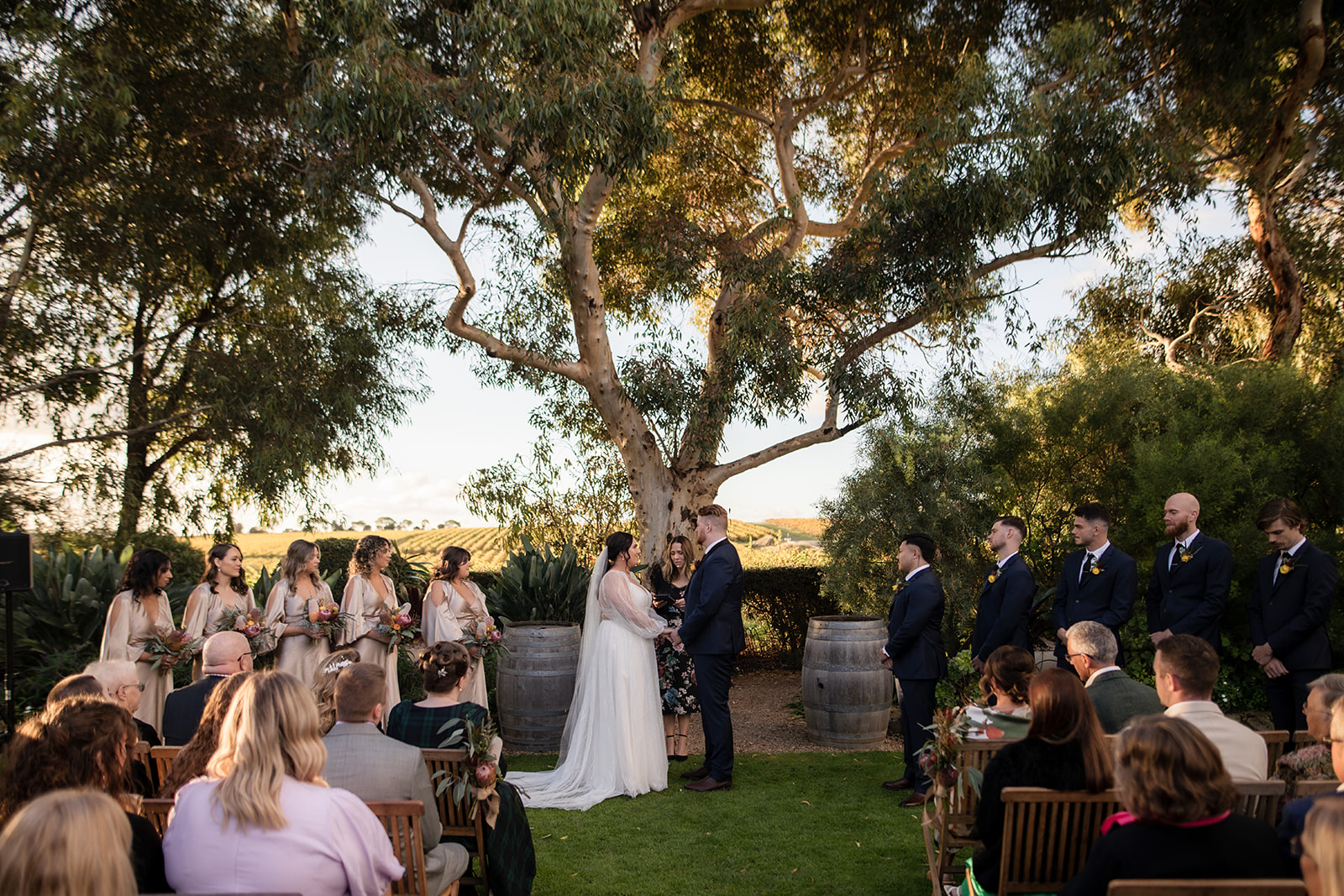
Beach Road is a family-owned winery, cellar door, restaurant and function centre in the middle of McLaren Vale, looking over the vineyards to the Willunga…
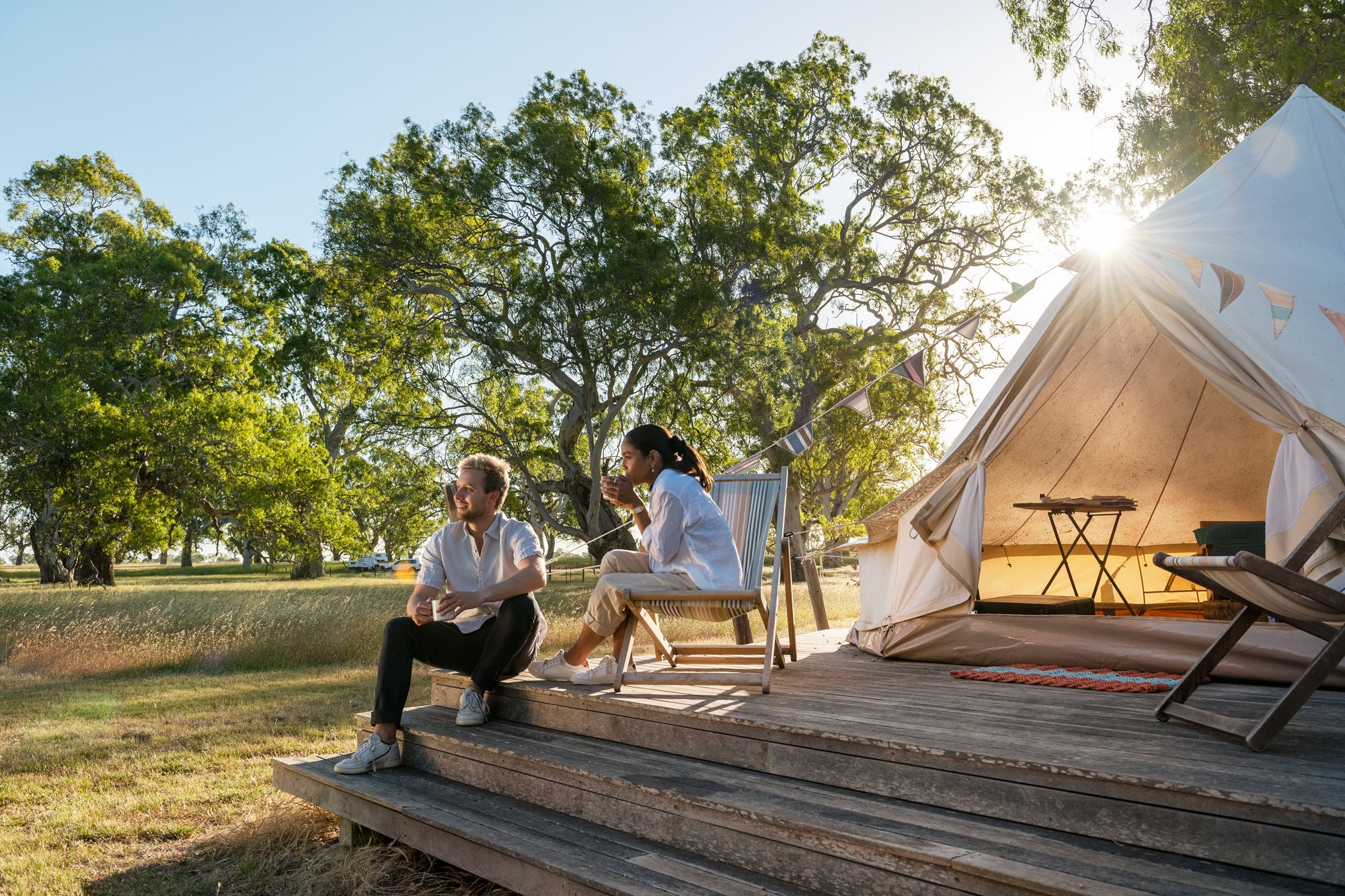
A boutique winery in a restored 1860s stone woolshed on the Riddoch Highway at Coonawarra, on Boandik country.