
High Country / King Valley, Victoria
Halfmoon Creek
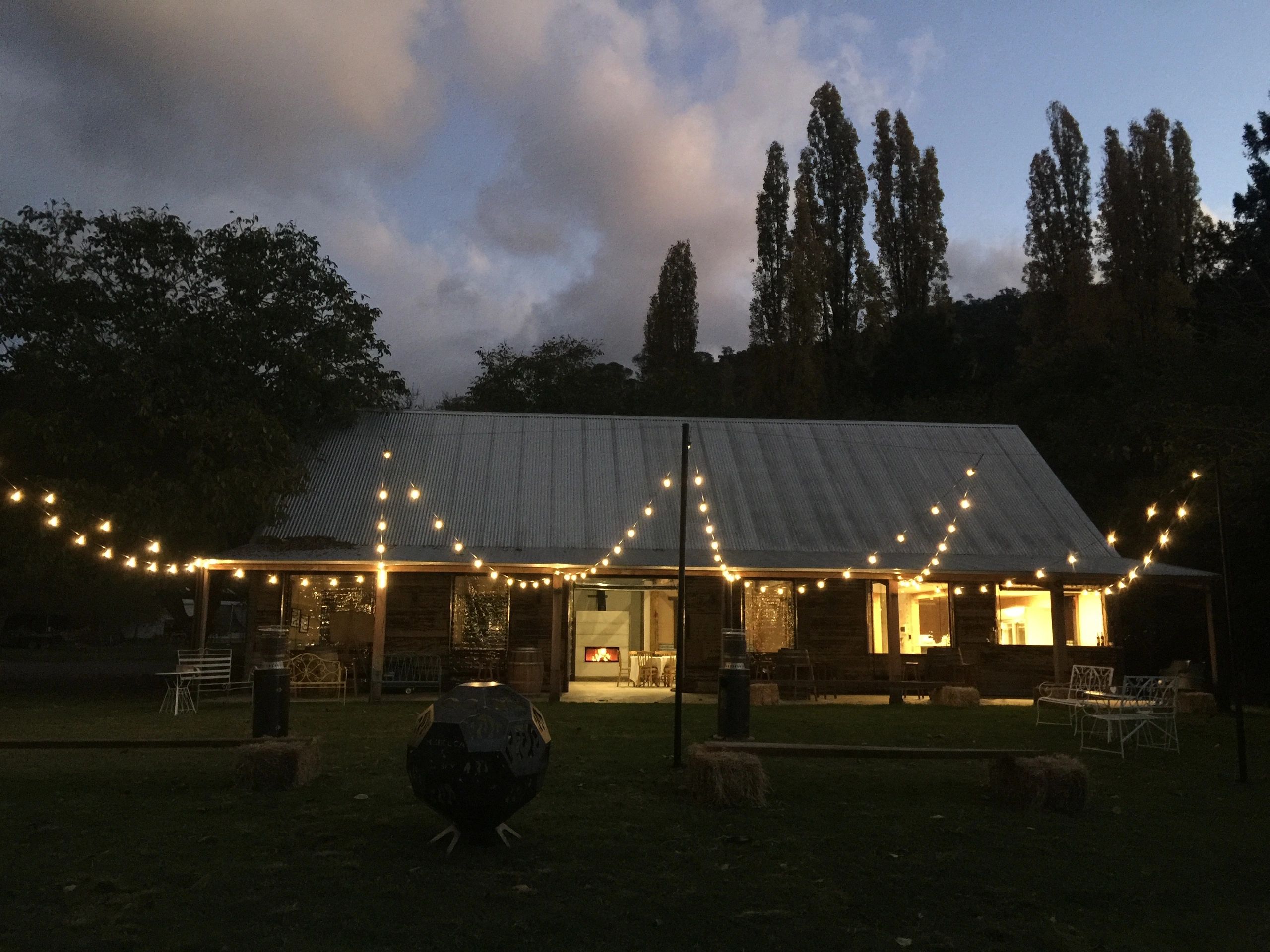
Halfmoon Creek is five acres of native bushland at Wandiligong, in the valley below Bright.
Wedding Venues
Visit in person
The Journal · Blank canvas
You choose it for the gum trees. What you are buying is everything a town does quietly, on a property where somebody has to do all of it.
By The Little Wedding Planner Editors · · Updated 10 September 2026
A bush wedding is sold on what the bush does not have: no neighbours, no curfew, no traffic. Every one of those absences used to be somebody's job, and out there the property does that job or nobody does. The places worth booking publish the other half of the picture, the beds and the power and the months of the year they will not take a wedding at all.
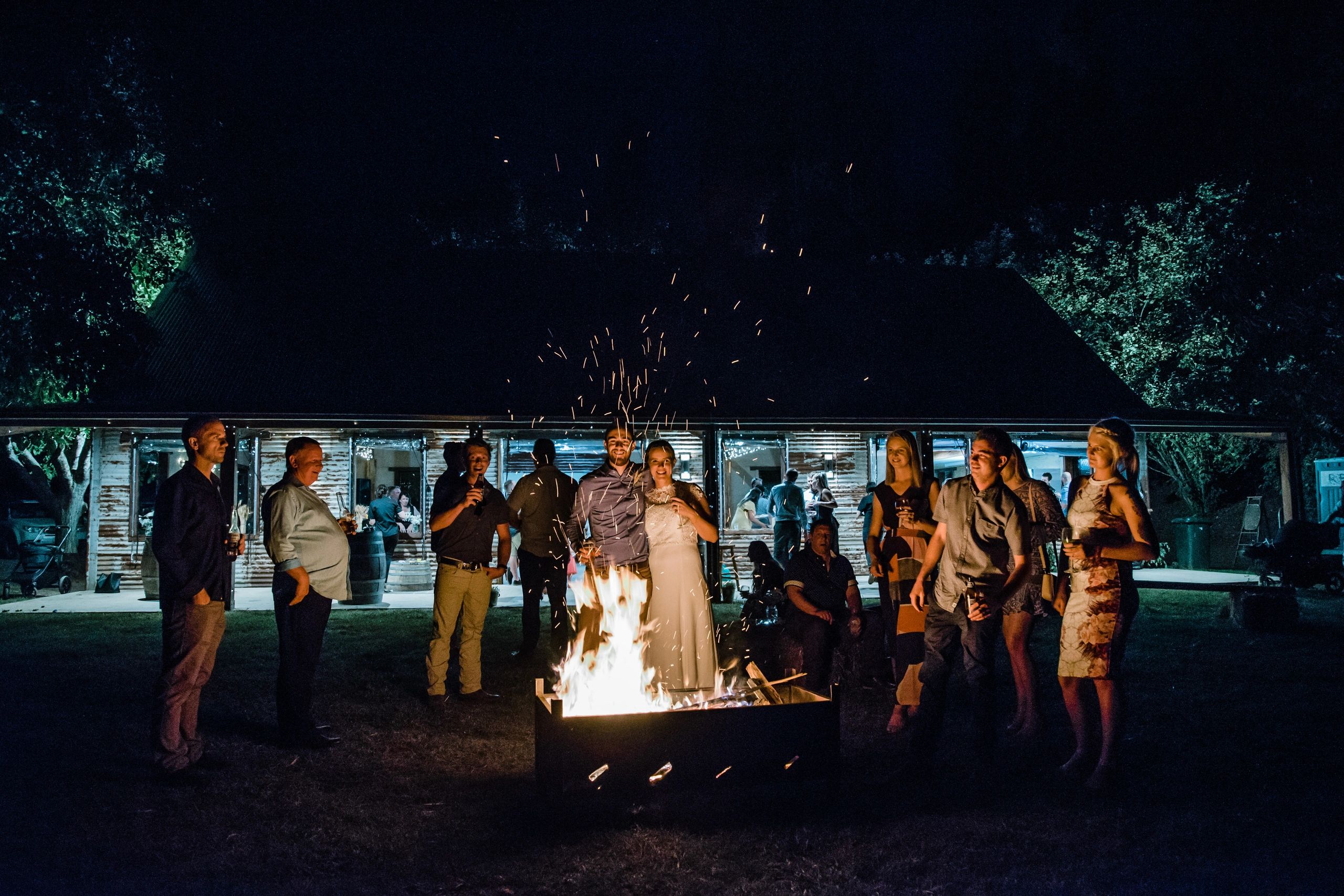
It is twenty past eleven and the music has stopped. Somebody's mother is looking for her cardigan. Out past the last string of lights there is a paddock with forty cars in it. The ground between here and there is uneven and unlit, and people are crossing it by the torch on somebody's phone.
Nothing has gone wrong. This is the wedding you booked, and it was the right one to book. Six hours earlier the sun came sideways through the gums and did exactly what it does in the photographs.
The bush is sold as a list of things that are not there. No neighbours. No curfew. No traffic, no function manager in a headset, nobody at the next table celebrating a fortieth. It is an honest pitch, and what goes unsaid is that every one of those absences used to be somebody's job. Out there the property does that job or nobody does. These places all look extraordinary at five in the afternoon. The question is what happens at midnight.
Book a room in town and you rent a great deal more than the room. The streetlights outside it, the taxis on the corner, other beds within walking distance, mains power nobody thinks about, an ambulance that already knows the address. None of it is on the invoice, and all of it is in the price of being in a town.
An hour up a valley, each of those becomes a job somebody has to do. Somebody lights the walk from the marquee to the toilets. Somebody works out how a hundred people get from a paddock to a bed, and it will not be a taxi, because there is no taxi. The cost of getting them there is a budget of its own. This is about the forty minutes after the last song.
A place out there has two numbers and not one. How many people it can feed, and how many it can put to bed. What sits between them is the number of your guests who leave in the dark. A property that publishes both has done that arithmetic in front of you, months before you would have done it standing on a lawn.

Watch one absence written up two ways, both honest. In one place there is no phone signal, and it sits on the amenities list beside the sound system, sold as a feature. Nobody can reach your guests, so your guests are properly here. Somewhere else the same fact is on the directions page, warning you that coverage out that way is thin and to check with your carrier before you drive.
A room full of people with no signal is a lovely evening. One person on a dark road with a flat tyre and no signal is a different evening, and it is the same absence. Which of the two you have bought depends on whether anything happens.
Curfews go the same way. Some places out there publish none, which is its own argument and half of what you came for. Others stop the music at eleven, because somebody who lives in that valley agreed to a noise condition in writing. They are different nights, and you can know which one you are buying before you pay for it.

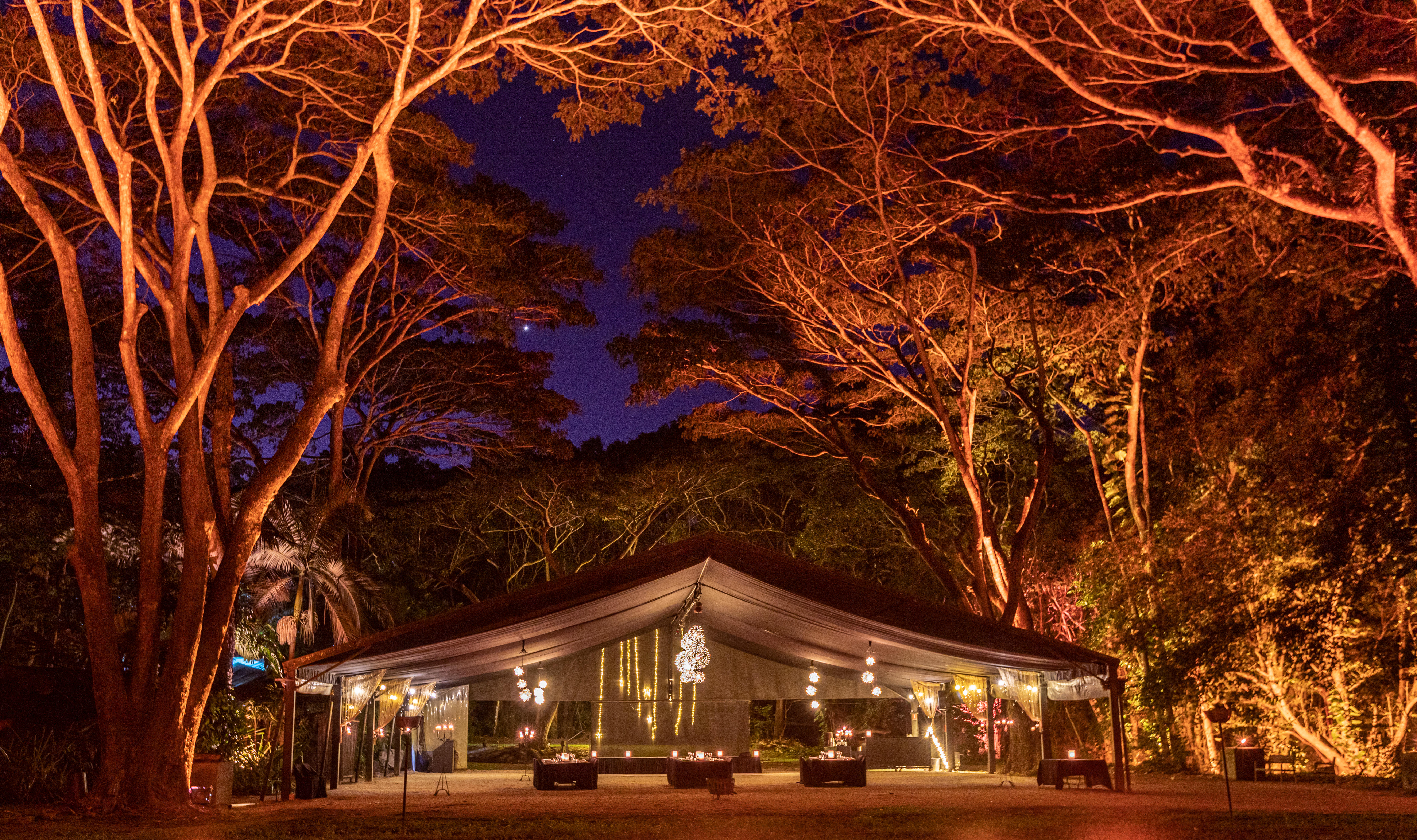
Now the page nobody reads. Somewhere on a good bush property's site, under a heading about what is included, is a list that reads like the minutes of a small council. Toilet hire. Water and power to every site. Parking. Somebody to meet the cars as they come up the drive. And in the middle of it, as calmly as a chair count, a generator.
Read that quickly and it looks like a place with a power problem. Read it properly and it is the reverse. Somebody has thought about nine o'clock on a Saturday going dark, bought the machine, and decided the machine is not a secret.
The best version I have come across has no backup at all, because there is nothing to back up. The lights, the fridges behind the bar and the water in the taps all run off a hydro system somebody built on the creek at the bottom of the property. A small power station, so that a wedding an hour from anywhere can have light and cold beer. What you are paying for is the power, the water, the toilets and the beds.
Lights, beds and generators can be solved. This next part cannot be, at any price. There are months when the country out there is not available, and the people who own it know exactly which ones, because they live on it and they are the ones who would be getting everybody out.
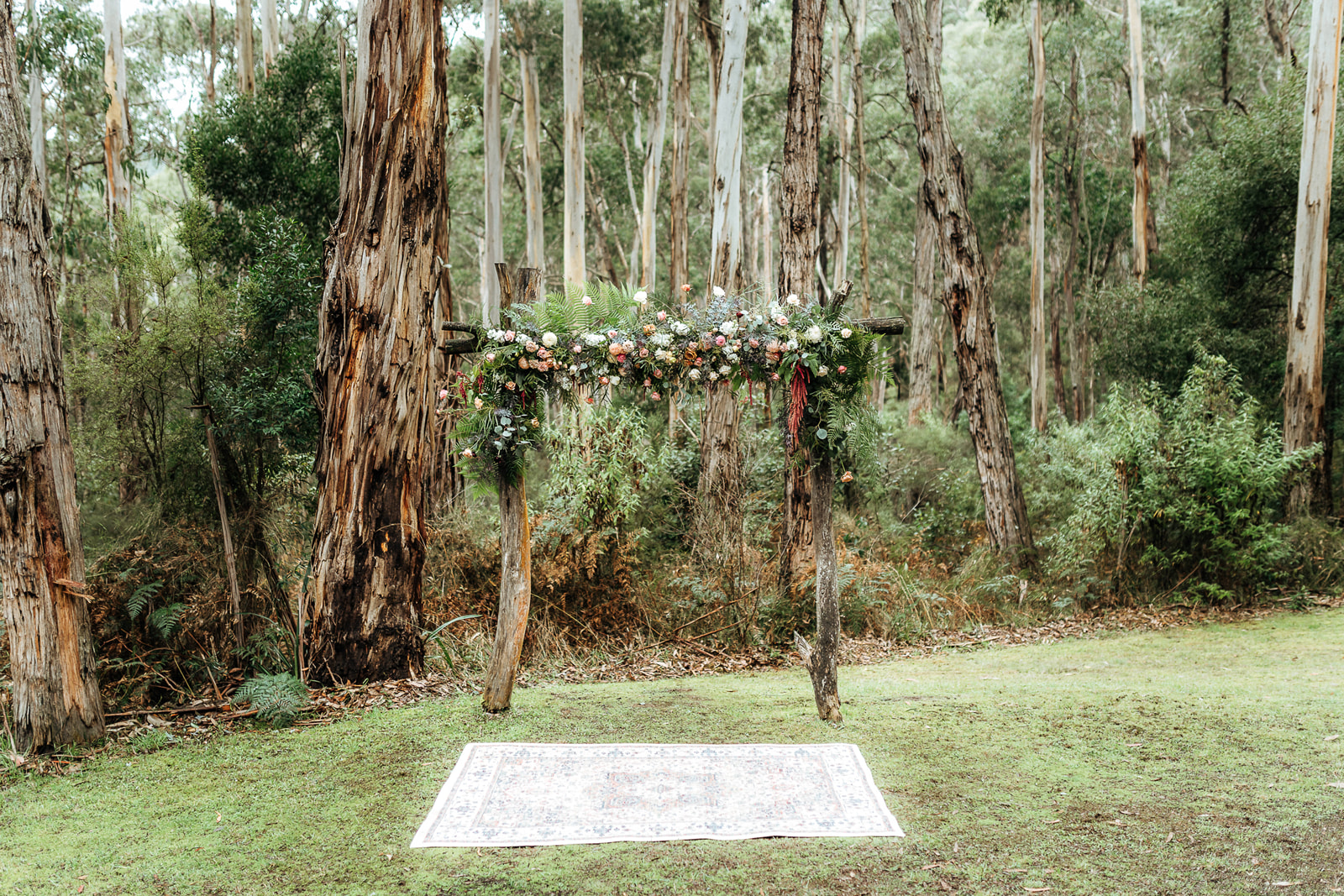
So some properties will not take a wedding in the hottest stretch of the year, and they say so on the wedding page, in one sentence, with the reason attached. Nobody makes them write it. It shuts their warmest, prettiest months, on ground whose whole appeal is old gums and gold grass at dusk. That is the exact picture in your head when you say you want to marry in the bush.

The same care shows up in the fine print, where nobody thinks to look. Some published wedding terms name the bushfire risk outright: a bushfire-prone area, fire danger ratings beyond anybody's control, guests expected to follow evacuation directions. That is a liability clause doing you a favour. There is a version of your wedding day in which the fire service decides and you do not, and somebody has written it down rather than let you find out.
None of which makes a bush wedding a worse idea, and I would still have one. It makes it a decision with a calendar attached, and the months you can have are set by the heat and the fire risk, not by you.
Everything that happens in those forty minutes after the music stops was settled months ago, by somebody not thinking about it at the time. Whether there is light on the path. Whether a bus is booked and how many seats it has. Whether the people who should not drive have a bed they can walk to. Whether the end of your wedding is a slow warm goodbye or a paddock full of people working out lifts. The places worth your deposit answered all of it in public, in writing, before anybody asked.
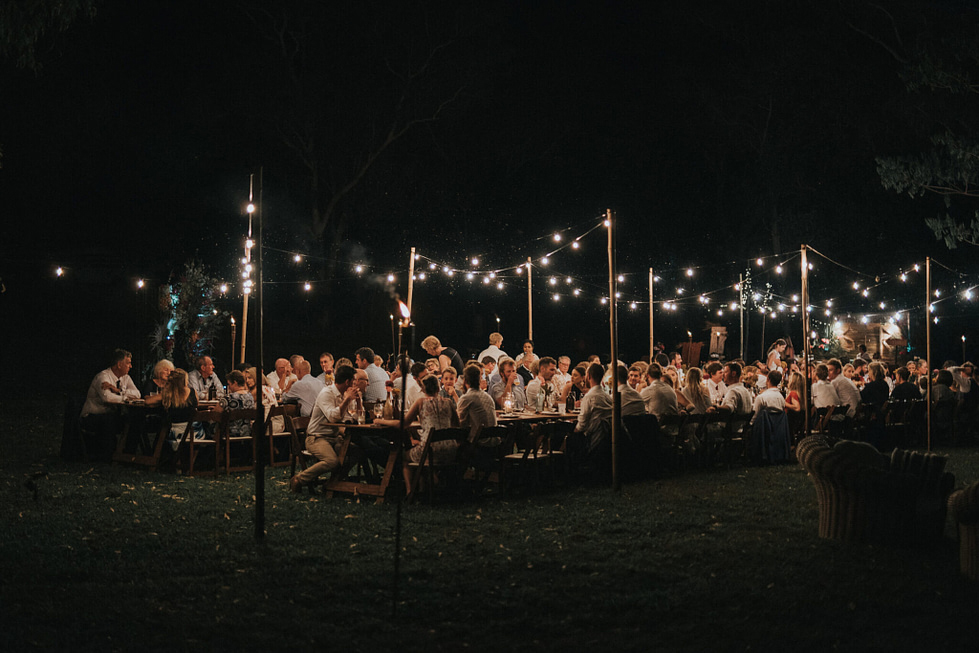
So go and look at five o'clock, because at five o'clock it will be everything they promised. Then ask whether you can come back after dark, and walk from the shed to where the cars are going to be parked. If they say yes, and they walk it with you, that is the property.
Halfmoon Creek is five acres of native bushland at Wandiligong, in the valley below Bright.

196 acres of private bushland overlooking the Pennyroyal Valley in the Otway Ranges, on Gadubanud Country — 25 minutes from Lorne, an hour from Geelong.

Hughes Park is a working sheep property in the Skilly Hills near Watervale, held by the same family for six generations and dating to 1845.
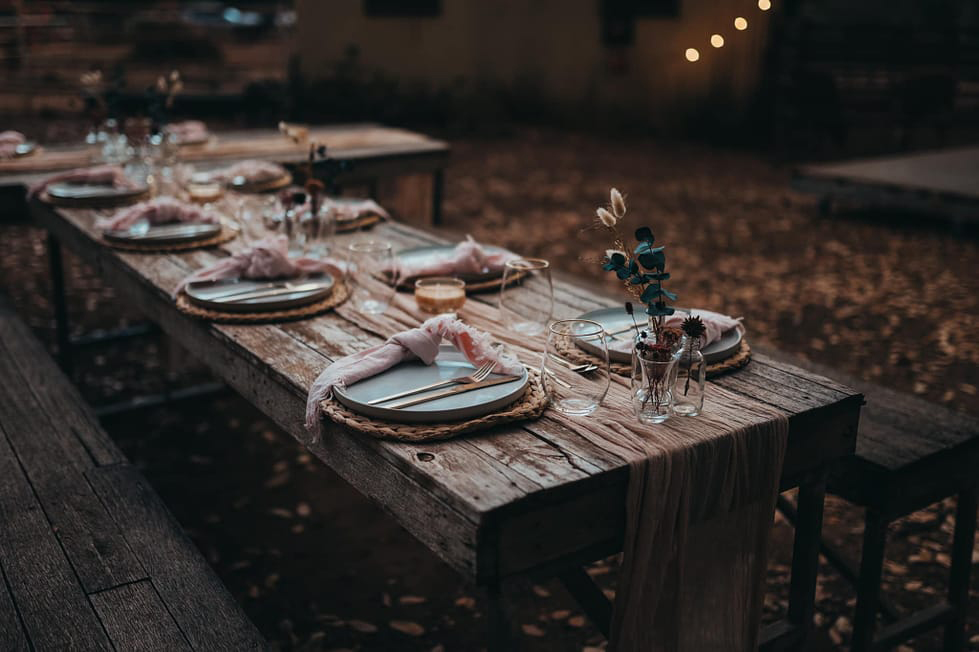
Mt Bundy Station is a working cattle property on the banks of the Adelaide River, established in 1911 by buffalo hunter Fred Hardy and family-run since 2007.
Paperbark Camp is a luxury bush camp on Woollamia Road outside Huskisson — safari-style tents raised on platforms among the paperbarks, with polished hardwood…
Flames of the Forest is set in a secluded valley of ancient Wet Tropics rainforest in the Mowbray Valley, ten minutes from Port Douglas — Australia’s only…

A luxury farm stay and garden estate between Walpole and Denmark, where the forest meets the Southern Ocean.

Orchards at Spring Vale Farm is a private estate at Weatherboard, fifteen to twenty minutes from Ballarat, built around an 1860s bluestone homestead.
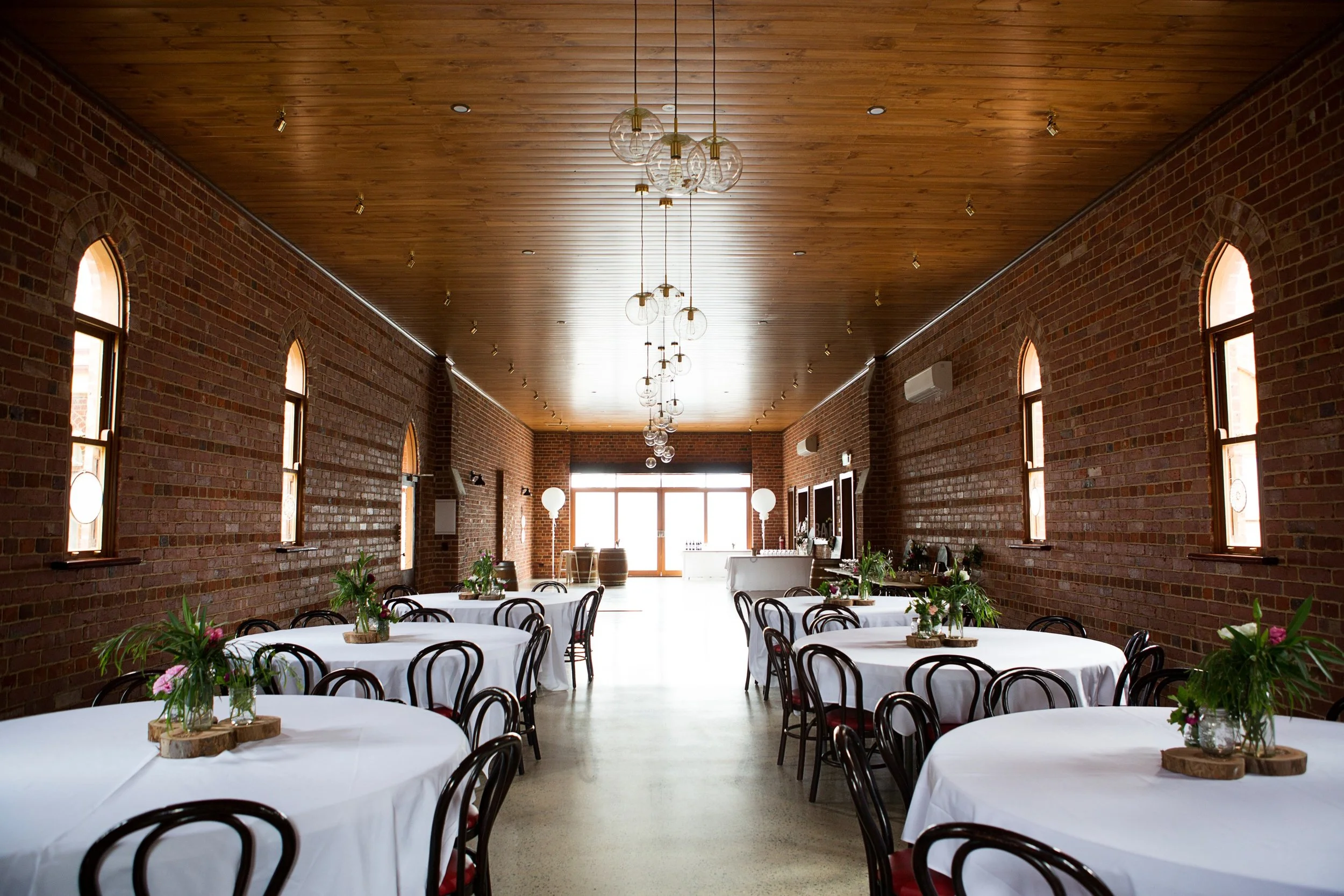
Waratah is a purpose-built wedding and function centre at Huntly, fifteen minutes north of Bendigo, built in red brick around an 1875 chapel that still has its…
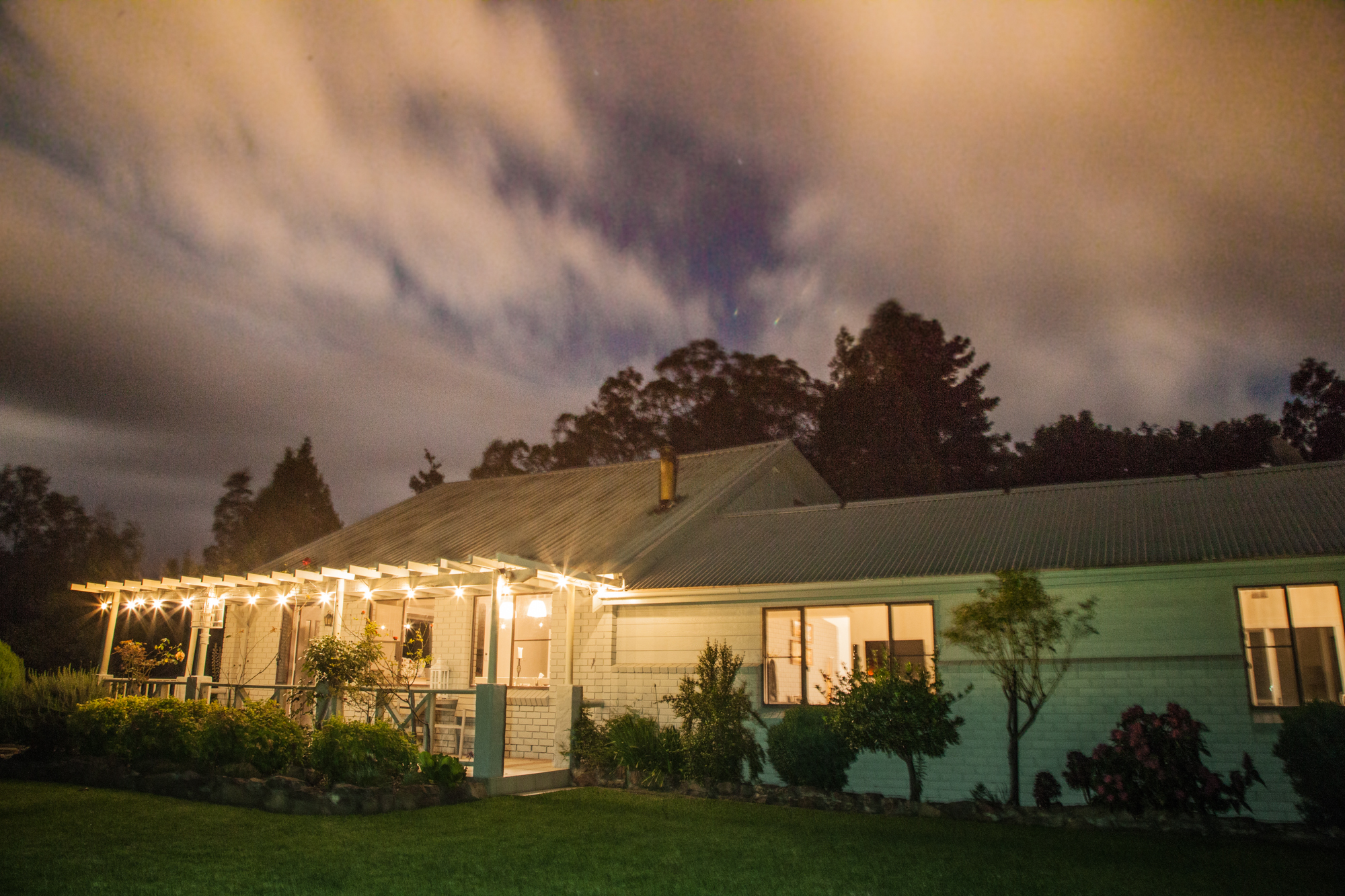
Riverlea Retreat is a five-bedroom house on 25 private acres in the pine hills above the Cudgegong River, fifteen minutes from Mudgee.
300 acres of Victorian High Country twenty minutes from Mansfield, with Howqua River frontage and no main road anywhere near it.