
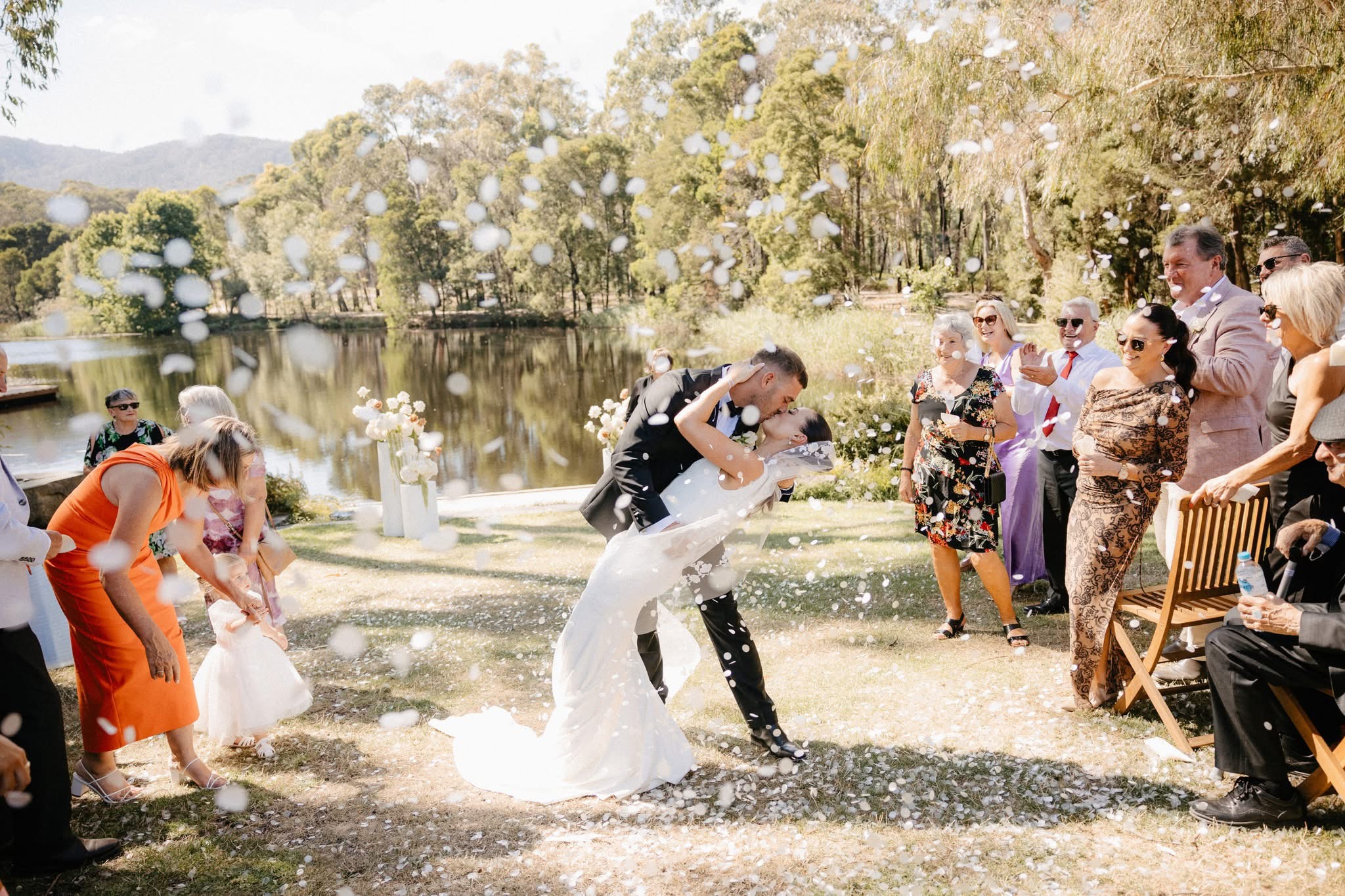
Ballarat, Victoria
Cave Hill Creek
Cave Hill Creek is a lake in a forest, two hours from Melbourne, and the whole property becomes yours for the weekend.
Wedding Venues
Visit in person
The Journal · Bush and wilderness
A lake at four in the afternoon does the one thing the ocean will not do for you, which is nothing at all.
By The Little Wedding Planner Editors · · Updated 10 September 2026
The coast gets booked first and the lake gets what is left, which is the wrong way round. Still water doubles the light and leaves the air alone, so the photographs have two of everything and the back row hears the vows. What it charges back is a level and a bank that answer to a catchment and a season. A venue worth having prints the season. The level is the one thing you still have to ask for.
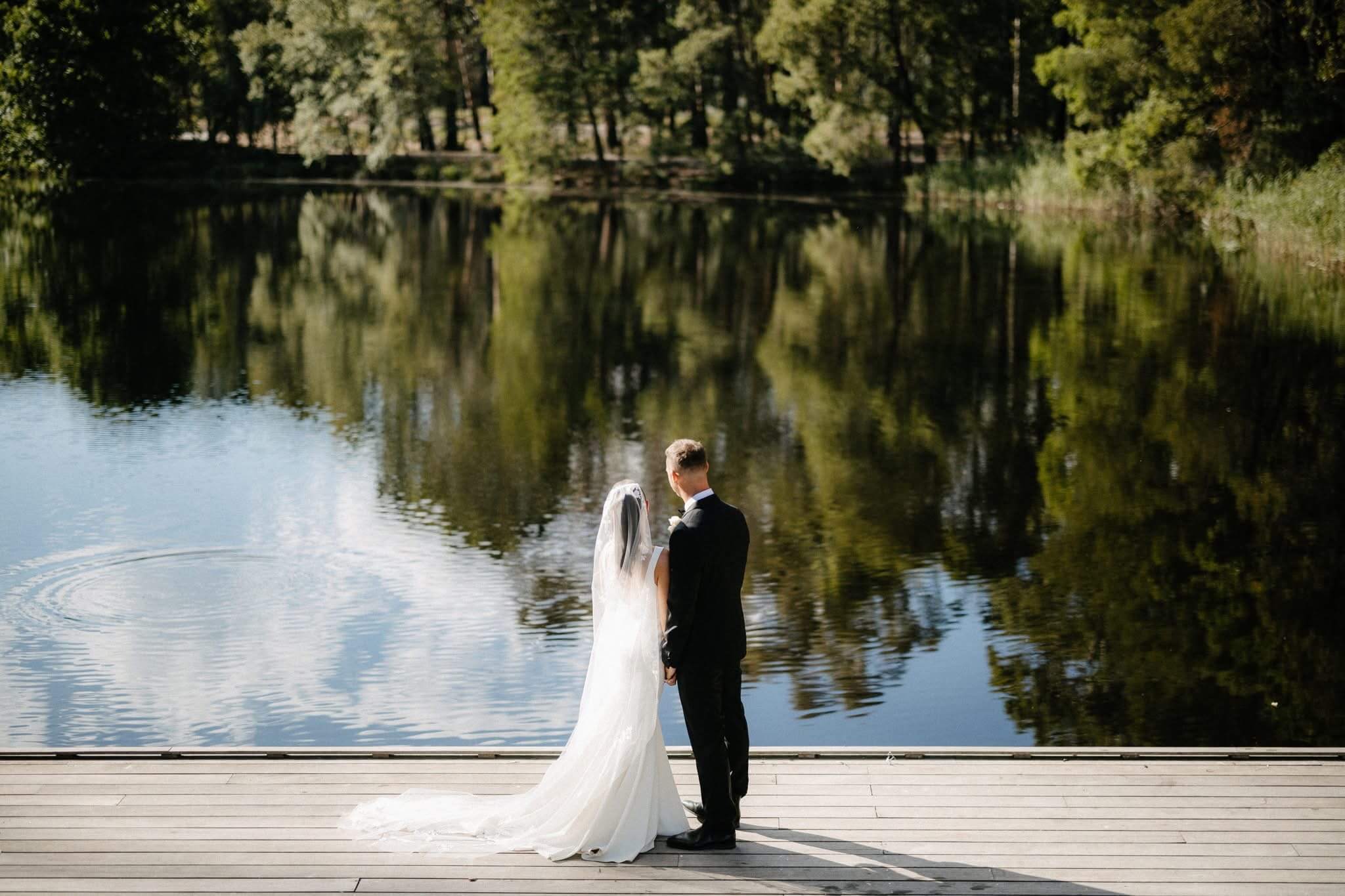
Four o'clock at a lake, and the photographer has her back to the couple. A minute ago the far bank was in the water whole, upside down, every tree of it. Then a boat went past. She is waiting for the far bank to come back, because when it does she gets the picture she came for.
The choice you are making is between water that moves and water that does not. Nobody puts it that way.
Here is the unglamorous case for inland water. A river, a lake or a dam holds still. It holds the light still, so photographs taken beside it have two of everything. It holds the air still, so you can hear the vows. Those are the two things you are buying at four in the afternoon, and the ocean will not sell you either one.

The lake is where you end up when the coast is booked out. That is backwards.
Still water is a second sky. It doubles the trees and the clouds, and it throws light back up under everybody's chin, which is the one direction a face is almost never lit from. That sounds technical. It is really an enormous soft light that nobody is charging you to switch on.
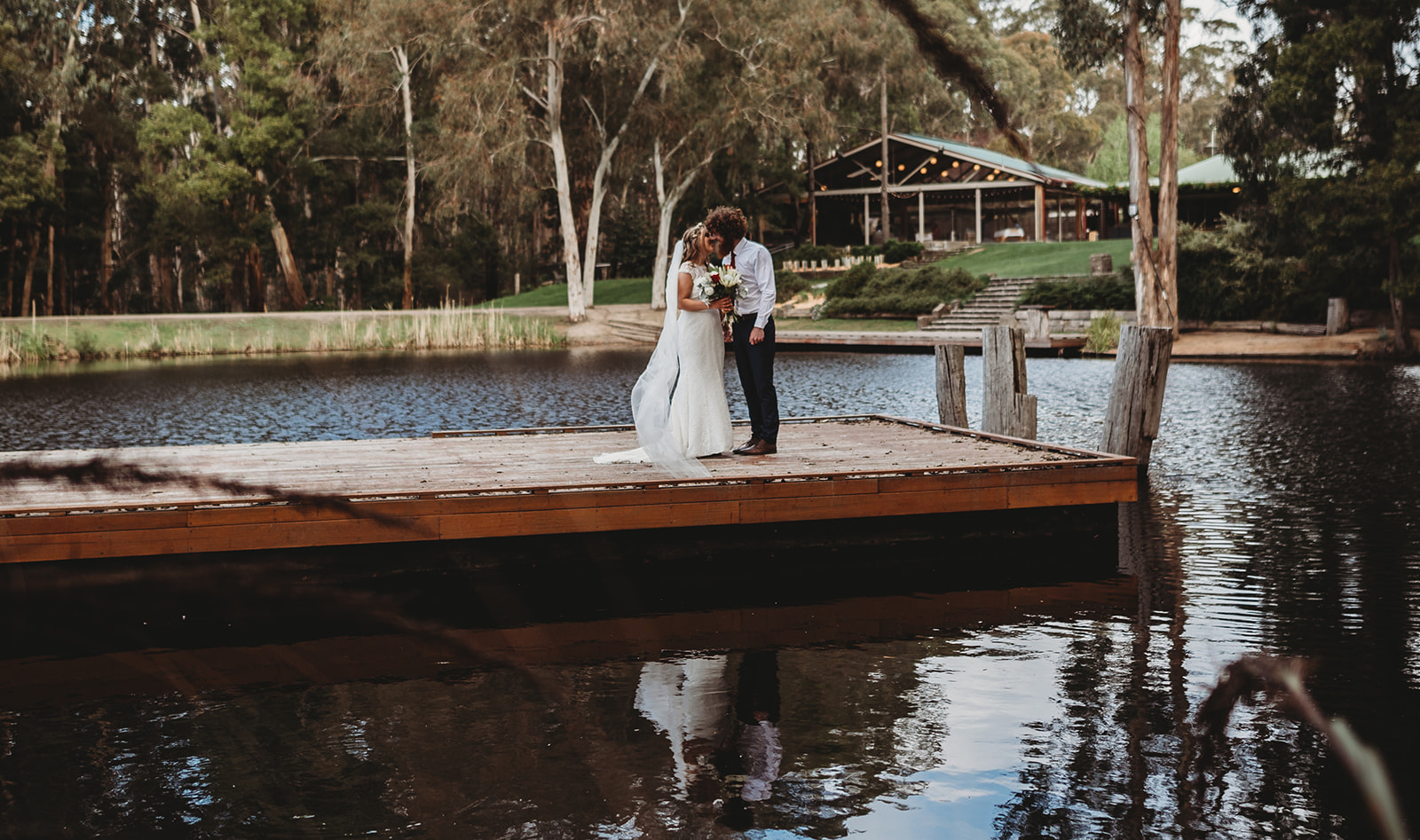
You can tell who has worked that out. They build a deck or a jetty out over the water, because a reflection only does its work if somebody is standing in it.
Then the quiet. Moving air is the enemy of a vow: it takes the words sideways and turns a lapel microphone into a roar. The coast makes its own, because land heats faster than water. A dam in a paddock has nothing to make it with. Nobody is shouting, and the people who drove four hours to hear you say it can hear you say it. Outdoors, it is the weather, not the room, that decides what your guests hear.
None of that shows up in a photograph, which is why it never reaches a shortlist.
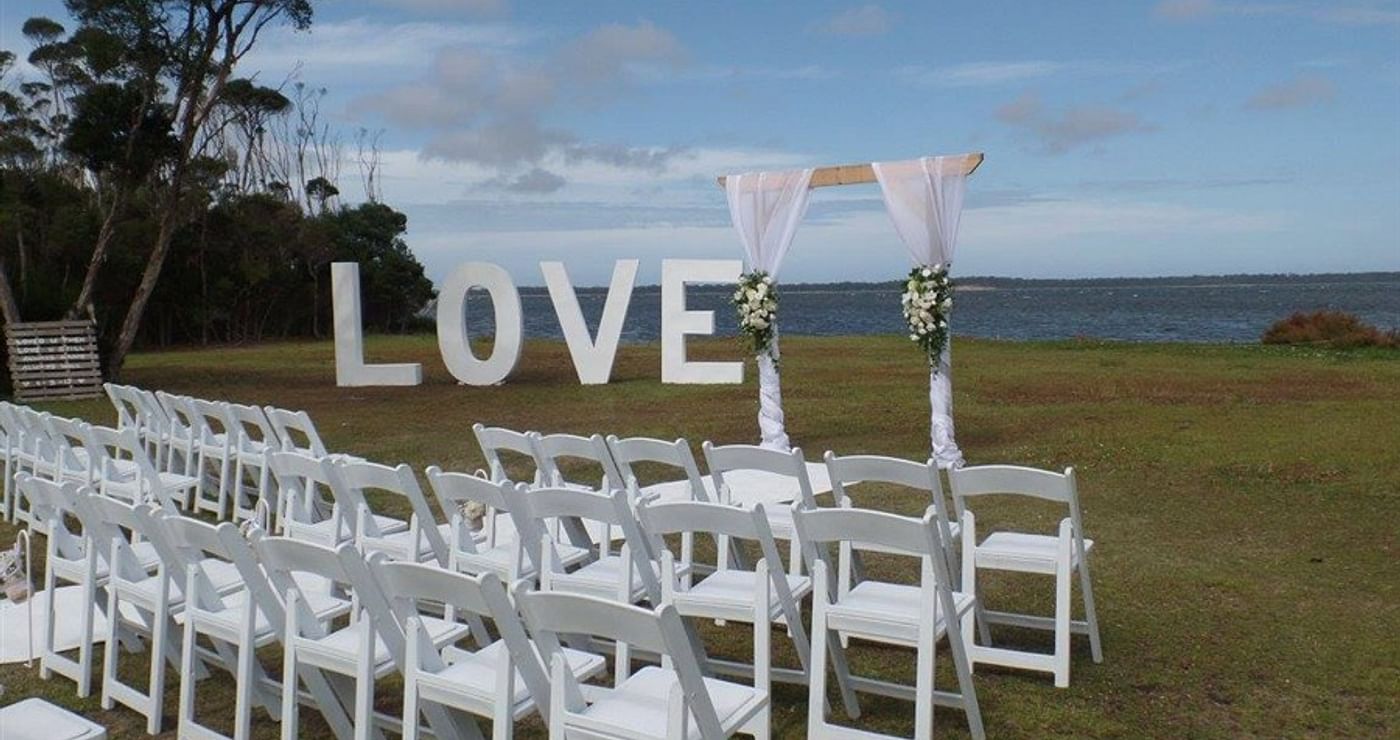
The mirror and the quiet both lose to one picture. The ocean is the better image and I know it. No dam has ever done what the surf does at the end of a hot day. If that is the picture in your head, go and have it. It is a fine thing to want.
Nor are the people who sell it hiding anything. Anybody who has run a room above that water for a few seasons knows exactly what the air does out there at four o'clock.
But there is one thing the sea cannot sell you, and it is not a view. It is ground you can fence.
You never own the water. Not a river, not a lake, not a dam. What a venue sells you is the ground beside it and the angle that ground gives you. That is where inland water quietly wins, because ground beside a river can be fenced and ground beside the sea generally cannot.
A beach is public, which is the best thing about a beach on every other day of the year. On this one it means a permit, a start time somebody else set, a dog, a paddleboarder, and possibly a second wedding along the sand with its own speakers.
A lake in a town park is public in the same way. The grass your chairs go on belongs to a council or a parks authority, and somebody has to ask permission to use it. The straight ones raise that early and lodge the application themselves.
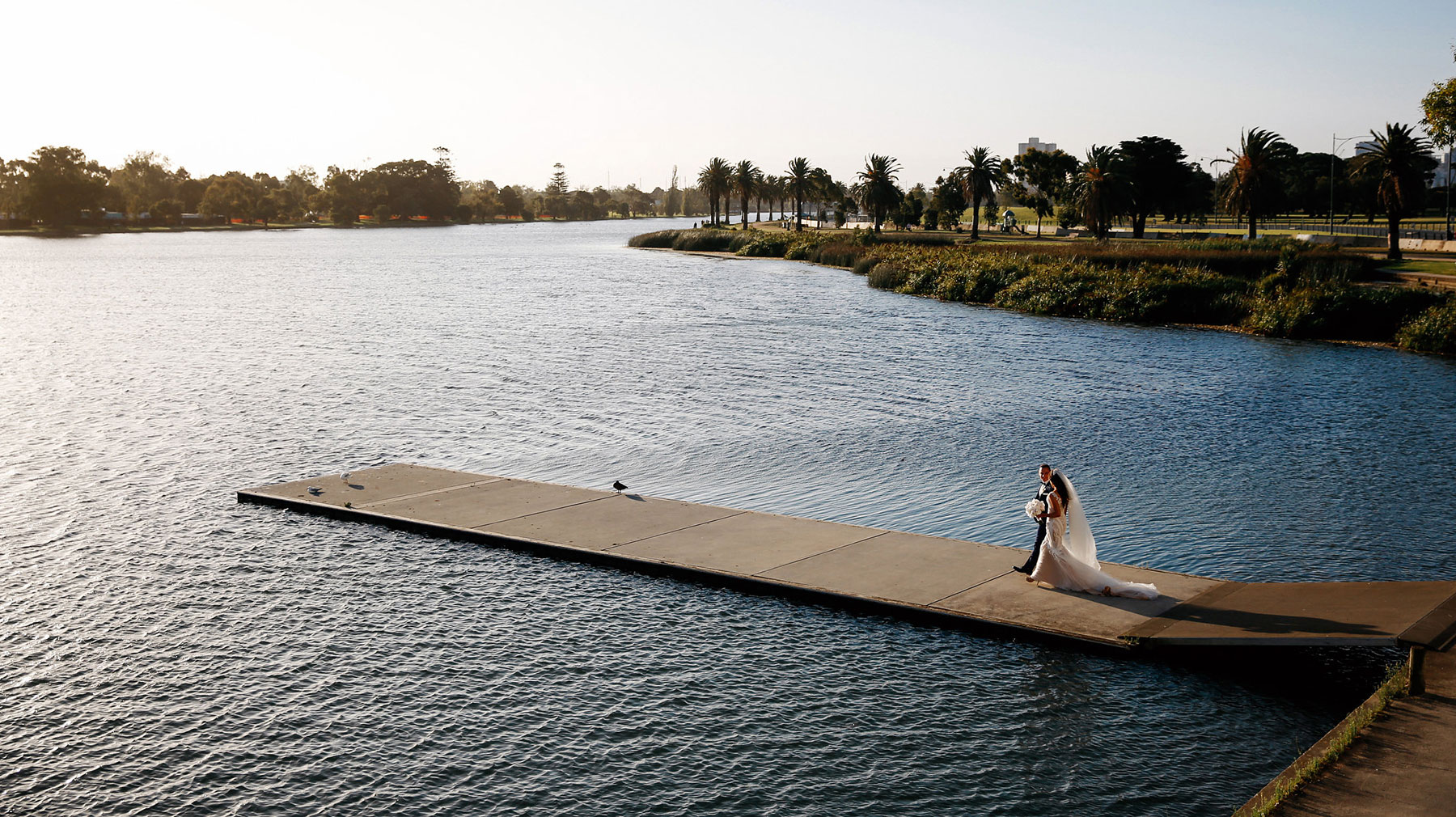
Drive out of town and the ground stops being a permit and becomes the reason you came. A lake with a fence around it, and a gate you hold the key to for the day, is a different purchase from a view of one.
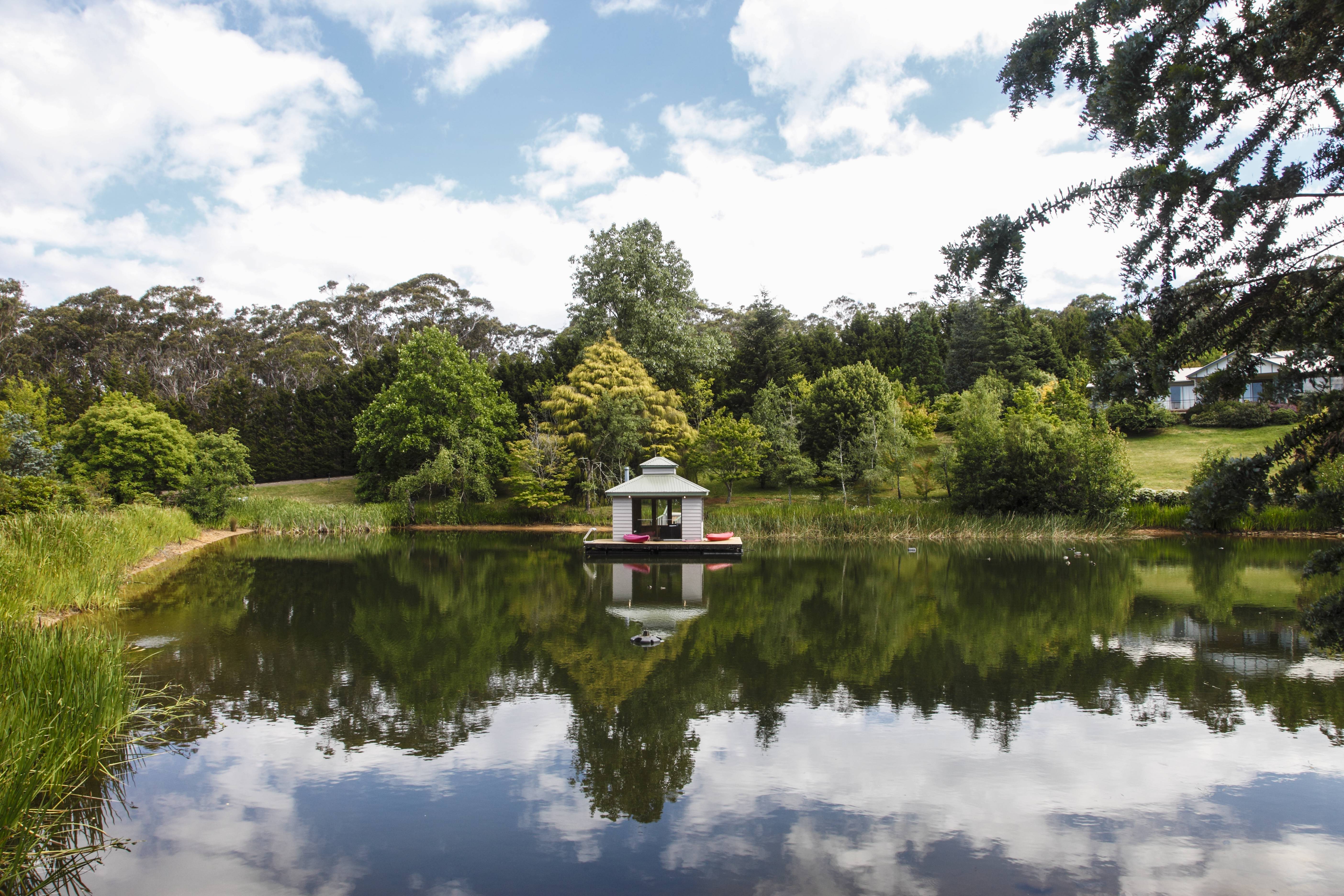
A bank is mud. So watch what gets built once the fence is there. The water's edge gets a deck, some benches, an arbour, a table to sign on. The ceremony site becomes furniture instead of a slope nobody can walk down in heels. Nobody photographs the decking. Everybody stands on it.
Now the bill.
The light you are paying for arrives in the last hour before the sun goes, and so does everything that lives around still water. Insects fly at dusk, in low light, at the exact hour your photographer has been describing since March. That is not a reason to avoid a lake. It is a reason to put repellent on the table with the confetti and ask which weeks are worst.
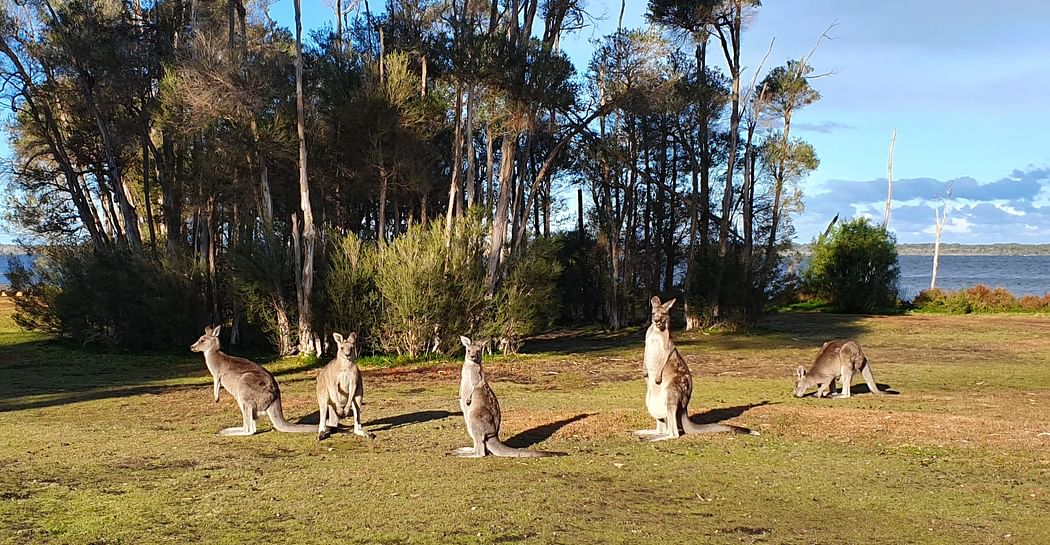
The animals come out then too, and the places that sell that as an attraction are right to. Kangaroos on the grass in the last of the sun is worth the drive. The grass they are standing on is also where the chairs go. Go anyway. A long table beside still water at dusk is exactly what you came for.
The last cost is invisible in every photograph ever taken of a lake. It is how much water there is.
A dam is somebody's water, and so is any lake behind a wall. Its height is whatever somebody in an office settled on this month, weighing irrigation against floods, and your wedding was not part of that decision. A river's level is set by the rain that fell hundreds of kilometres upstream, in a wet year or a dry one. Any of it can change the frame between the deposit and the day.
So nobody can promise you a level, and the venues worth having do not try. What they can do is name the months they will not take a wedding at all. The ones that live with real water do. A season in writing is a business handing back half of its own year rather than let you book into the wrong half of it. Read that as generosity.
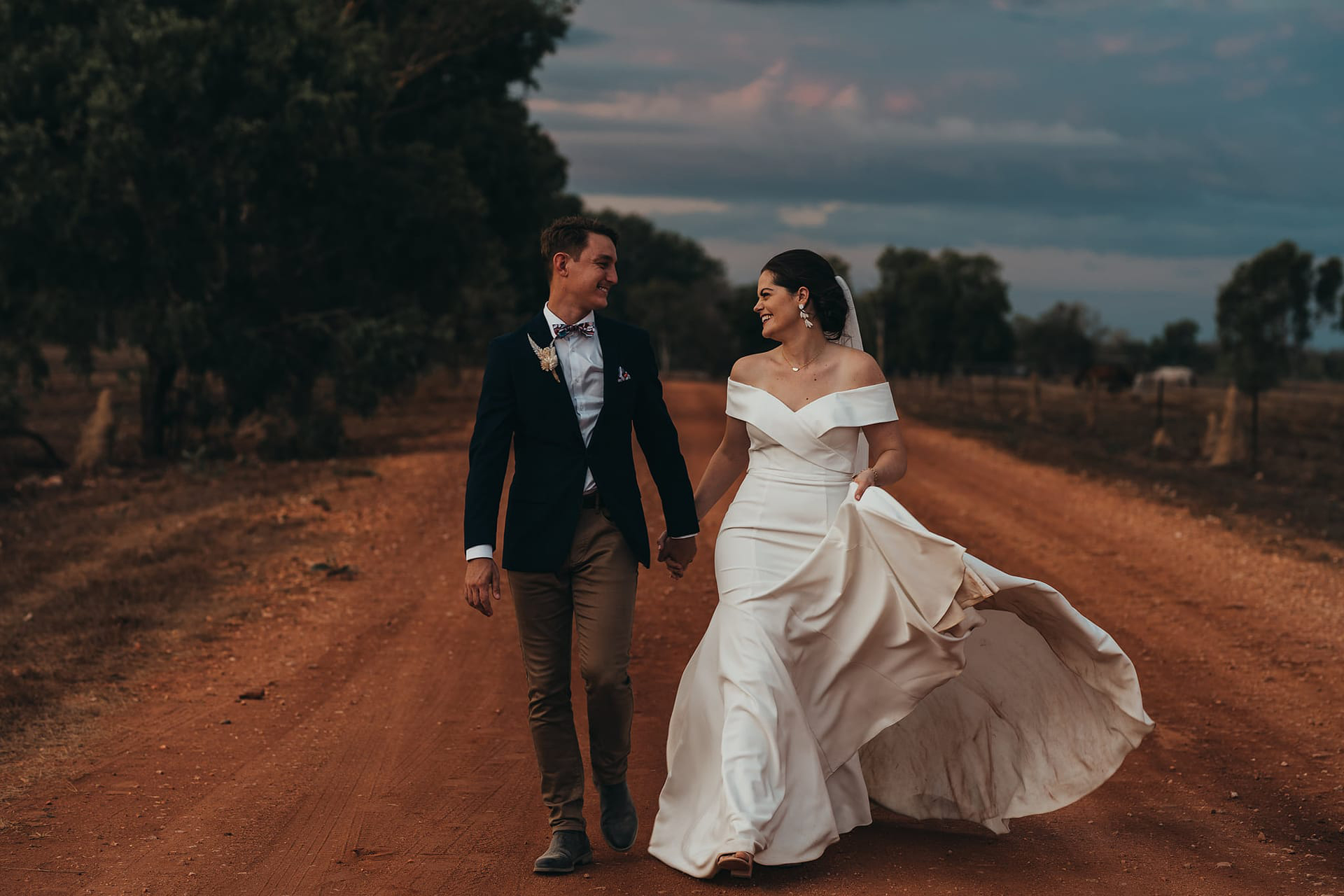
There is one thing you can do about it, and it takes one email. Every venue photographs its water full. Ask for the same view in the month you are marrying, in a year the district was dry. If somebody has that picture they will send it. If nobody has ever asked, the answer that comes back will tell you more than the picture would.
Then book it. And at four o'clock on the day, watch the water go flat and stay flat.
Cave Hill Creek is a lake in a forest, two hours from Melbourne, and the whole property becomes yours for the weekend.

The Wool Press is a 1960s shearing shed on Murray River Road at Granya, forty minutes east of Albury-Wodonga, set on twenty-two acres in the rolling hills above…
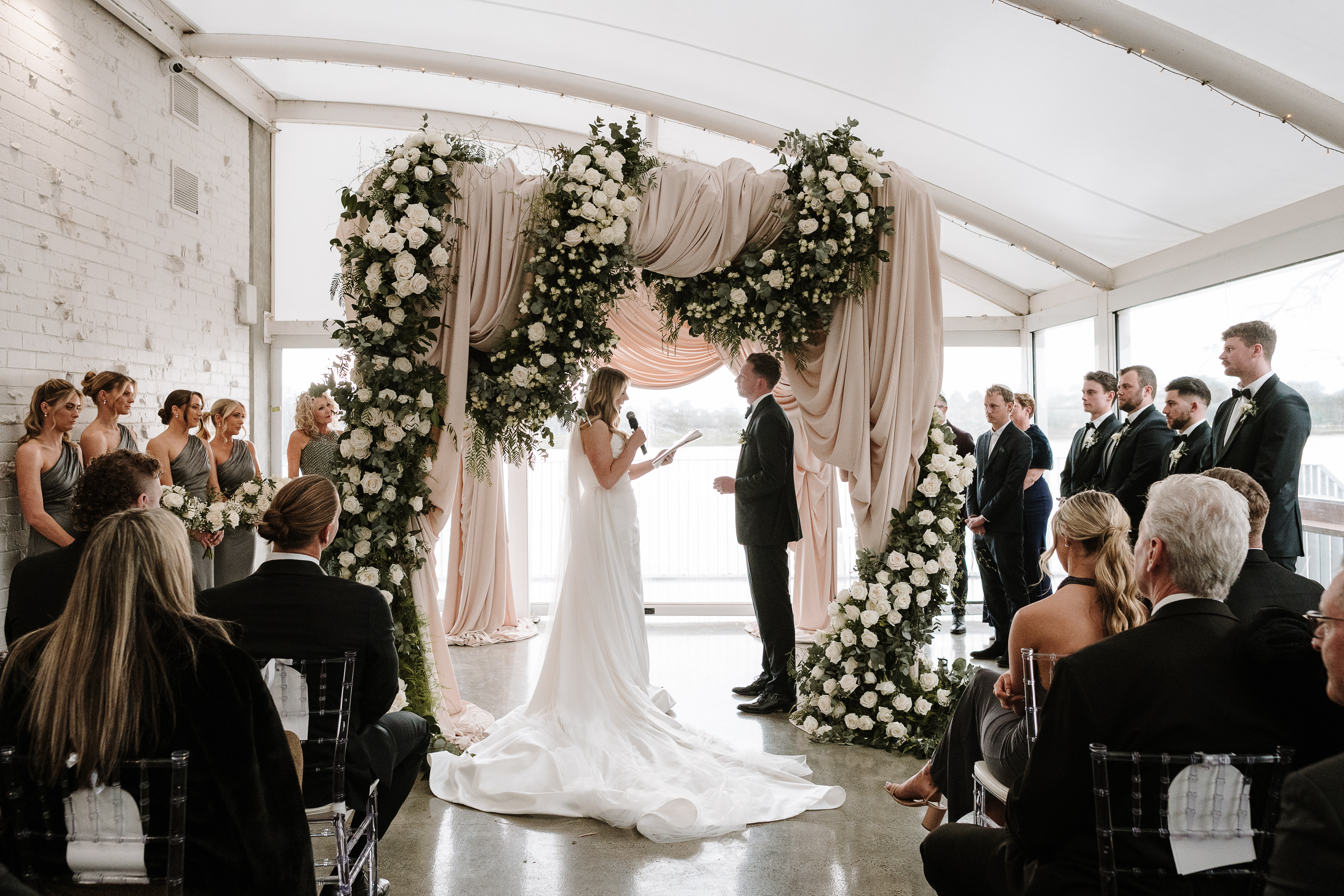
Lakeside Pavilion stands on Lakeside Drive at Albert Park, directly overlooking Albert Park Lake with the Melbourne skyline rising across the water — ten minutes…
Mt Bundy Station is a working cattle property on the banks of the Adelaide River, established in 1911 by buffalo hunter Fred Hardy and family-run since 2007.
Frog Hollow Estate sits on two acres at the edge of the Dry Diggings forest a few kilometres north of Daylesford — a mid-1900s mud cottage, a stone barn and a…
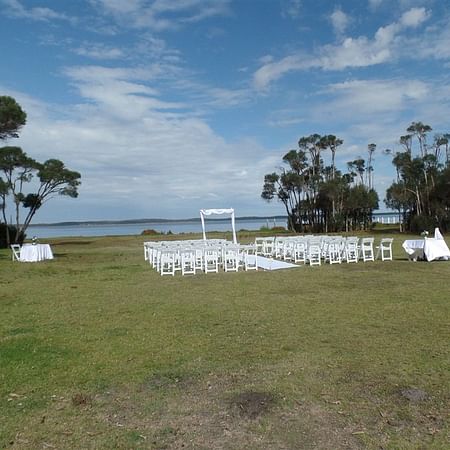
Twenty acres of natural bush on the banks of Lake Victoria, fifteen minutes from Paynesville and twenty from Bairnsdale, with nineteen self-contained lodges and a…
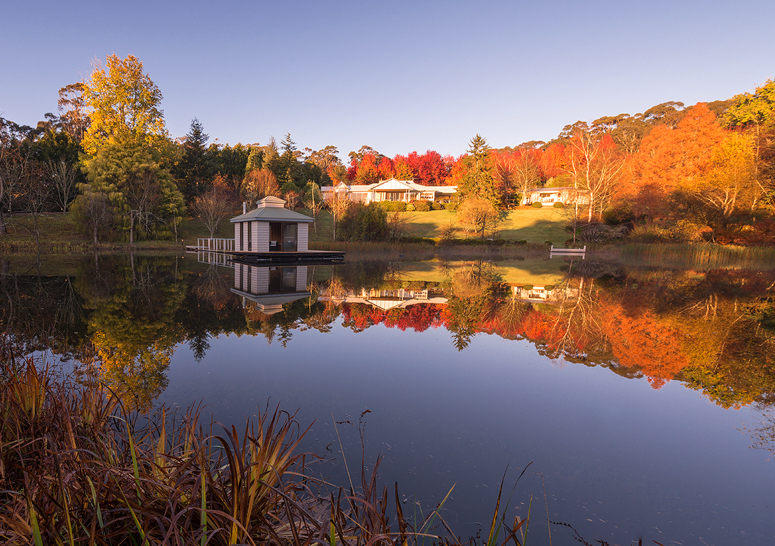
Dantosa hides nine private acres inside the World Heritage Blue Mountains at Katoomba — parkland, walking paths, streams and a mirror-still private lake with its…

Raffertys Resort sits on the southern shore of Lake Macquarie at Cams Wharf, a self-contained lakeside resort where the ceremony, the reception and everyone’s beds…
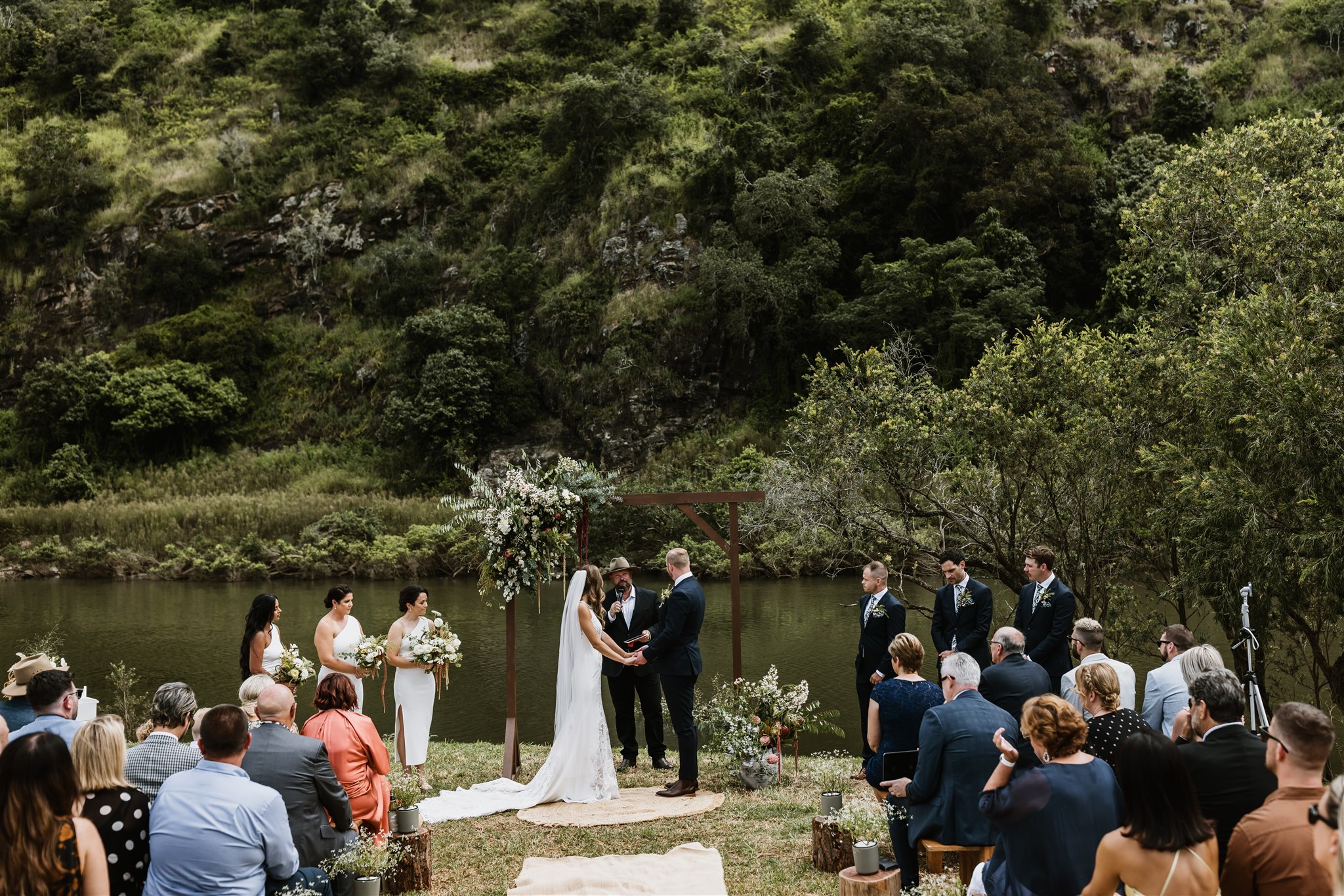
Longview Farm is an 80-acre property in the Manning Valley hinterland with a kilometre of frontage to the Nowendoc River, half an hour from Taree.

A rural retreat at Barmoya, thirty minutes north of Rockhampton, set against the towering volcanic plugs of the Berserker Range — the venue’s own word for it is “a…
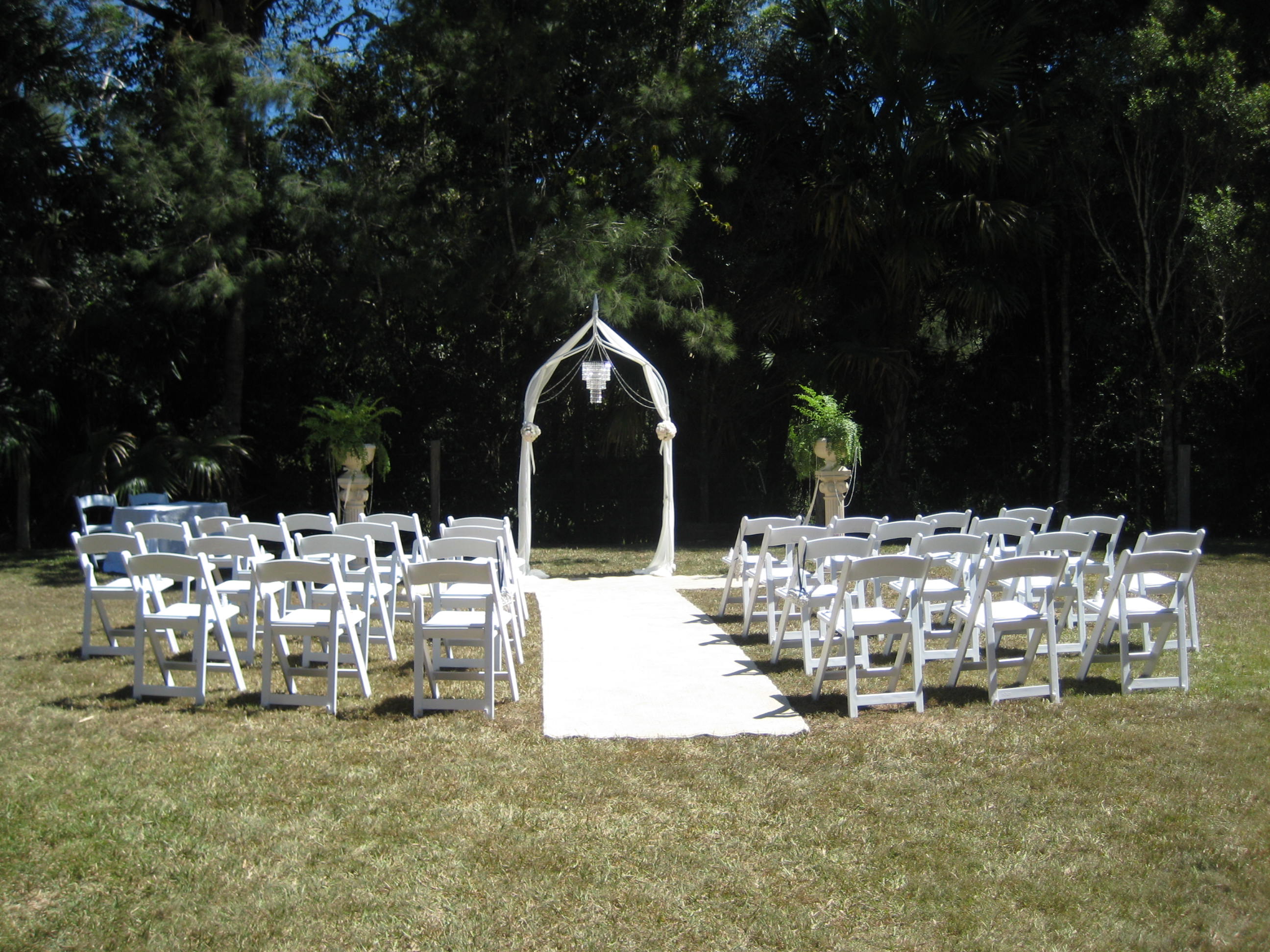
Broken River Mountain Resort sits inside Eungella National Park, 90km west of Mackay up the Pioneer Valley and over the range.
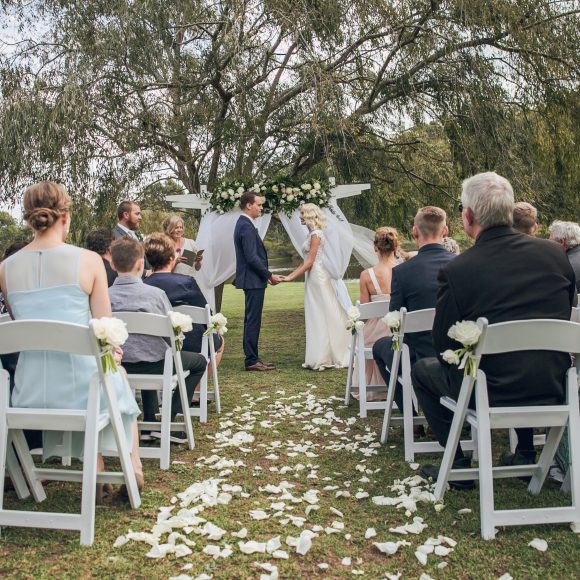
The Lake House Denmark sits in a valley on Turner Road, ten minutes from Denmark in Western Australia’s Great Southern.
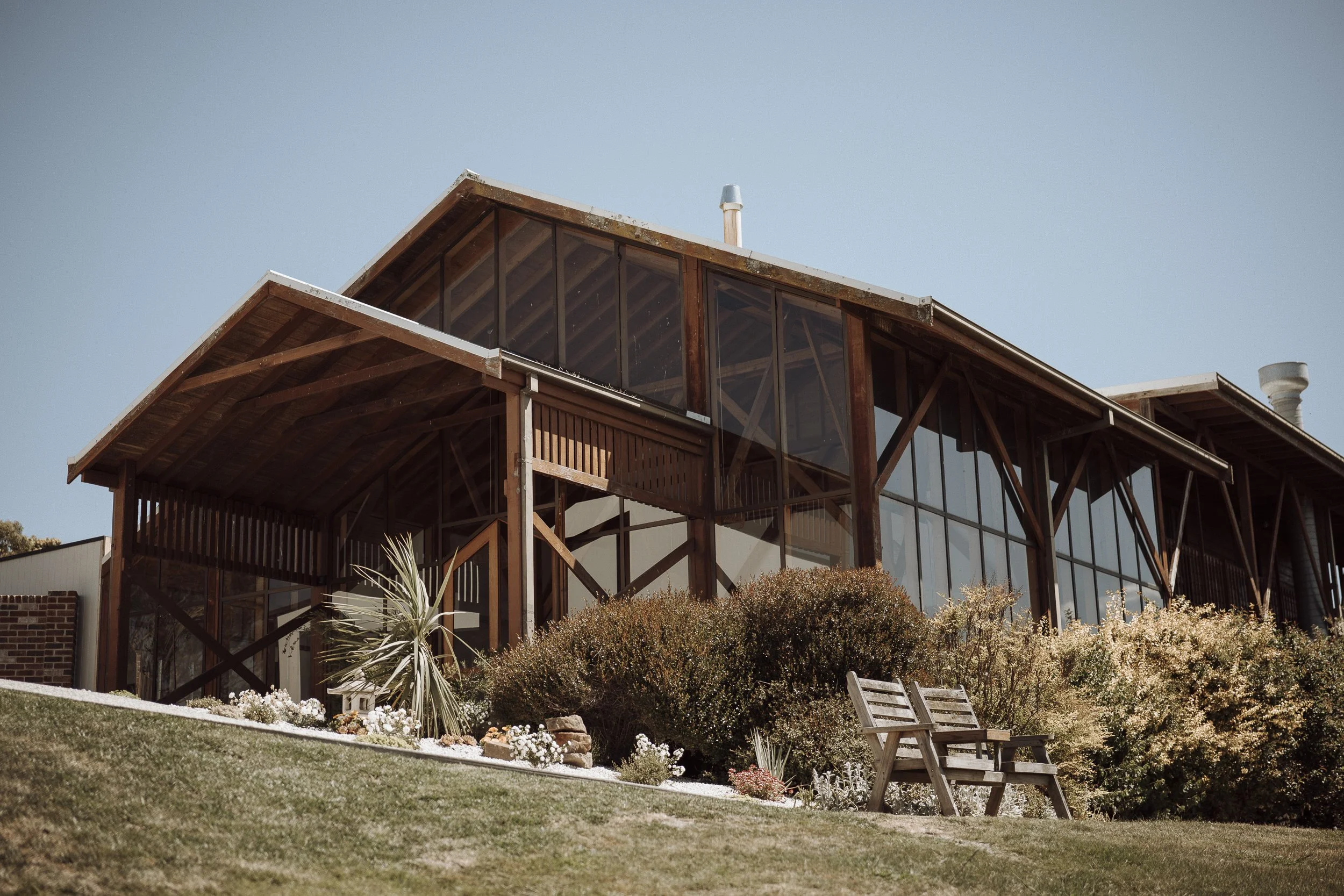
An exclusive event property on the banks of the Tamar River at Legana, ten minutes from Launceston, with panoramic views up the valley.
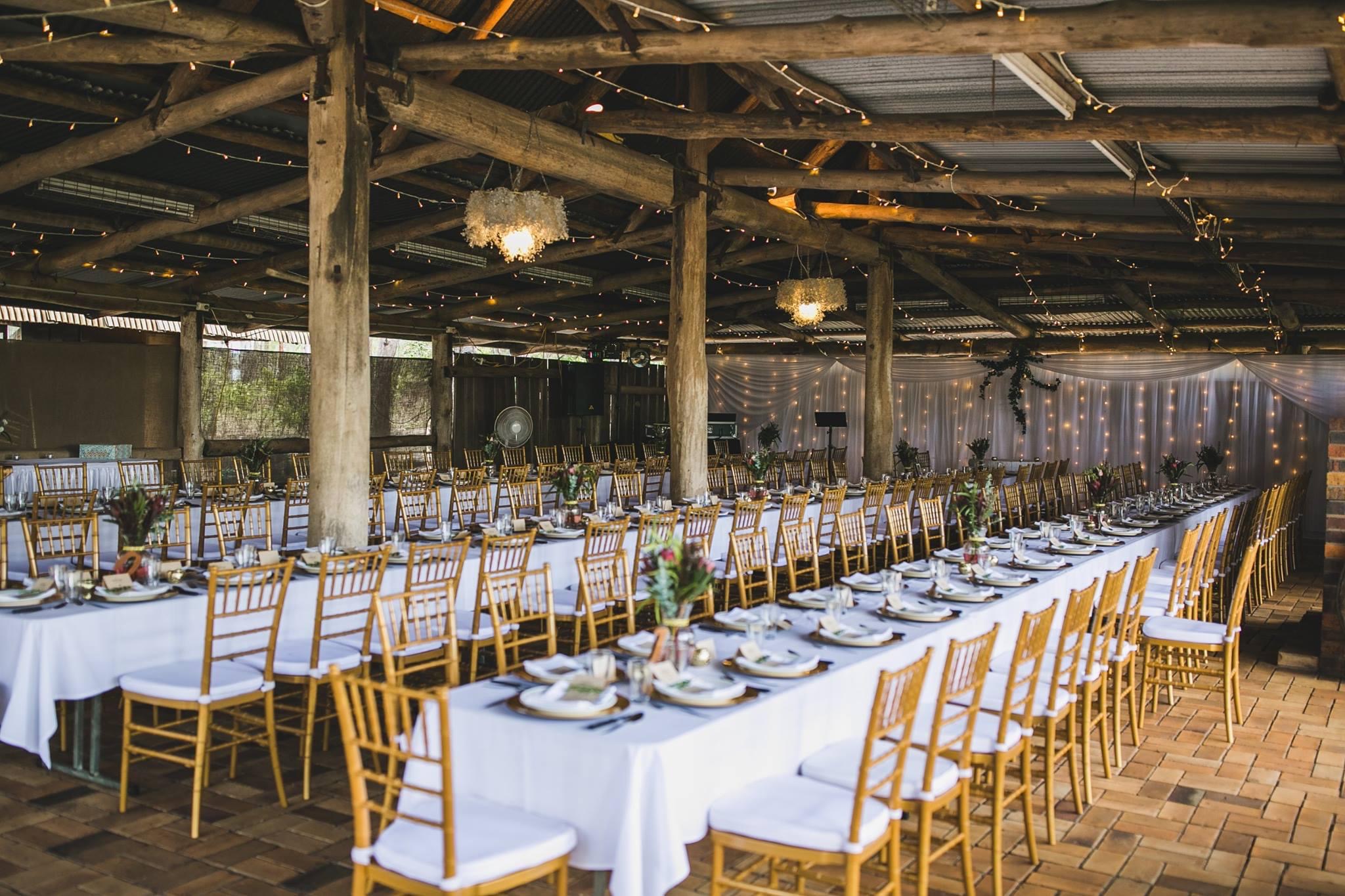
A 20-acre property on the banks of the Burnett River at South Bingera, fifteen minutes from the Bundaberg CBD, trading for over ten years.
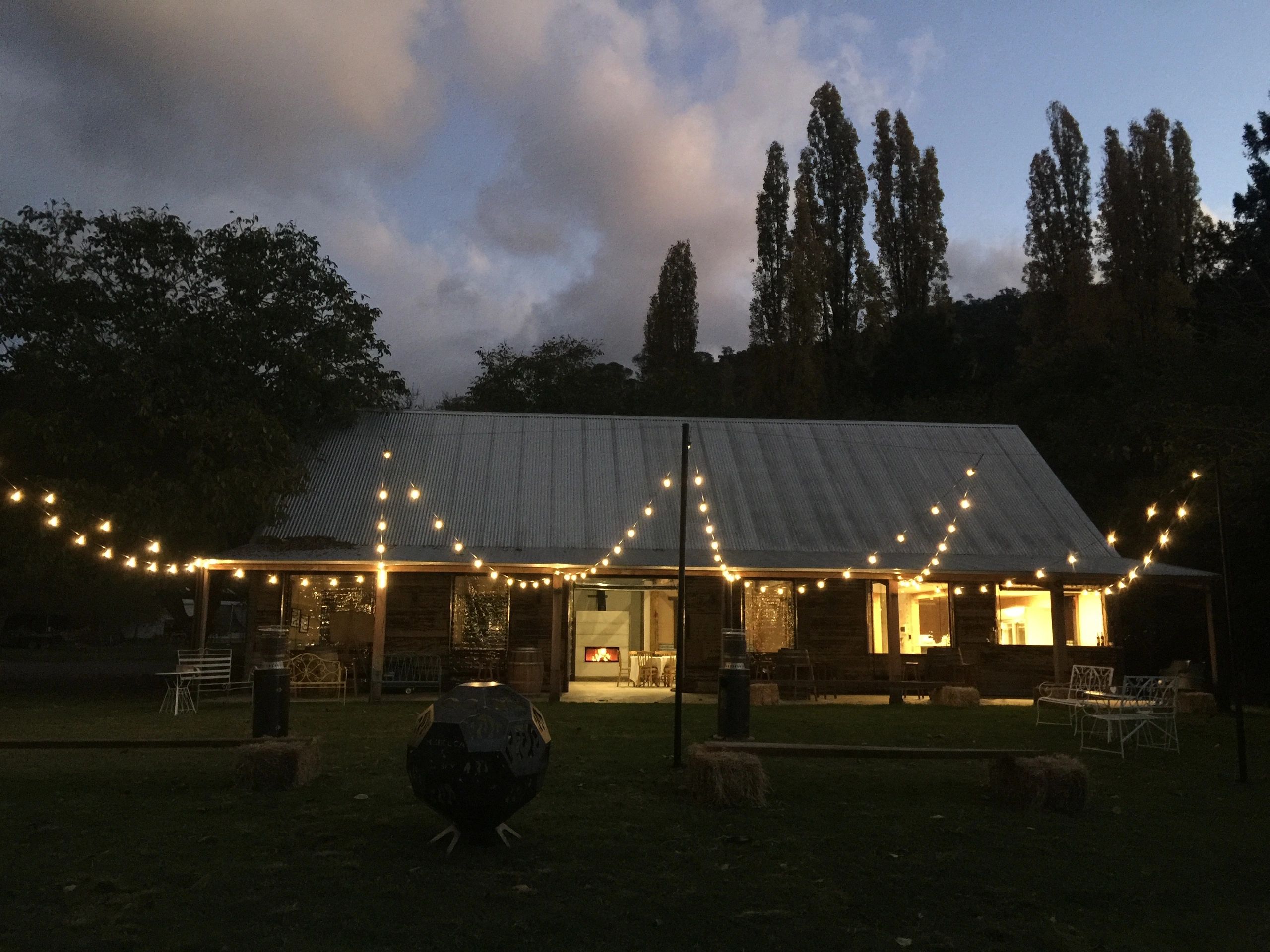
Halfmoon Creek is five acres of native bushland at Wandiligong, in the valley below Bright.
.png)
Parklands spreads twenty-eight acres of heritage garden at Blackheath — oak-lined lawns, a picturesque lake and a glass-walled Grand Marquee, an hour and…
Over 150 acres of lawns, lakes and Swiss-style architecture at Grindelwald, fifteen minutes north of Launceston.