
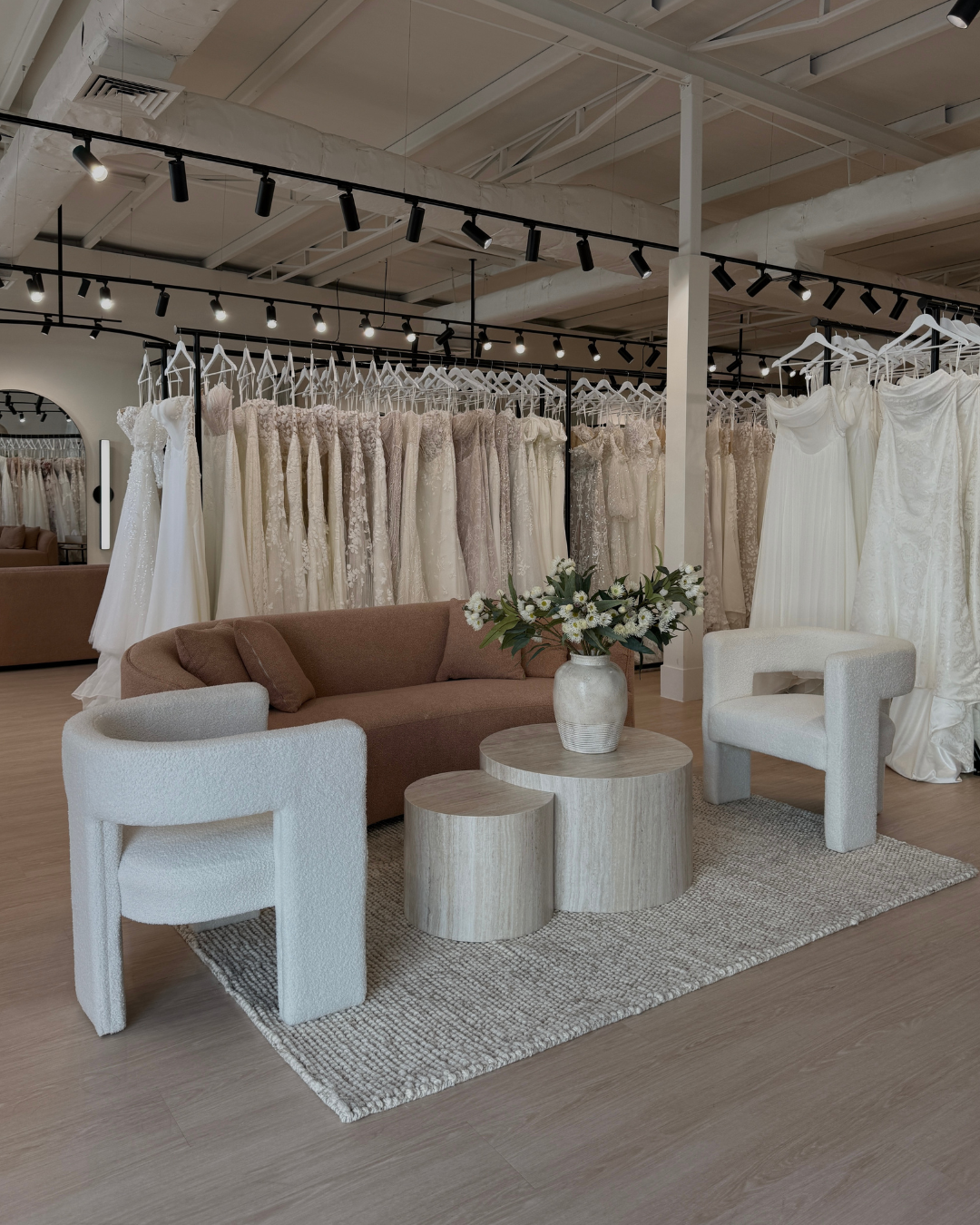
Sydney, New South Wales
Luv Bridal is Australia’s largest bridal chain and has been trading since 2009, with twelve showrooms from Townsville to Hobart.
Bridal Dress Stores
Visit in person
The Journal · Budget tiers
A bridal shop has two size numbers. Only the smaller one decides your afternoon in the cubicle.
By The Little Wedding Planner Editors · · Updated 10 September 2026
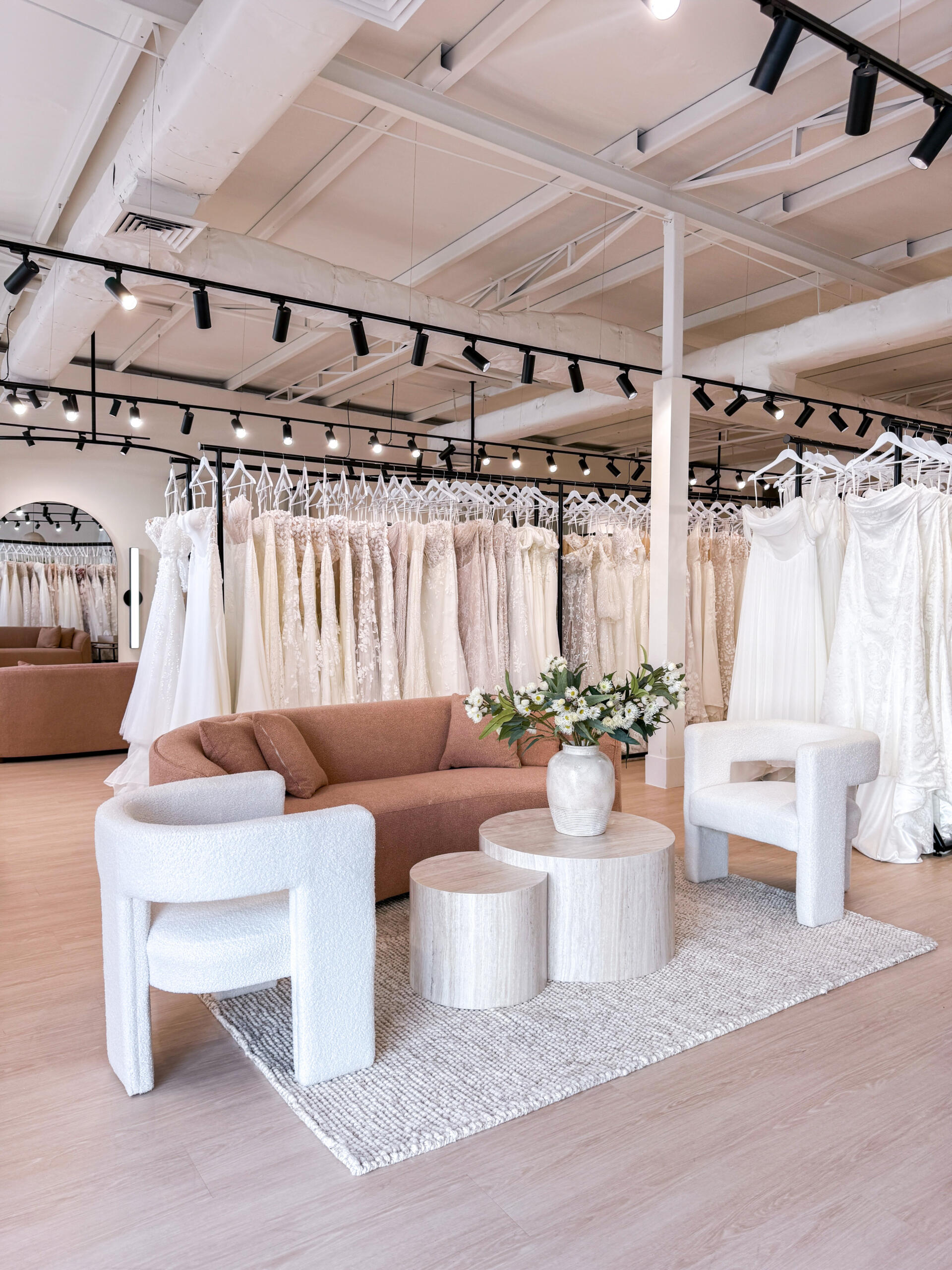
A bridal shop has two size numbers: the range it can order for you and the range it has hanging up. They are different numbers, the rail is the narrower of the two, and it is the only one that decides your afternoon in the cubicle. Ask which one you are reading before you book.
A bridal shop keeps a drawer of clips behind the counter. Bulldog clips mostly, sometimes pegs. They come out when the gown will not do up at the back. A sample is cut in one size and tried on by everybody who walks in, so the clips get a lot of use. The dress on the rack was never going to be your dress. Someone gathers it in behind you and you stand at the mirror, doing arithmetic about what it would look like cut for you.
A one-size sample is not a scandal. There is no version of a small shop that holds every design in every size. The bit nobody warns you about is the ten minutes after. The sample will not go over your shoulders at all, the assistant goes pink, and you are standing in a curtained cubicle in your good underwear working out how to be gracious about it. You booked that appointment because the website gave a size range and the range went a long way up.
The range probably does go that far, on an order form, months from now. The number was true. At four o'clock on a Saturday, with your mum in the good chair outside the curtain, it was no use to you at all.
There are two size numbers in a bridal shop. The first is what it can order, a promise about what can be cut and made for you in the months ahead. The second is what it holds, the gowns standing in the room, the ones you can put your body inside on the day you visit. One is a purchasing arrangement. The other decides what you can actually put on in the cubicle.
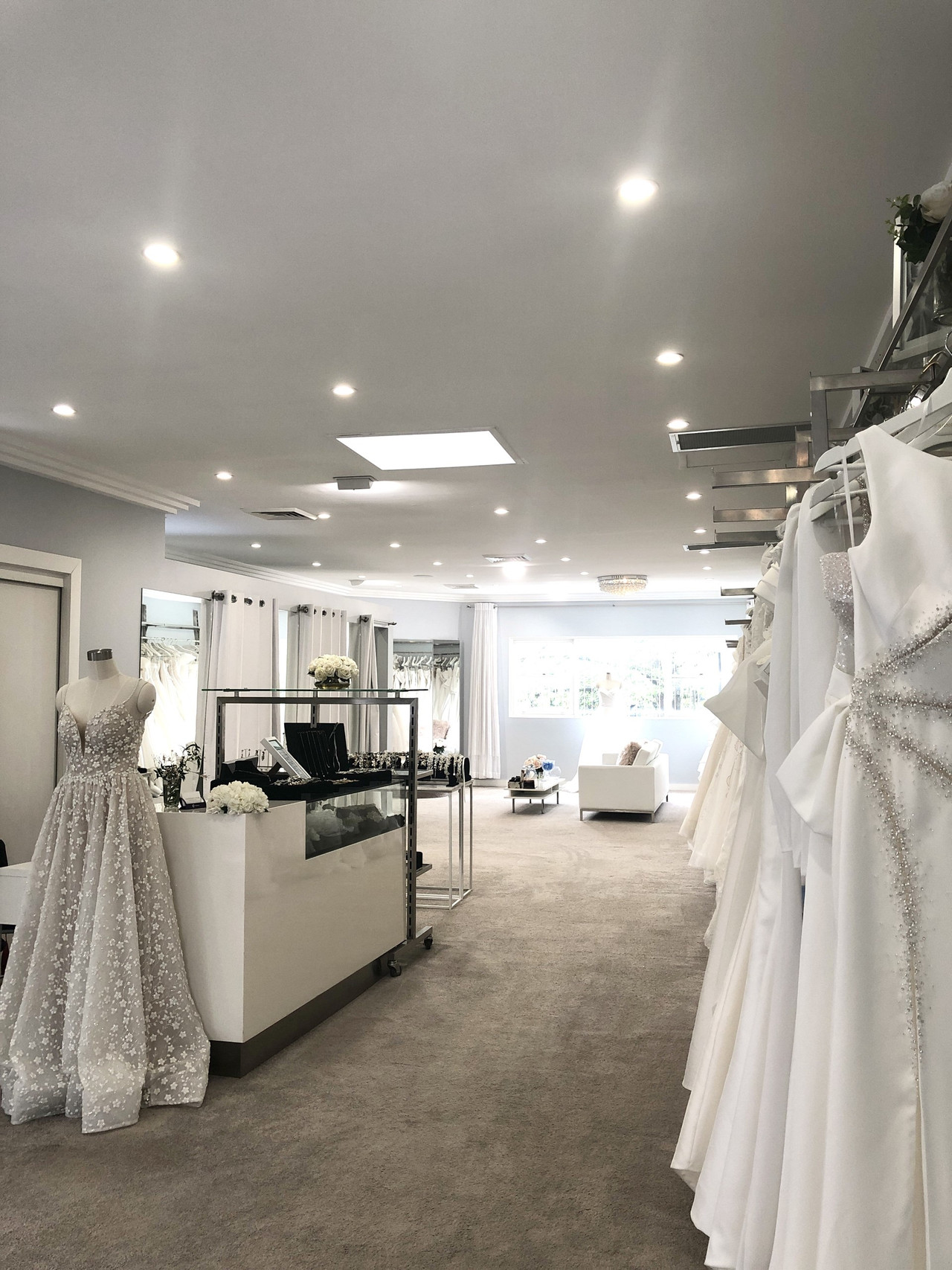
Both numbers are printed in the same place, in the same font, and a size range on its own does not say which one you are reading. Some shops mean the rail. Some mean the order form. Plenty print the number and never say, and nothing makes them. A shop that leaves it open may well have a rail that would delight you. You find that out on the Saturday.
Where the gowns are second-hand and one-off, the number means a third thing, and that one is the plainest. It is what is hanging there today, and each size is in the shop only for as long as that one gown goes unsold. Ring on the morning you mean to go in, rather than trusting a number you read weeks earlier.
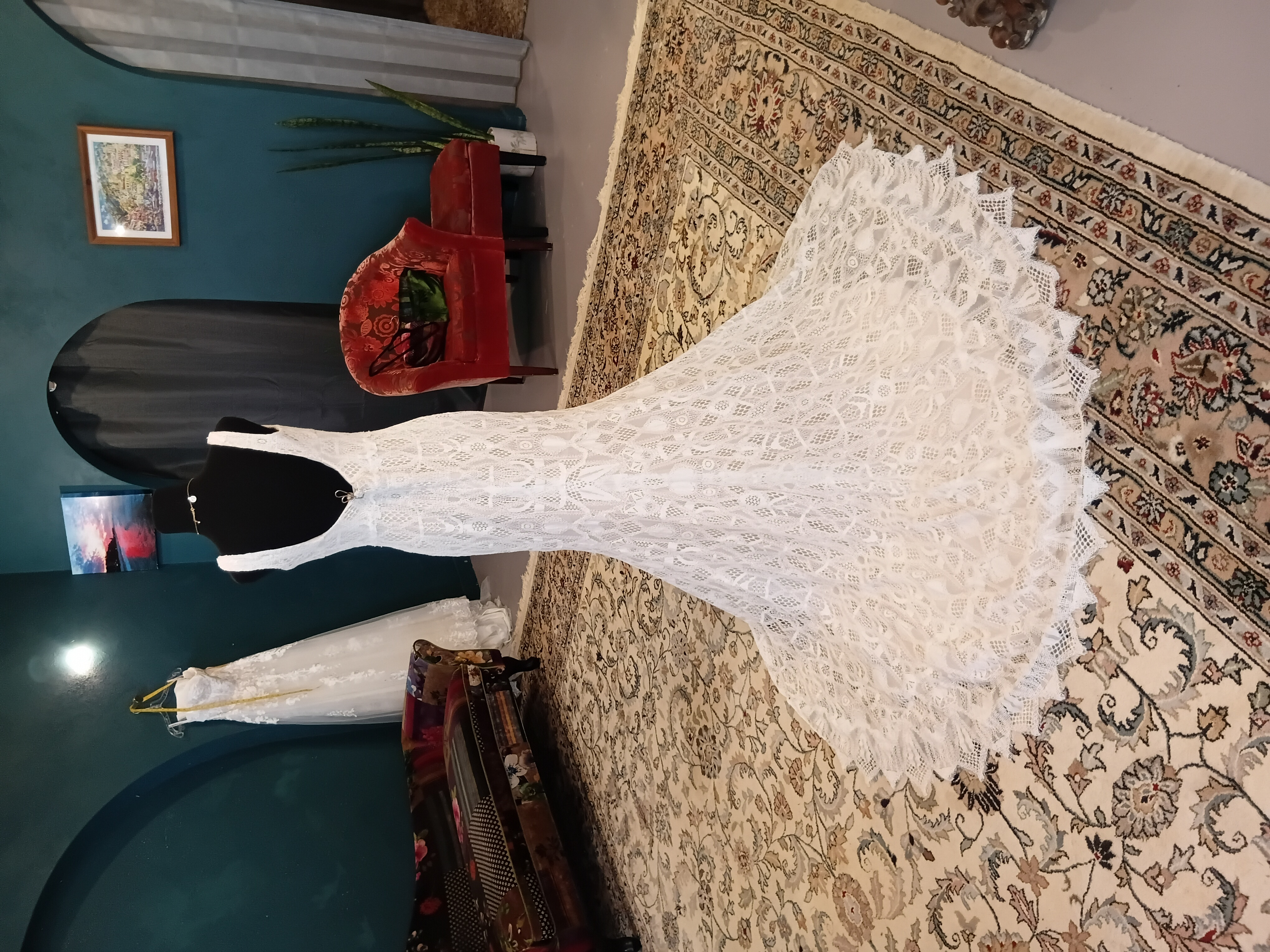
Some shops print both numbers together, in one answer, on their own website. Here is what we can order for you. Here is what we keep in the room to try on. The second number is always the lower one, and printing it takes nerve, because it makes a shop look smaller than it is.
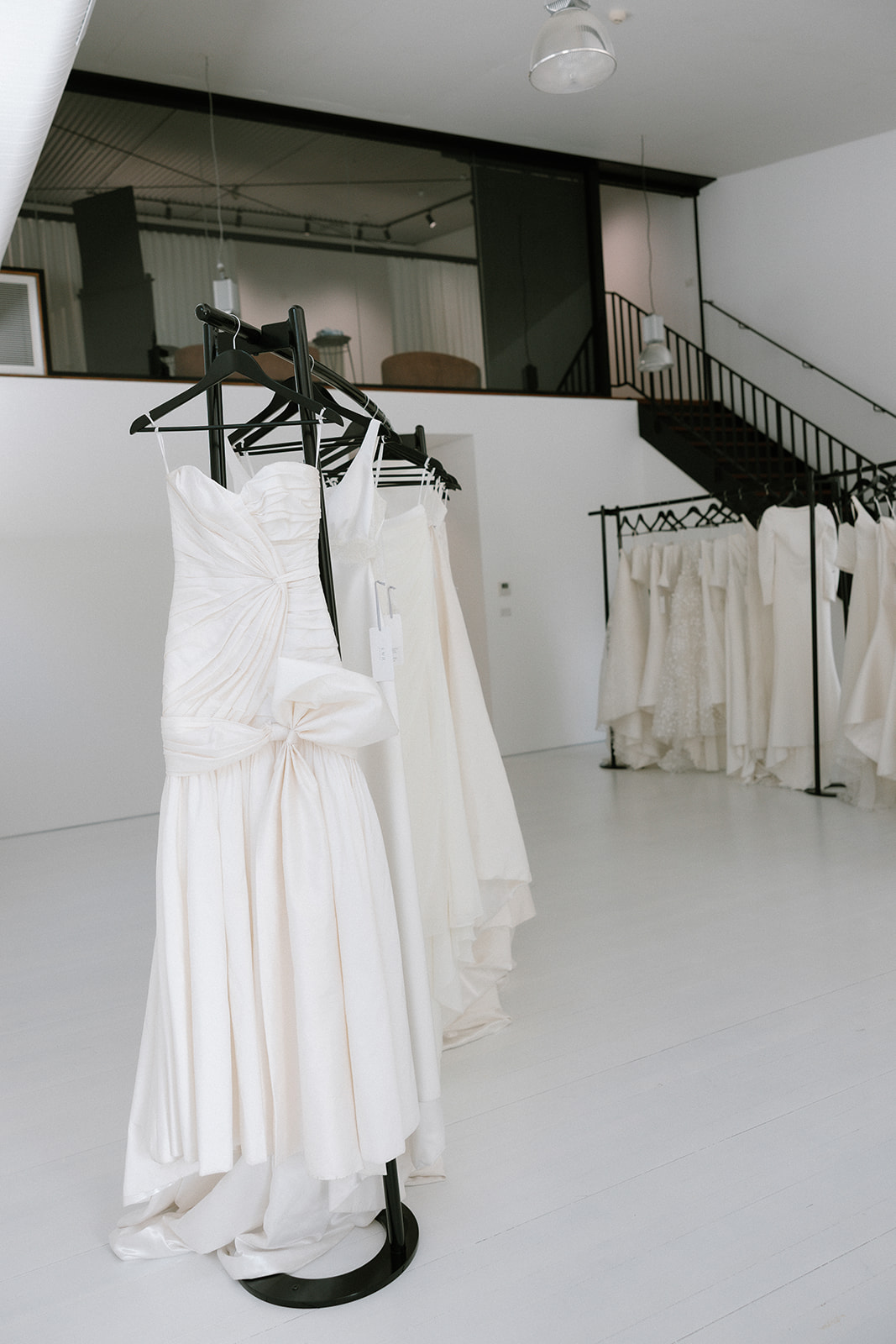
A range that runs a long way up reads like a shop with something in it for you. A short rail reads like a shop that has already made its mind up about who it buys for. Both readings can be wrong. Printing a long order range costs a shop nothing. Printing the short rail is what loses it a booking. Nobody has to behave badly for a trade to end up here.
When a shop does print both, it is not a confession. It is somebody saving you a drive, a park, an hour in the chair and an afternoon you would rather not have had. That is worth a booking.
Almost nothing on a bridal rail is cut to the woman who is going to wear it. Not the gown that fits you at the front and gapes at the back. Not the one held together with three clips while you look at the mirror and try to see past them. A sample is a display copy in whatever size the shop bought it in, and everybody in that room is doing the same imagining.
So a rail is not a verdict on anybody. It is a set of buying decisions made months before the shop knew you existed, out of its own pocket, in the sizes its labels shipped that season. Samples cost money and hang there getting tried on. A small shop can afford a handful of each style, not a wardrobe of them. A short rail means a shop had a budget. It does not mean a shop has an opinion about you.
A shop that publishes its rail has told you what you can try on before you drive over. What it does about the gap is no secret either: a sample pinned and clipped for the fitting, an order cut afterwards to your closest size. The clips do part of the work in that room and you do the rest, imagining the finished dress, and there is nothing wrong with either. The only question is whether you knew that before you took your coat off.
There is also a way of buying a gown where none of this arises. A dressmaker who drafts her own patterns holds nothing on a rack. She cuts from your measurements and builds the dress on you across a run of fittings, so there is no size to get into and no clip to be gracious about. It takes months instead of an afternoon and it costs what it costs. It is not a consolation prize. It is the one arrangement where a size chart never comes into it at all.

Until every shop prints both numbers, you are the one who has to ask, which is the wrong way round. Do it anyway, and do it knowing that none of this is about the size you are. It is about what a shop bought. Ring before you book and ask one thing.
What sizes are the samples I can try on this month?
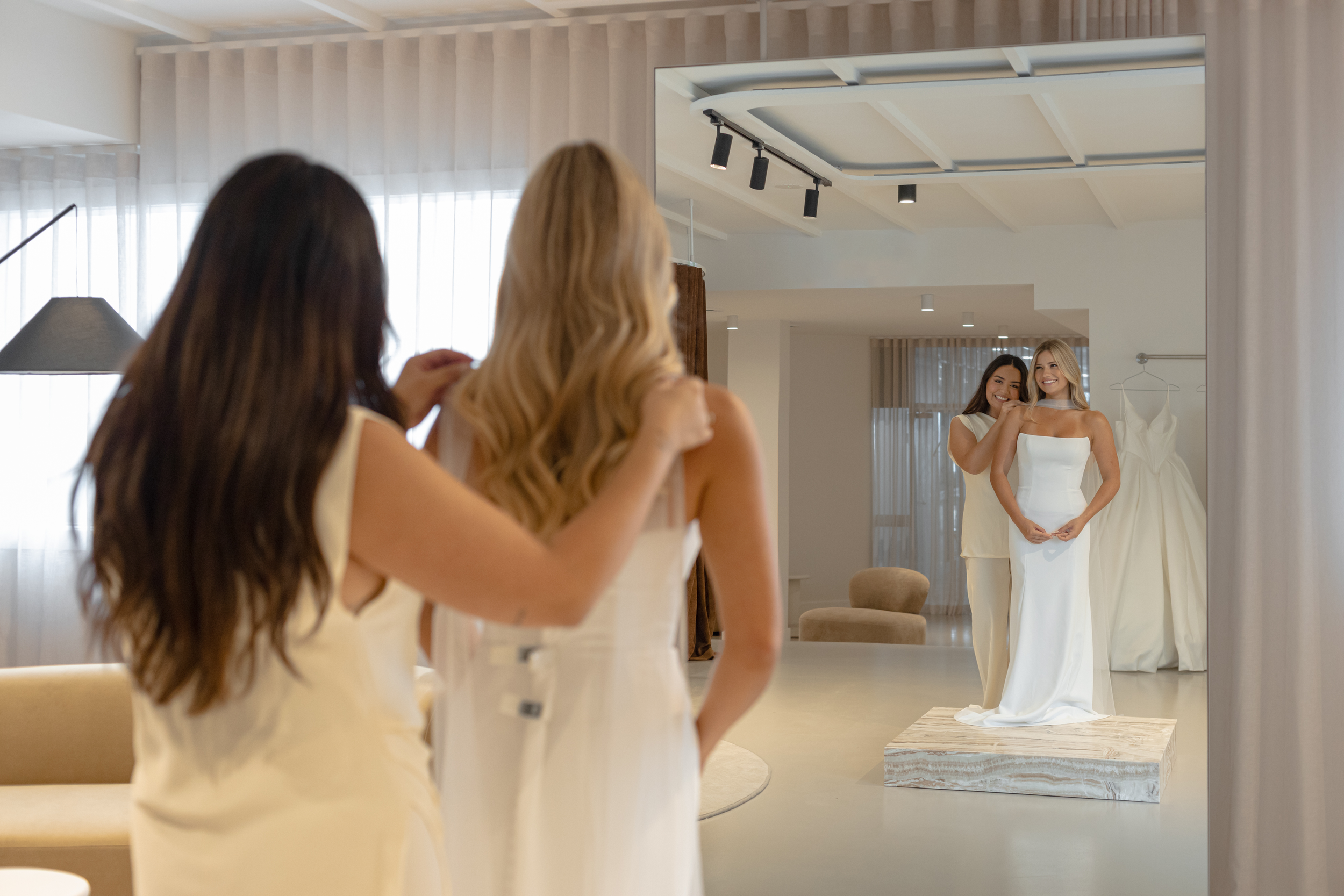
Every word of that is doing a job. Samples, because what can be ordered is a different question with a different answer. Try on, because that is what the afternoon is for. This month, because a rail moves, and a gown that went out in February is not there in March. Whatever comes back, you will know which number you are holding, and you can decide with your shoes still on.
While you have them on the phone, ask what a gown costs before alterations. The bottom of a published price range is the same sort of generous number as the top of a size range: true, and not about the dress you are picturing. Publishing a price and publishing what it leaves out are two separate acts of honesty. So are the two size numbers.
A size you cannot try on is advertising. The clips in the drawer are fine. Every gown in the room gets clipped. Being ambushed by them, in your good underwear, on a Saturday, with your mum outside the curtain, is not.
Luv Bridal is Australia’s largest bridal chain and has been trading since 2009, with twelve showrooms from Townsville to Hobart.

Confetti is the big one in Tasmania, 750 published products across bridal, bridesmaid, formal, cocktail and mother-of-the-bride, run from a single Collins Street…

Away With The Faeries is Nicki Hearn designer, dressmaker, textile designer and corset specialist working from a home studio on the Sunshine Coast since 2012.

Sphere Bridal Gallery is a luxury destination boutique on James Street in Fortitude Valley, one room, by appointment, one bride at a time.
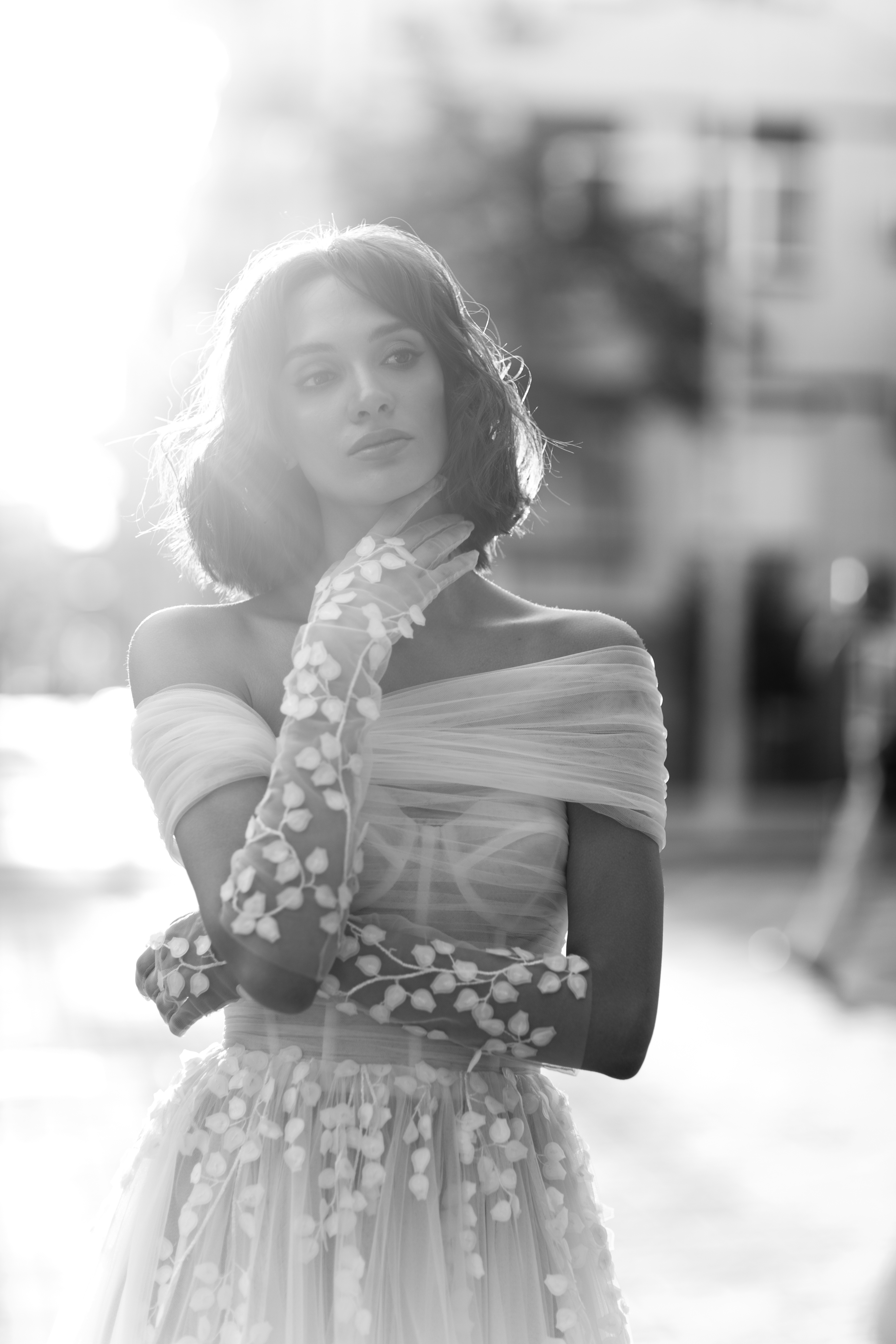
Ivory Bride is a by-appointment bridal studio in South Melbourne, curating “a curated edit of exclusive and highly sought-after designers from Europe and…
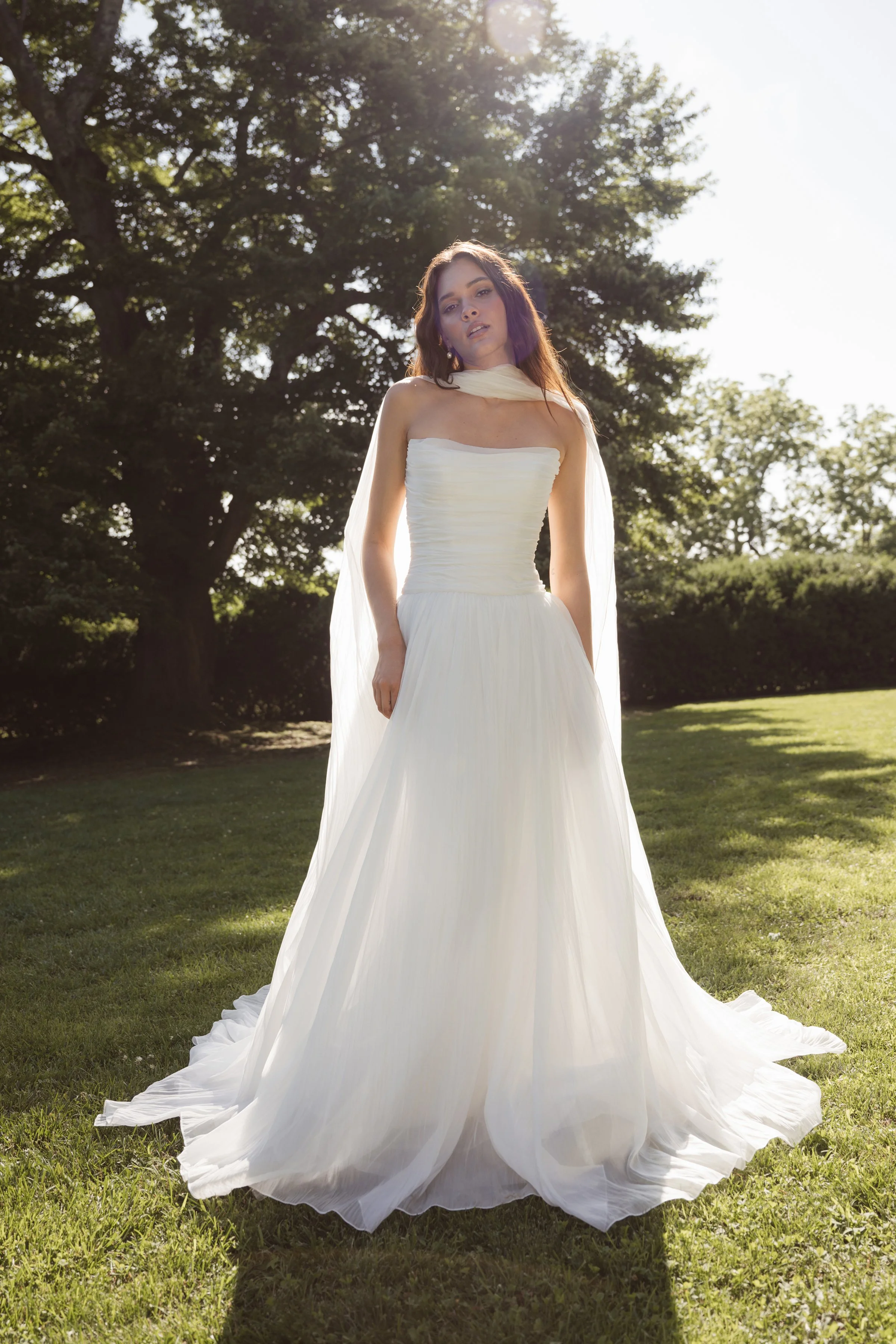
Aura is a by-appointment bridal studio in the arcade on Terrigal Esplanade, a few steps from the beach.
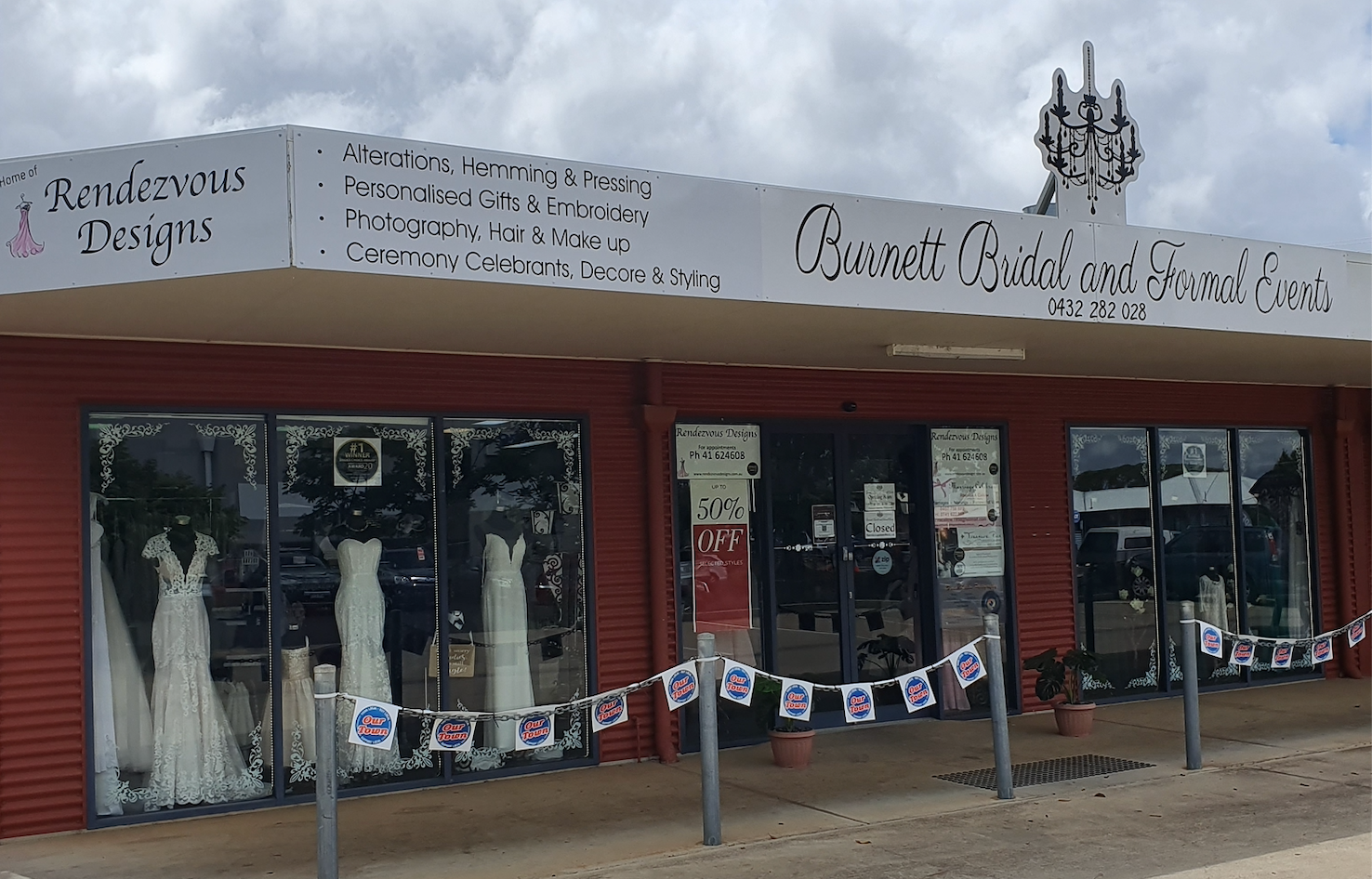
Rendezvous Designs has been dressing brides in Kingaroy for 25 years, and its showroom sits inside the Burnett Bridal and Formal Events premises on Markwell Street.
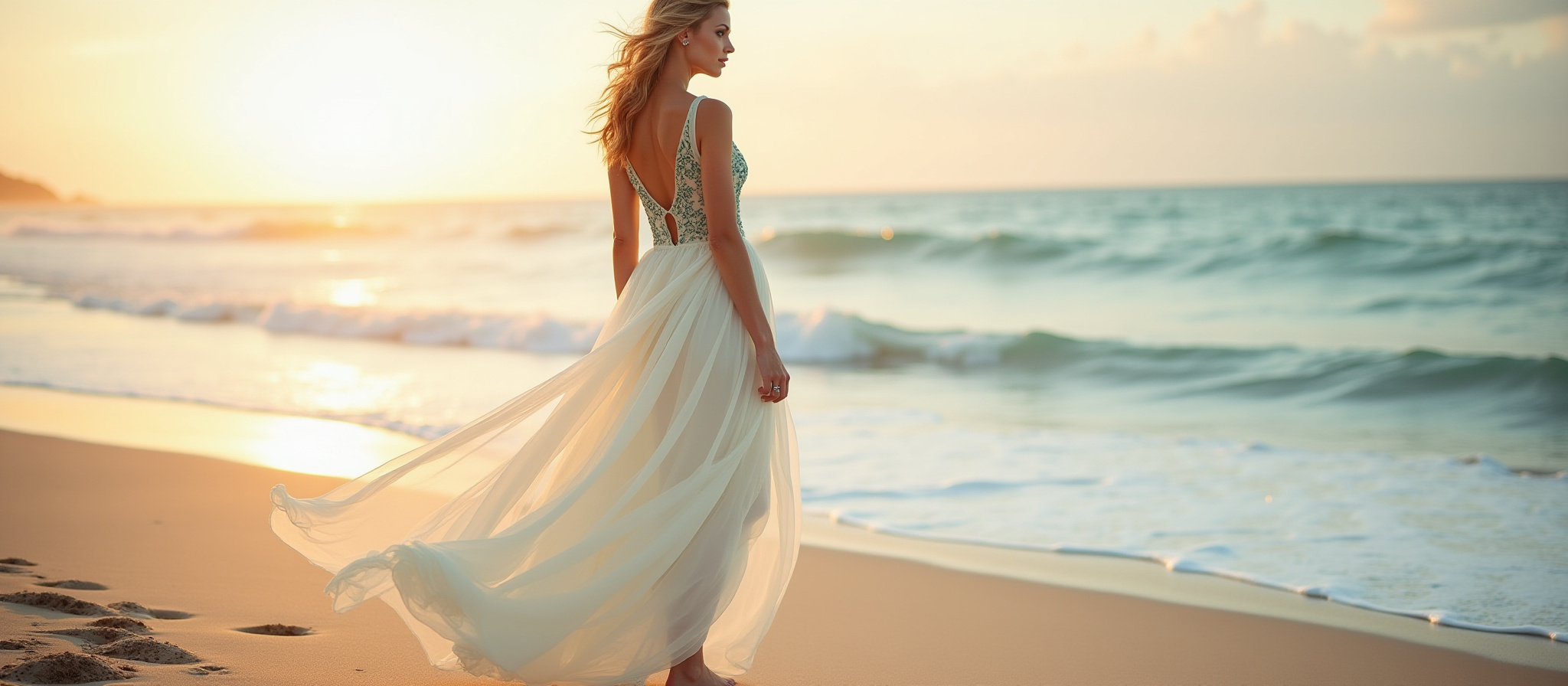
Bohemian Beach Bridal is a Nerang shopfront built around an idea most bridal retail avoids: selling pre-loved gowns alongside new ones, without treating the…
Fashionably Yours has been dressing brides, bridesmaids and wedding guests from its Wahroonga showroom on Sydney’s upper north shore since 2006.
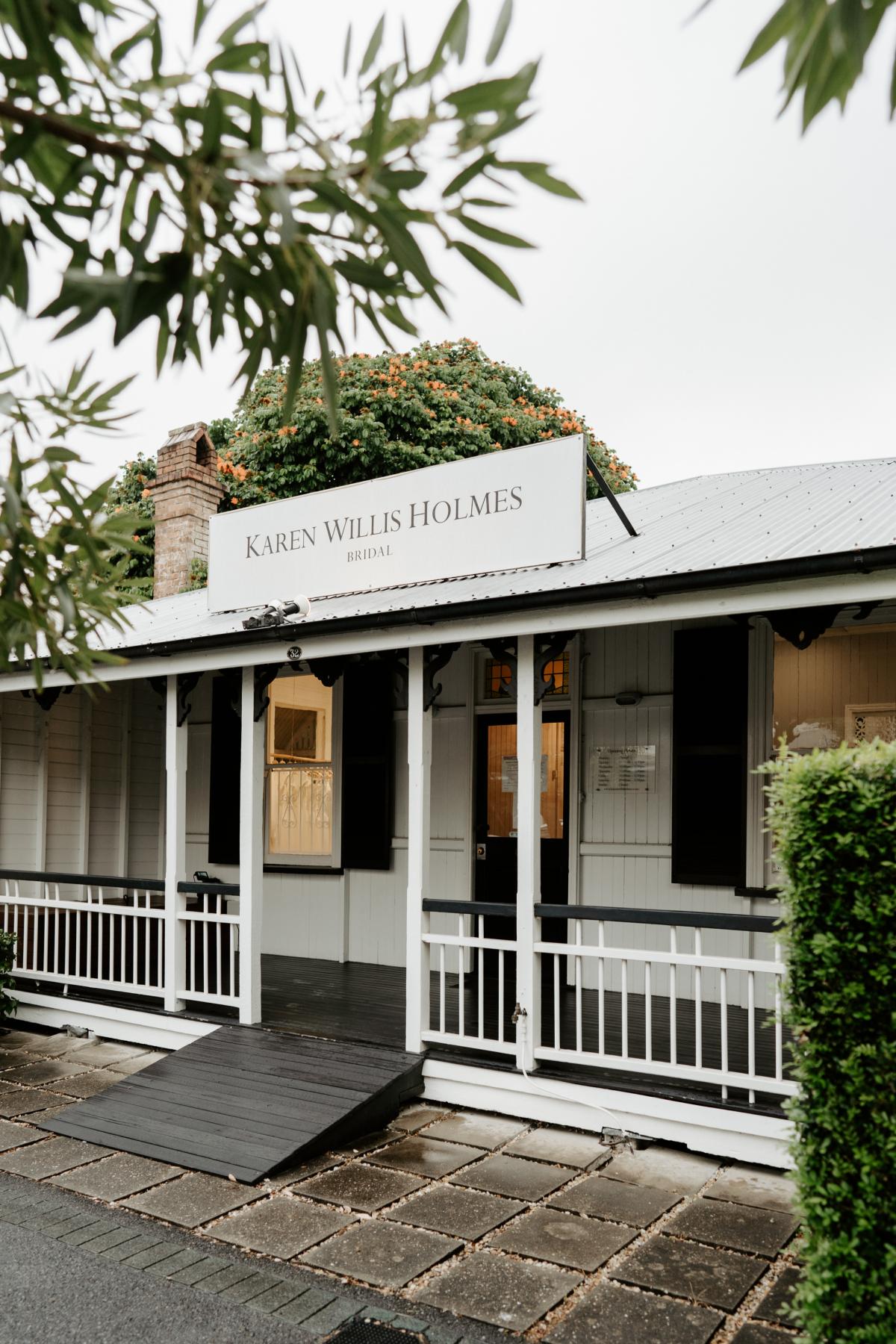
Karen Willis Holmes has been designing in Australia since 2000 and sells its own gowns through three boutiques, a Sydney flagship at Alexandria, a Melbourne space…
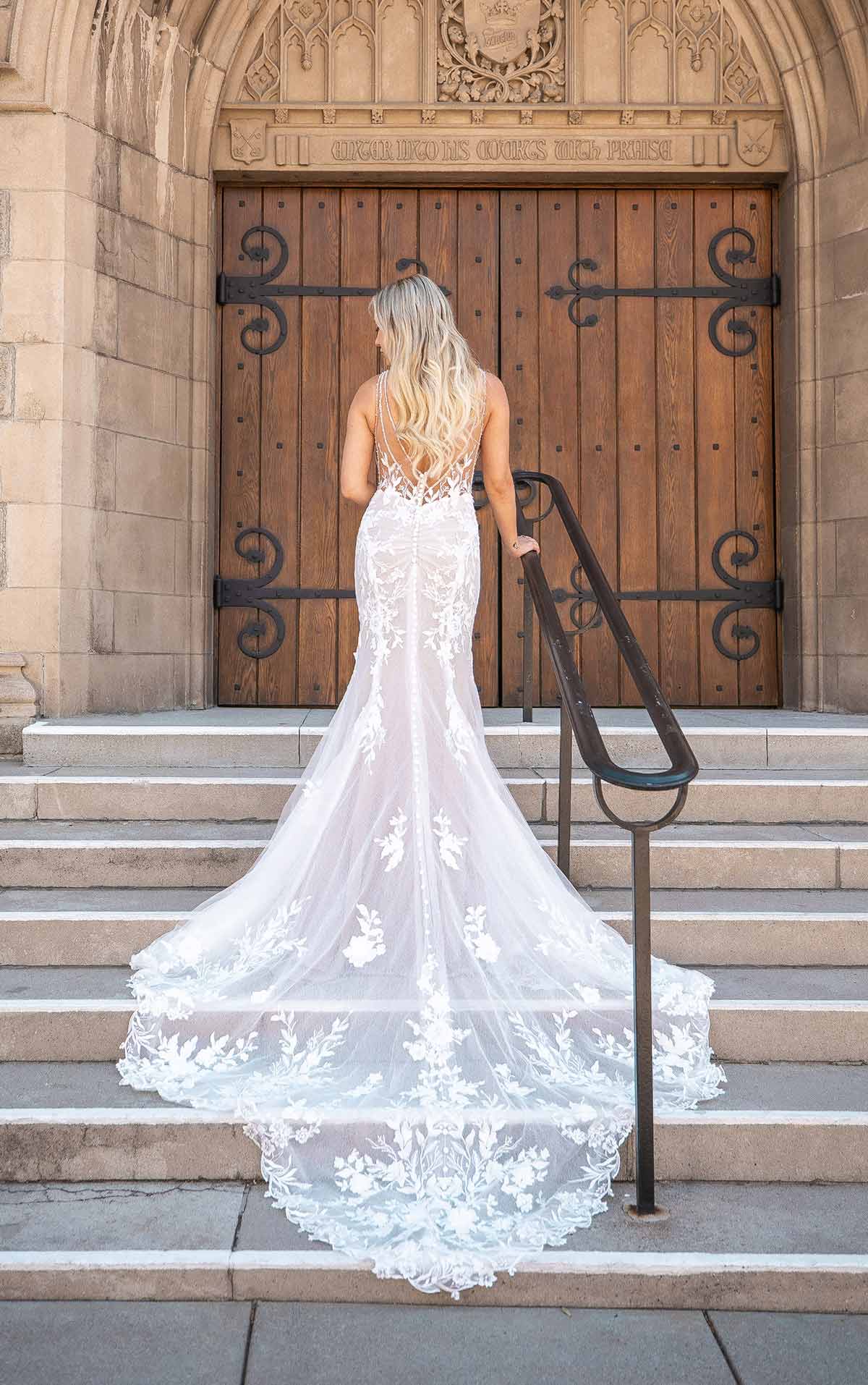
True Society is a bridal retail group with three Australian shopfronts: Rosebery in Sydney, Fitzroy in Melbourne and Leederville in Perth, where it trades as True…
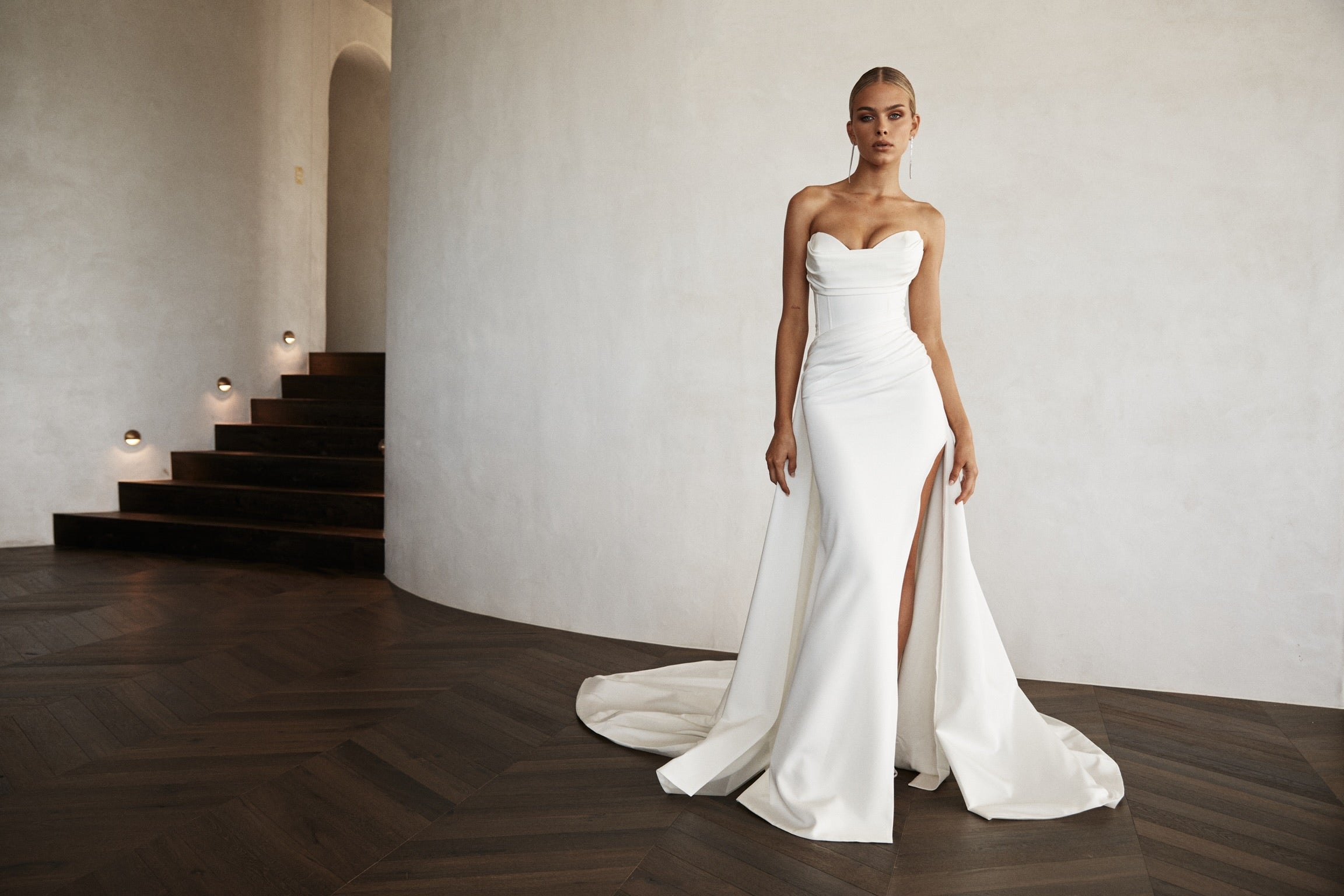
Gladstone Bridal Boutique has been dressing brides in Central Queensland since 197945 years and, in its own count, thousands of gowns.
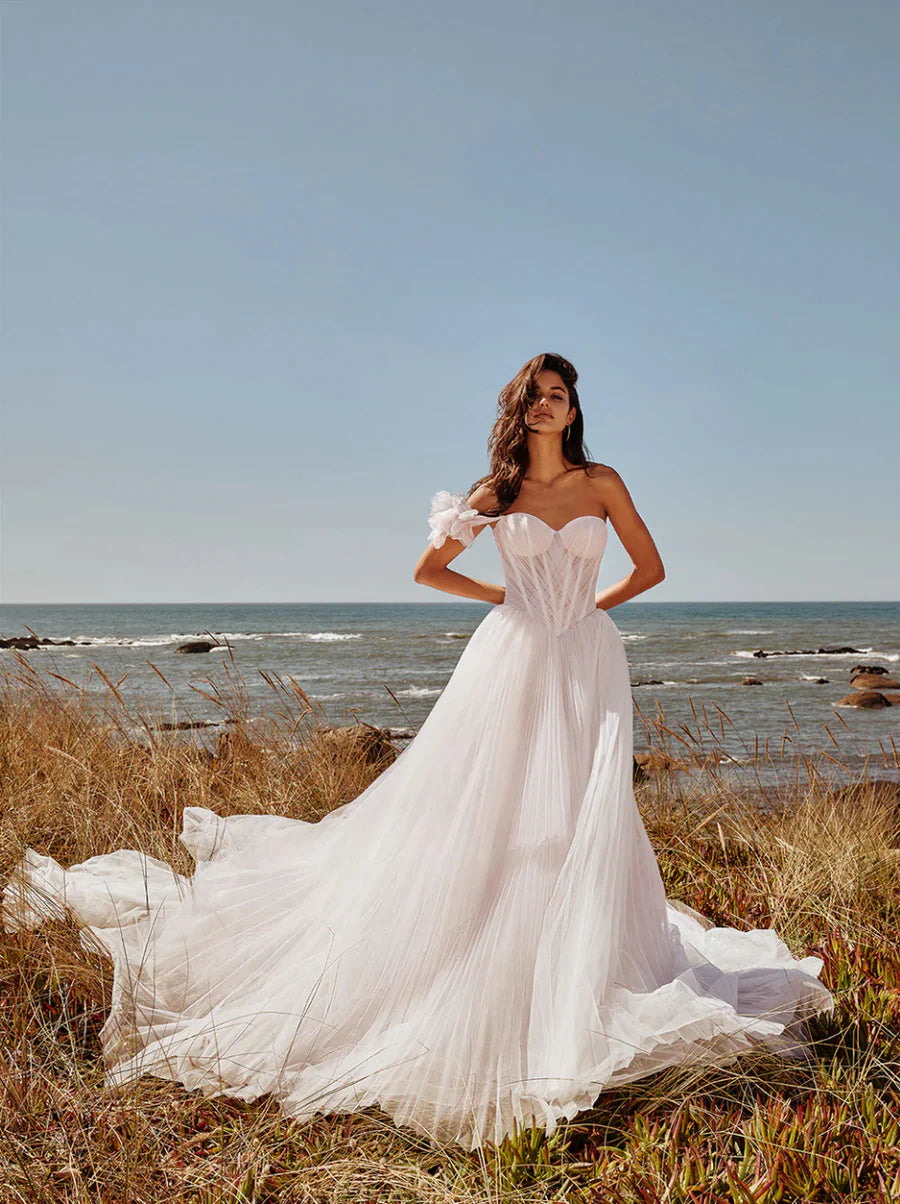
Dion for Brides has spent more than three decades building one of Australia’s deepest designer bridal collections, and its Subiaco showroom is scaled to match…

Accapella Bridal is a one-bride-at-a-time boutique on Auburn Street in central Wollongong, run by Connie Di Genni, a bridal couture seamstress with over 38 years’…
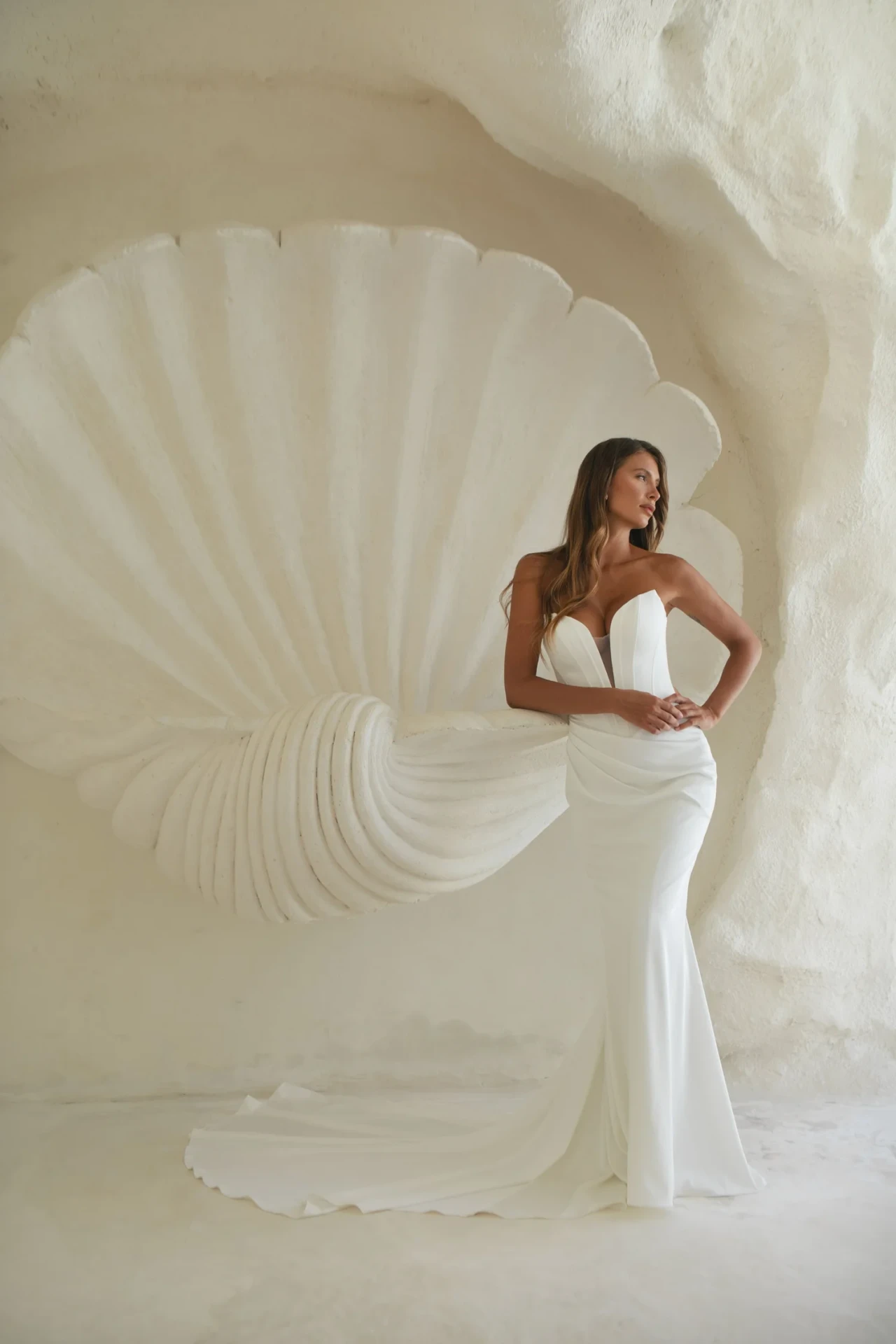
Affordable Bridal has been dressing Canberra brides for over 20 years, and it is exactly what the name says: a large, budget-conscious, family-owned boutique that…
After Five has been part of Queensland’s bridal story for over four decades. It once ran three shops; today it is deliberately one, a single boutique on Kingston…
Angelic Bridal sits on Gympie Road at Chermside, an eight-minute walk from Chermside shopping centre on Brisbane’s northside.

Angelic Inspirations sits in Federation Square at Gold Creek Village, Nicholls, “nestled in amongst the delightful shops and cafes” in Canberra’s north.