A gown that has sat in a box for forty years is a fabric problem long before it is a sentimental one, and the studios that do this well say so first.
By The Little Wedding Planner Editors · · Updated 10 September 2026
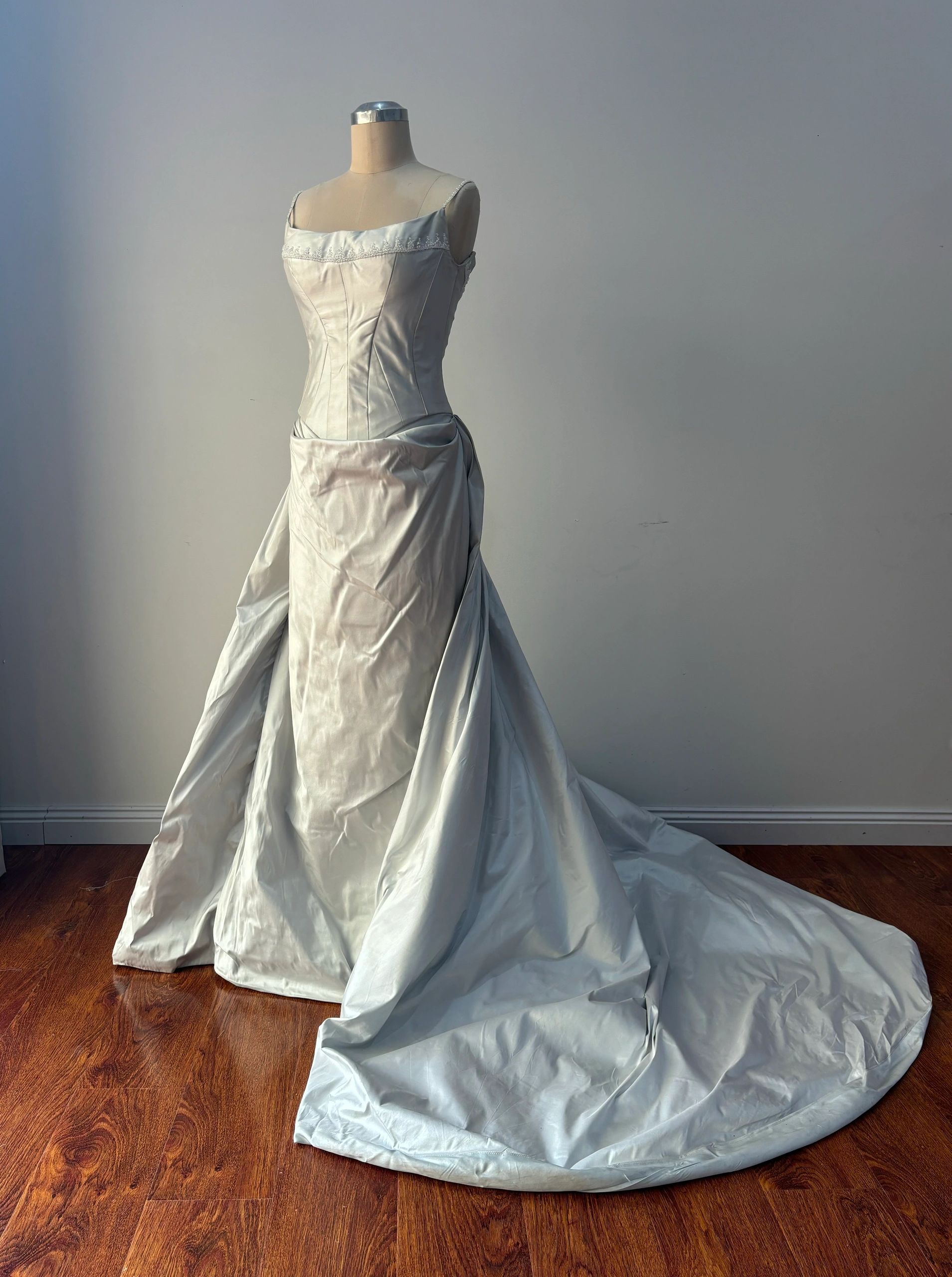
A gown on the stand at Lyn's Bridal & Formal Alterations on the Mornington Peninsula, where the dressmaker has been at this for over fifty years. Panels, lacing and inserts cut true to the design are listed there as work in their own right.
The argument
Your mother's dress is a material before it is a memory. What is left in the cloth was settled decades ago by people who had no idea you were coming, and no amount of wanting it changes the seam allowance. So the question to take to the first appointment is not whether the work can be done. It is what the studio will tell you if it opens the box and finds the dress cannot be saved.
The box comes down off the top of the wardrobe with dust on the lid, and somebody's mother is already crying. The tissue paper has gone the colour of weak tea. Then it is out on the bed and the room goes quiet, because there she is in the photograph in the hallway, and here it is, the actual thing, with the actual buttons.
Nobody in that room is looking at the underarm seam. Which is a shame, because whether the dress can be let out at all is decided in there.
Wanting to wear it is not a whim you have to justify to anybody. It is the best reason there has ever been for a dress, and it is the only part of this whole wedding nobody is charging you for. But between wanting it and wearing it stands a woman with a tape measure, and she will be looking at something else. Not the photograph. Not your mother's face. The cloth, and how much of it is left.
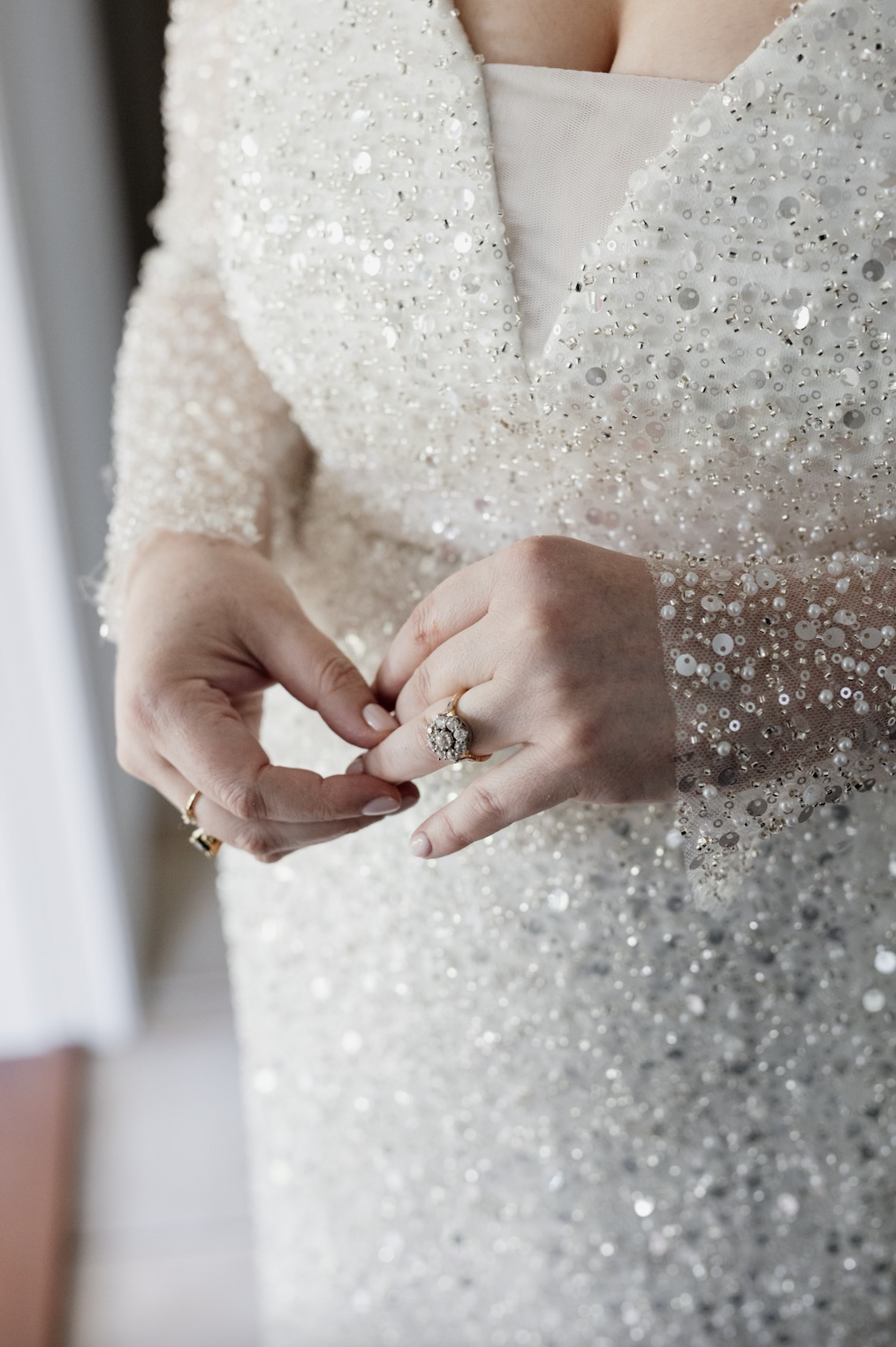
Beading and a sheer sleeve, photographed for Made By Rose, a one woman studio at Kilaben Bay on Lake Macquarie. Its published price list adds a fee for sleeves, beading and lace, which is a fair account of where the hours go.
The dress was settled decades ago and has been ageing in a cupboard nobody opened. So the question for the first appointment is not the one you want to ask. If you open it and it cannot be saved, will you tell me?
The room inside the dress
Every dress has a seam allowance: the strip of cloth folded away behind the seam. Letting a dress out means spending it, and there is nothing else in there to spend.
How much is in there was settled by whoever made the dress, on an afternoon nobody wrote down. Some makers leave a good margin. Some leave next to nothing, and the dress cannot be let out at all. Some shops now write that answer straight into the dress description. You find out how far a dress can be let out before you fall in love with it.
Your mother's dress has whatever room the person who made it happened to leave. Then it was taken in once for somebody else, and folded on the same crease ever since. Nobody knows what is left in it. Not you, not your mother, not the dressmaker, until the thing is open on a table under a good light. A dress is not faulty for having been made to fit one woman in one particular year. It only means the arithmetic was done before you were born, by somebody who is not here to explain it.
Rachel's Custom Sewing in Toowoomba, where a back that would not close was closed with a corset lacing. When there is nothing left to let out, something has to go in.
Which is why the answer, when there is one, is usually to put something in rather than let something out. Panels, lacing, an insert cut true to the design so that a back which will not close, closes. A dress that fits and a dress that has been forced are not the same garment.
The trade has its own word for it
The studios that take this work on call it remaking, restyling, re-modelling, restoration, reconstruction, creating new designs from old, and, on one list, rescue.
Those words are job descriptions, not marketing. Alterations move a dress towards a body. The other words all mean taking it apart and deciding what to do with the pieces, and in every version of it there is a moment when the dress is in sections on a table and nobody is certain yet.
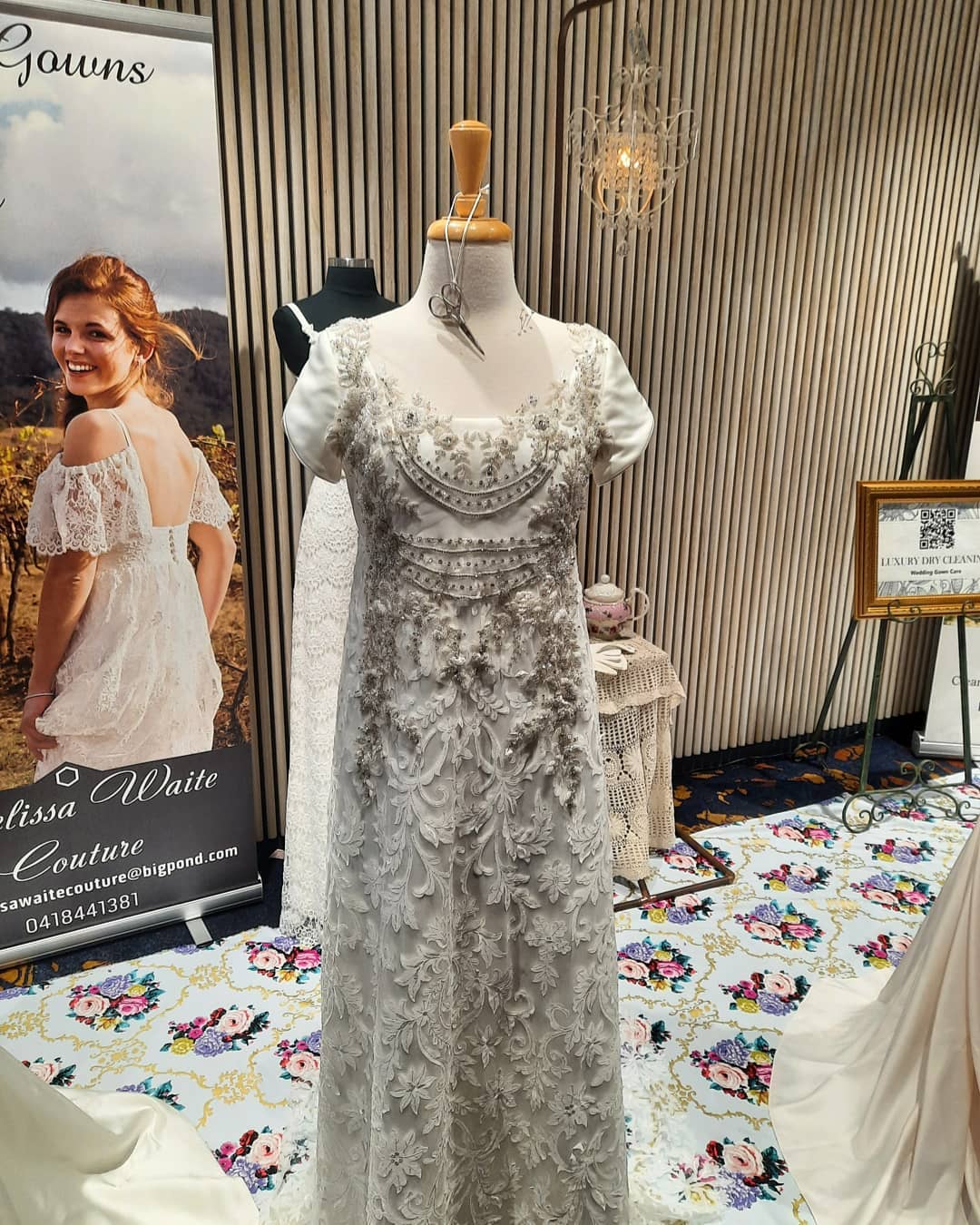
A gown on the stand at Melissa Waite Couture, Newcastle. Among the things the studio lists is re-modelling, which is its word for reworking a gown of special significance or a family heirloom.
An alteration is booked in weeks. A dress made from scratch is booked in months. An heirloom sits somewhere between the two and will not tell you where until it has been opened.
A shop that says no has done you a favour
Somewhere in this trade there is a woman who looks at your grandmother's dress for twenty minutes and says she cannot do it, or cannot do the version you have been picturing since March, and you drive home feeling turned away. You were not turned away. You were told the truth by the one person in the room qualified to see it, and she has done you a bigger favour than the one you came in for.
Look at what she is declining. A commission she is trained for, at a price she sets, from a customer who walked in hoping to say yes. She is refusing on the strength of what she can see and you cannot: what the cloth has done along a fold, and what a clean would take out along with the mark.
You may be asked to come to a fitting with no perfume on and no lotion, because the fabric drinks both and keeps them. That is a request about a dress a few months old. Your mother's dress has had forty years of it.
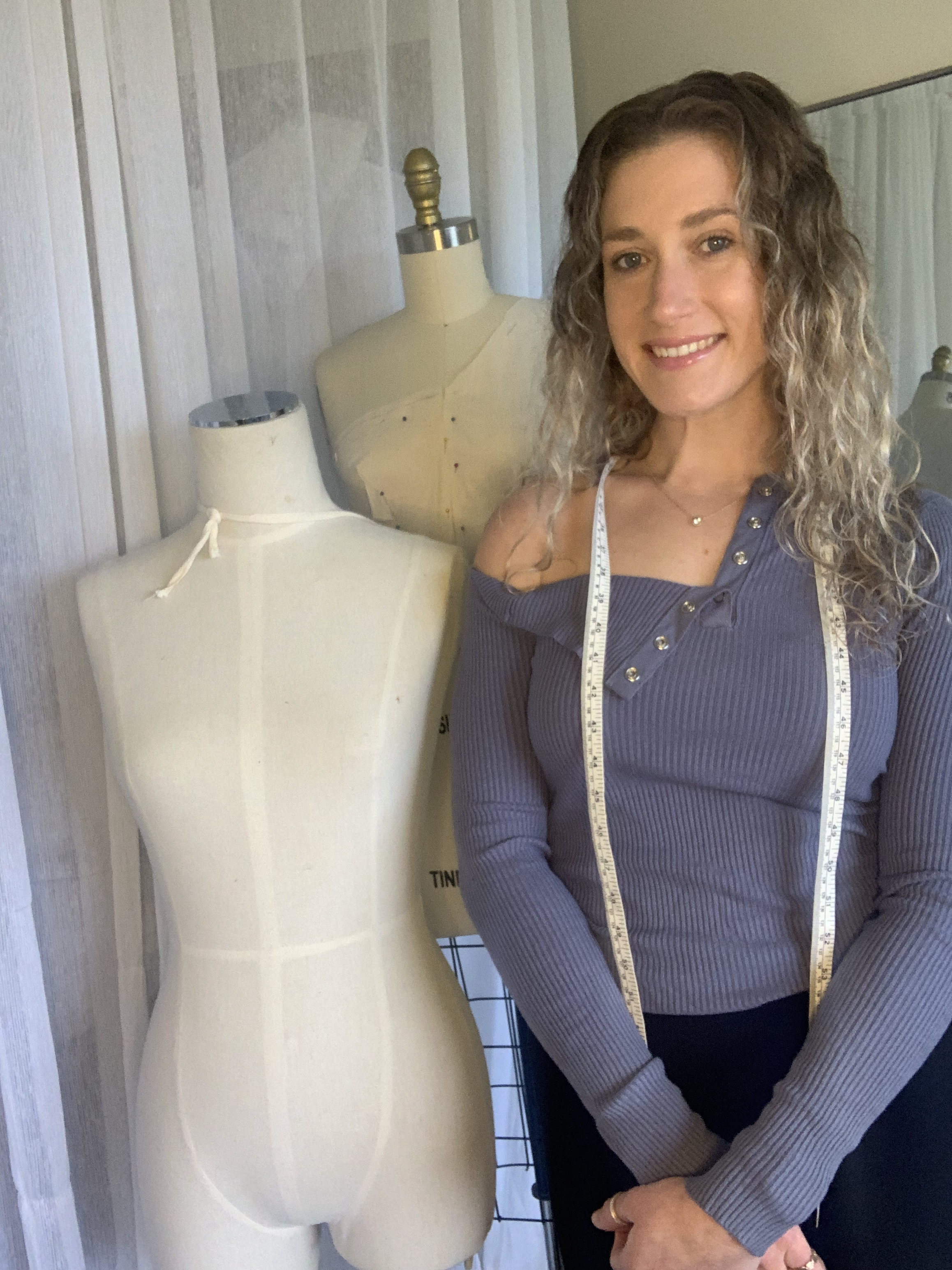
Brittney Paige Couture, on Hobart's Eastern Shore, where the work starts with two dress forms and a tape measure. First consultations carry no upfront fee, and the quotes come with no obligation attached.
Ask what the looking costs, though. Some studios take a first appointment with no fee up front and put no obligation on the quote, so you can hear the answer and walk out owing nothing. And a no to the whole dress is not the end of the dress.
It does not have to survive whole
You are not trying to save a garment. You are trying to walk your grandmother down an aisle. Only one of those jobs needs the whole dress.
Take the lace off and put it on a new bodice, over a new skirt cut for a different shape, a different height and a different century. The dress has not survived. The lace has, and the lace is the part in the photographs, the part her mother held while somebody did up the buttons. The satin was never the point.
Moving the lace is not a compromise, and it is not a cheaper alteration. A remake is its own commission with its own price, listed as work in its own right beside the gowns a studio makes new. It is a third thing, and you have to ask for it by name.
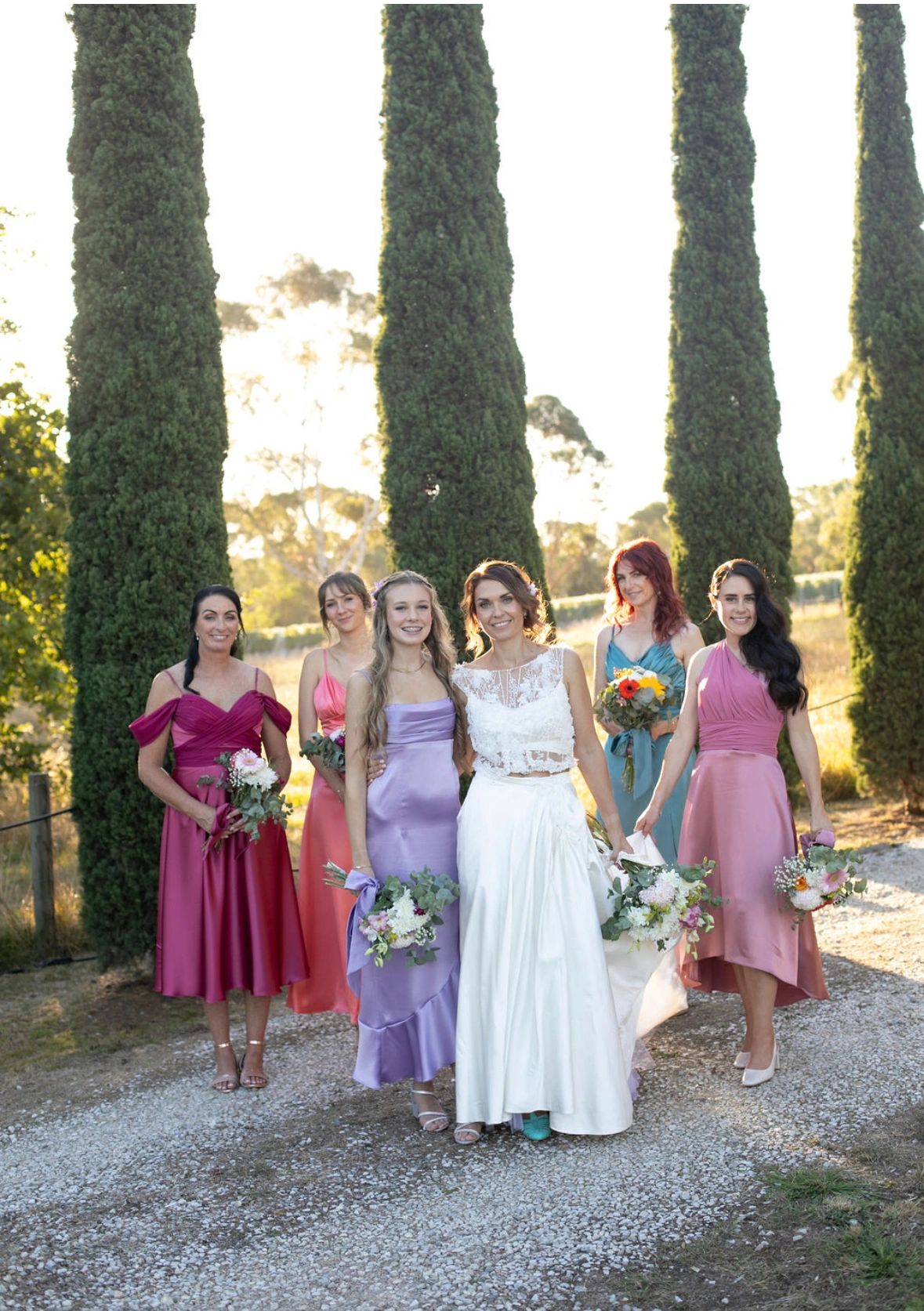
Before and after at Design by B in Newcastle, where a lace gown became a crop top and a skirt. Re-made and upcycled gowns start at $800 there, and custom gowns at $4,000.
Once you see it that way the options open up. Sleeves. A panel through the back. A veil out of the skirt. A christening gown out of the train, for somebody who has not been born yet. And what is left over after any of those is enough to make a small girl a dress out of the same cloth.
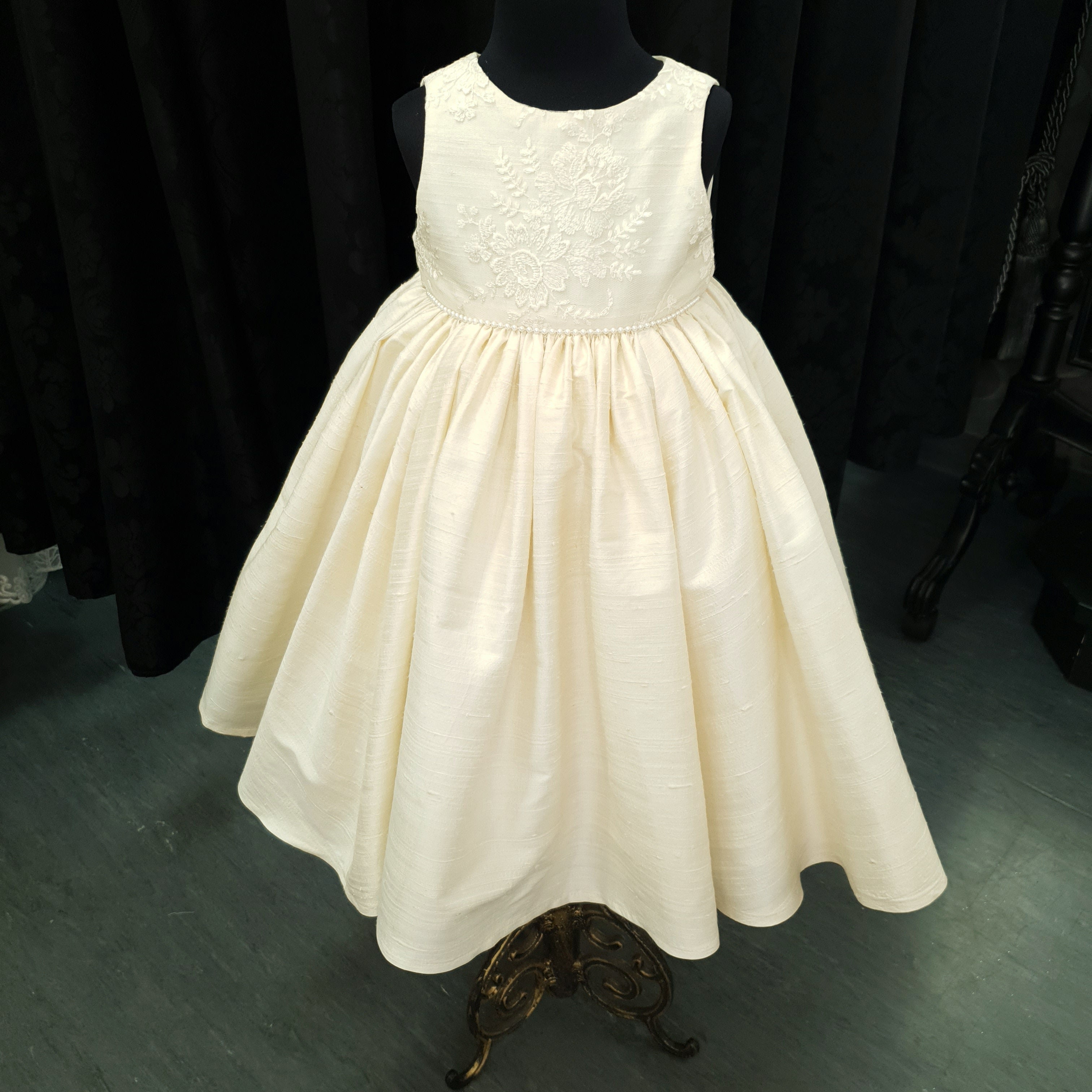
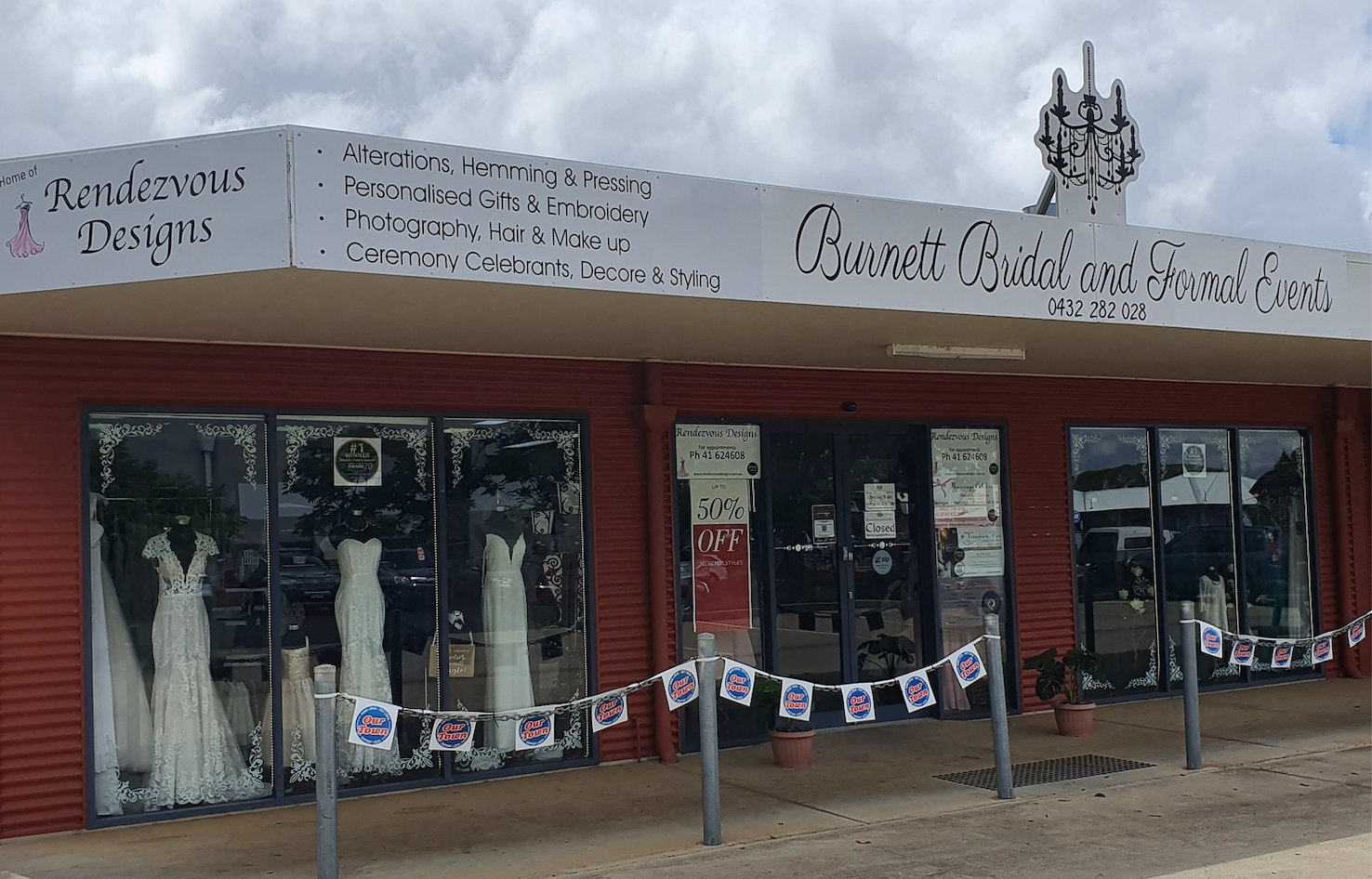
A flowergirl dress at Rendezvous Designs in Kingaroy, which has run a shop in the South Burnett for twenty five years. Creating new designs from old is one of the services it lists.
The dress can come apart and you will still have what you wanted from it, because what you wanted was never the cloth. It was your mother.
So take it in early, before there is a date you cannot move. Put it on a table in daylight, in front of somebody who will look at the cloth before she looks at you, and ask her what she will say if it cannot be saved. If she answers that one straight she is the right person, whichever way the answer goes.
And take your mother. She will want to be in the room when somebody who knows what she is looking at finally opens the box.
Studios that remake a dress somebody has already worn, and shops that will alter yours
Lynette Wilson has been a couture dressmaker for over fifty years. She built her name across Bayside Melbourne as Linze Couture, retired in 2015, and — in her own…
Brittney Paige Couture is a made-to-measure bridal studio on Hobart’s Eastern Shore. Its brief is a rebuke to the rack: “to work with clients to achieve something…
Design by B is Brooke Osland’s atelier on Wood Street in Adamstown, Newcastle — “custom fashion design & alterations for the aisle or the boardroom.” It is a studio…
Melissa Waite Couture makes one gown at a time, for one bride at a time, in Newcastle. Melissa is a dressmaker and couturier with more than 27 years in the…
Made By Rose is a one-woman bridal studio at Kilaben Bay on Lake Macquarie, run by Rose, who made her first commissioned wedding dress at fifteen — cutting on her…
Rendezvous Designs has been dressing brides in Kingaroy for 25 years, and its showroom sits inside the Burnett Bridal and Formal Events premises on Markwell Street.
La Belle Bridal Boutique has been dressing Canberra brides for 50 years, and is now run by owner and couture fit specialist Ashleigh Switalski from Barker Street in…
Aluuna is a couture and tailoring house in Ballina, and bridal is where it started. Its founder learned to sew before she learned to ride a bike, from a grandmother…
Lainie Brookman has been making gowns to measure from her Waurn Ponds studio since 2005, and she is the third generation to do it: her mother sewed in Geelong…
Melanie Jayne is a family-owned couture house on Harbour Drive in Coffs Harbour, where every gown is designed and manufactured in their own studio from fabrics and…
Toowoomba’s only bridal boutique led by a fully qualified designer, and the rare case in this directory where the shop and the label are the same person.
Lucia Josephine is a couture house rather than a bridal shop. It sits inside the historic Cannery woolstores in Teneriffe, a few minutes from the James Street…